
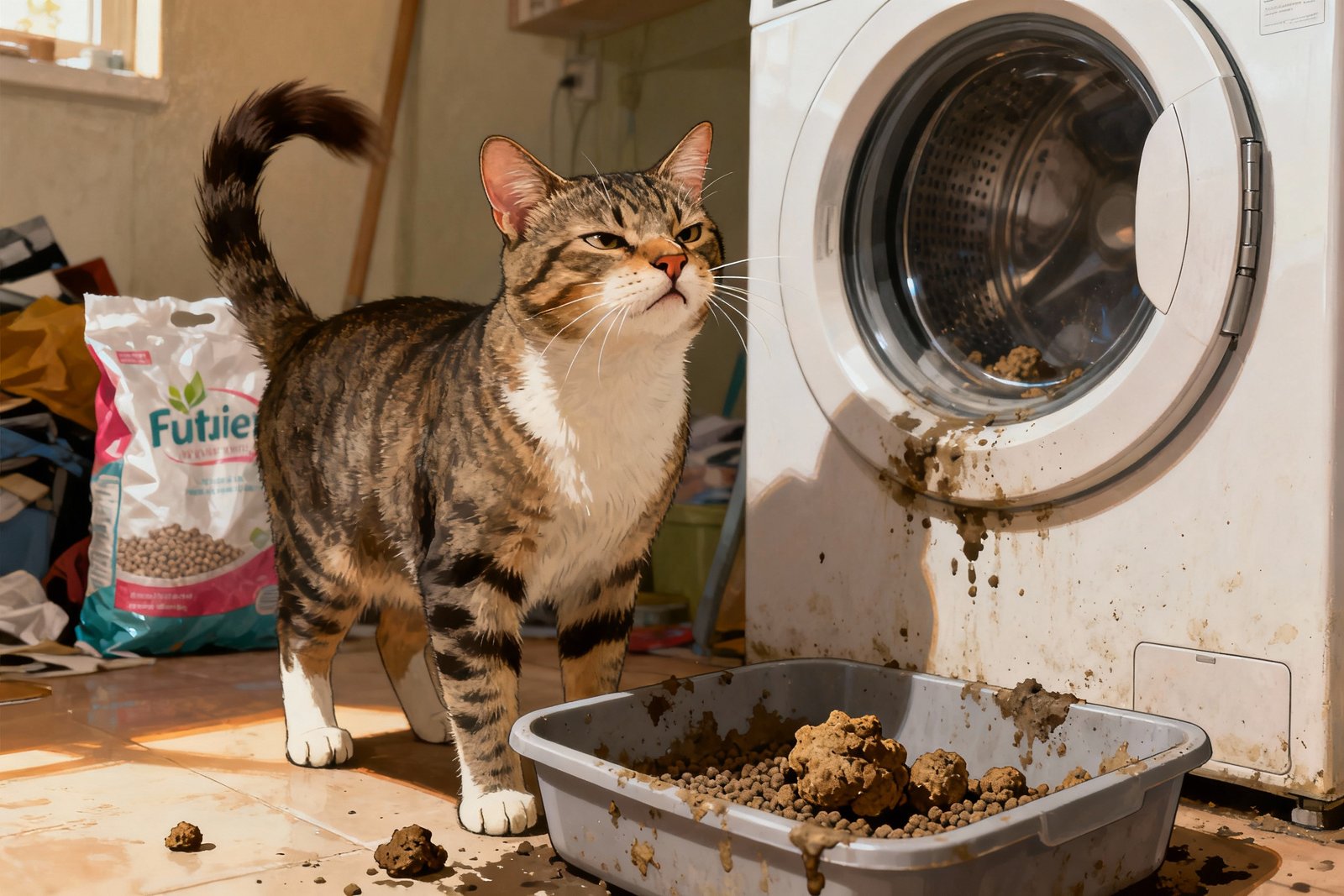
Your perfectly house-trained angel just peed on your favorite rug. Again. Did your cat suddenly forget how a litter box works, or is there something bigger going on?
Good news: you’re not alone, and your cat isn’t being spiteful. Bad news: you’ll need to play detective. Let’s figure out why your cat suddenly hates the litter box—and how to fix it without losing your sanity.
First: Rule Out Health Issues
If your cat stopped using the litter box out of nowhere, think health first.
Sudden changes often signal pain or discomfort. Cats hide symptoms like it’s their full-time job, so accidents can be your first clue. Call your vet if you notice:
- Frequent trips to the box with little urine
- Straining, meowing, or licking the genitals
- Blood in urine or stool
- Constipation or diarrhea
- Sudden accidents after years of perfect behavior
Common medical culprits
- UTIs and urinary crystals: Painful, urgent peeing. Cats associate the pain with the box and avoid it.
- Kidney disease or diabetes: More urine, more often.Overflow happens.
- Arthritis: High-sided boxes feel like a jungle gym. Older cats skip the climb.
- GI upset: Diarrhea or constipation make timing… tricky.
FYI: Treat the medical issue first. No litter hack fixes a UTI.
Yes, The Litter Box Setup Matters (A Lot)
Cats care about bathroom ambience more than you think.
If the setup feels wrong, they’ll find a better spot—like your laundry pile (warm, soft, smells like you… can’t blame them).
Location, location, location
- Quiet beats busy. Avoid laundry rooms with loud machines or hallways with foot traffic.
- No ambush zones. If another pet can trap your cat at the exit, your cat will boycott that box.
- Multiple floors? Boxes on each level save legs and carpets.
Box size and style
- Go big.The box should be about 1.5x your cat’s length. Most store-bought boxes are too small, IMO.
- Uncovered > covered. Covered boxes trap smells and feel like a porta-potty.Some cats prefer open-air.
- Low entry for seniors. Arthritic cats need easy access.
Litter type and depth
- Unscented clumping litter wins most of the time. Strong scents scream “chemical pine forest.”
- Depth sweet spot: around 2–3 inches.Too shallow = no digging. Too deep = quicksand.
- Consistency matters. Switching brands weekly confuses cats.Pick one and stick to it.
Cleanliness: The Deal-Breaker
Cats have standards. If the box stinks or looks like a construction site, they’ll pass. Wouldn’t you? Minimum cleaning routine:
- Scoop at least once daily (twice is better).
- Top off litter weekly to maintain depth.
- Full dump and scrub with mild dish soap every 2–4 weeks (more often with multiple cats).
- Avoid strong cleaners.Bleach and citrus smells can repel cats.
Little PSA: Air fresheners don’t fix dirty litter. They just perfume the crime scene.
Stress and Scent Drama
Cats use scent to feel safe. Changes in their world can mess with that sense of control.
And yes, they will pee on your stuff to cope. Common stress triggers:
- New pets, people, or babies
- Construction, new furniture, or moving
- Outdoor cats hanging around your windows
- Schedule changes (night shift, vacations)
How to chill things out
- Add more boxes so no one has to share under pressure.
- Use pheromone diffusers or sprays near litter areas and favorite hangouts.
- Create safe zones with perches, hiding spots, and consistent routines.
- Block window views if outside cats trigger your cat’s anxiety.
The “One Box Per Cat + One” Rule (And Why It Works)
If you own multiple cats, you need multiple bathrooms. Cats don’t love sharing. Some guard, some avoid.
The math: number of cats + one equals boxes you should have. Place boxes in different rooms, not side-by-side. Side-by-side counts as one, practically speaking. Spread them out so no single cat can gatekeep.
When Your Cat Hates the Litter Itself
Some cats get picky after a bad experience.
Maybe litter stuck to their paws, or the new formula smells weird. Texture matters. So does dust. Try a litter lineup:
- Set out 2–3 boxes with different unscented clumping litters.
- Keep everything else identical: same box size, same location style.
- See which one your cat uses most over a week.
If your cat has long fur, consider fine-grain litter or trim the pantaloons (a tiny sanitary trim) to prevent cling-ons.
Glamorous? No. Effective?
Yes.
Reforming the Repeat Offender
Once a cat pees somewhere, that spot becomes a bathroom in their brain. You must erase the scent and block access temporarily.
Clean it right
- Use an enzymatic cleaner made for pet urine. Regular cleaners leave trace smells your cat still detects.
- Treat padding and subfloors if accidents soaked in.Sometimes you need to pull back carpet, IMO.
- Test with a UV light to find hidden spots.
Make the old spot boring
- Cover with furniture, plastic carpet runners (nubby side up), or foil temporarily.
- Turn it into a “good zone”: feed meals there or place a cat bed.
Re-introduce the litter box
- Start with an easy-access box near the problem area.
- Once your cat uses it consistently, move it a foot per day toward your ideal location.
Special Cases Worth Calling Out
Senior cats
- Low-entry boxes, soft fine litter, and extra boxes on each floor help a ton.
- Senior checkups catch arthritis, kidney issues, and hyperthyroidism early.
New kittens
- Multiple small boxes in common areas help them “find” success fast.
- Scoop often. Kittens hold grudges against dirty boxes like Olympic-level sulkers.
Spraying vs. peeing
- Spraying: small amounts on vertical surfaces, usually territorial.
- Peeing: puddle on horizontal surfaces, usually box-related or medical.
- Neutering/spaying reduces spraying. Stress reduction helps too.
FAQ
My cat pees right next to the box.
What does that mean?
Often it means the box feels unsafe or uncomfortable. Try a larger uncovered box, lower sides, and a different litter. Also check for pain—arthritic cats sometimes can’t climb in, so they “aim” nearby.
How many litter boxes do I actually need?
Use the rule: number of cats + one.
Place them in separate areas for real choice. One box for two cats often equals drama and accidents.
What’s the best litter, really?
Most cats prefer unscented, clumping, fine-grain litter. Keep it consistent.
Scented litters can overwhelm cats’ noses and cause avoidance.
How do I stop repeat accidents on carpet?
Clean with an enzyme cleaner, then block the area or convert it into a “good zone” (feeding, bed, play). Add an extra litter box nearby while you retrain, then slowly move it.
Could anxiety cause litter box issues?
Absolutely. New pets, outdoor cat visitors, or routine changes can trigger accidents.
Add boxes, use pheromones, and give your cat safe, elevated hangouts. Consistency calms cats.
Do self-cleaning litter boxes help?
Sometimes. They keep things tidy, which picky cats love.
But the noise can scare some cats. If you try one, keep a regular box available during the transition.
Wrap-Up
Your cat doesn’t hate you, or the concept of indoor plumbing. Something—pain, setup, cleanliness, or stress—made the box a hard no.
Start with a vet check, then fix the environment: bigger box, better location, cleaner routine, and more options. With a little detective work (and an enzyme cleaner on speed dial), you’ll get everyone back on the same page—and off the carpet. IMO, that’s a win for noses everywhere.