
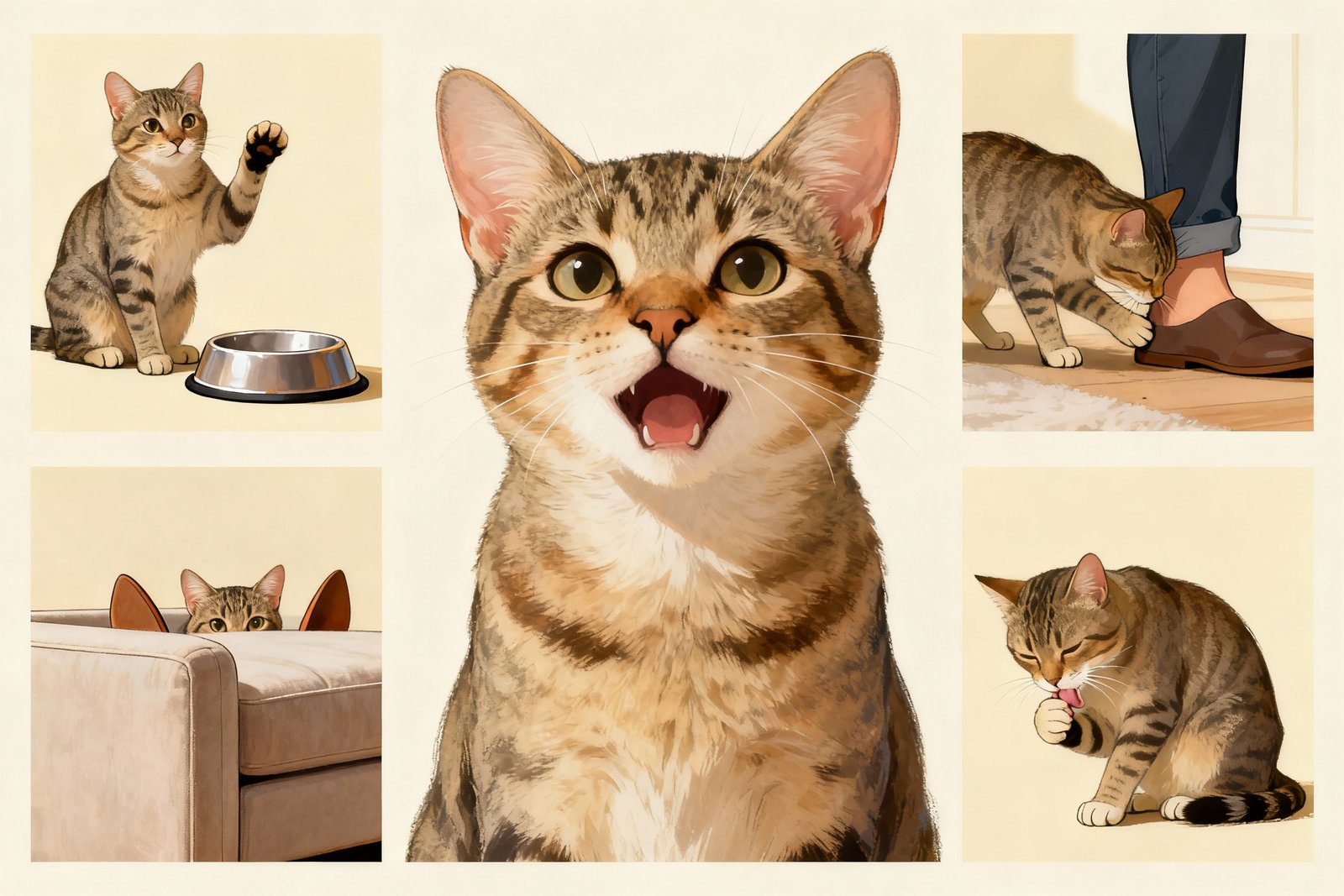
Your cat has a lot to say, and apparently, they’ve chosen you as the audience. Constant meowing can feel cute at first—until it’s 3 a.m. and you’re questioning your life choices. Good news: cats meow for reasons you can understand and fix.
Let’s translate the feline commentary into something you can actually act on.
First, What’s “Normal” Meowing?

Cats meow to humans, not to other cats. Weird, right? It’s their way of saying, “Hey, human, pay attention.” Some breeds (hi, Siamese) talk more than others.
Kittens meow more than adults. Normal meowing looks like periodic “check-ins,” especially at mealtimes or door time. If your cat’s meowing spikes or shifts suddenly, that’s your cue to investigate.
Common Reasons Your Cat Won’t Stop Meowing
Cats don’t meow just to troll you—most of the time. Here are the big ones:
- Hunger or food obsession: They’ve learned meowing summons snacks.They’re not wrong.
- Attention-seeking: Bored cats meow. Lonely cats meow. Cats who want you to witness them sit on a box also meow.
- Stress or change: New furniture, new roommate, moved the litter box?Cats love stability like we love Wi-Fi.
- Medical issues: Hyperthyroidism, dental pain, urinary issues, high blood pressure, cognitive dysfunction—these can all cause vocalization.
- Heat cycles: Unspayed females and intact males will vocalize loudly and dramatically.
- Night confusion (senior cats): Older cats may yowl at night due to sensory loss or cognitive decline.
- Locked-door syndrome: If there’s a door, they want behind it. If they’re behind it, they want out. Classic.
Quick self-check
- Did the meowing start suddenly?
- Is your cat eating, drinking, and using the litter box normally?
- Any weight loss, pacing, vomiting, or bathroom accidents?
- Is your cat a vocal breed (Siamese, Orientals, Bengals)?
If you notice sudden changes or other symptoms, call your vet first. Better safe than sorry, IMO.

Medical Causes You Shouldn’t Ignore
When meowing shifts from “chatty” to “help me,” health issues often sit underneath.
Here’s what vets see most:
- Hyperthyroidism: Older cats with weight loss, huge appetite, zoomies, and nonstop meowing. Blood test confirms it.
- High blood pressure: Can cause anxiety, yowling, even vision changes. Often linked to kidney disease or thyroid issues.
- Pain: Dental disease, arthritis, or abdominal pain can trigger vocalization.Cats hide pain until they can’t.
- Urinary issues: Straining, frequent bathroom trips, crying in the litter box—urgent vet visit, especially for male cats.
- Cognitive dysfunction (feline dementia): Disorientation, night yowling, staring at walls. Usually in senior cats.
When to see the vet
- Right away: Straining to urinate, crying when touched, vomiting repeatedly, severe lethargy.
- Within a week: New persistent meowing, weight change, excessive thirst, nighttime yowling in an older cat.
FYI: A basic vet workup might include a physical exam, bloodwork, urinalysis, and blood pressure check. It’s worth it.
Behavioral Causes (and How to Fix Them)
If your cat is healthy, this is where training and routine save your sanity. Cats repeat what works.
If meowing gets them fed or petted, the meowing stays.
For the “Feed Me Now” Meower
- Use scheduled, automatic feeders: Teach your cat the machine feeds them, not your fingers.
- Ignore meowing before meals: Wait for silence (even 3 seconds), then feed. Timing matters.
- Switch to smaller, more frequent meals: Helps satisfied cats chill out.
For the Attention-Seeker
- Daily play sessions (2x 10 minutes): Wand toys, laser pointers, chase games. End with a treat to “close the hunt.”
- Enrichment stations: Window perches, bird videos, puzzle feeders, catnip toys.
- Reward quiet: Pet and praise when the house goes silent.Ignore meows; engage during calm moments.
For the Door-Drama Cat
- Frost the glass or block the view: If they can’t monitor the void, they care less.
- Give a “yes” space: A tall cat tree or window perch signals “this is your domain.”
- Practice boundary training: Toss treats away from the door before you leave and when you return.
For the Nighttime Yowler
- Increase evening play: Tire them out an hour before bed.
- Feed a small meal at bedtime: A full belly often equals fewer serenades.
- Use white noise: Helps anxious or older cats settle.
- For seniors: Nightlights, pheromone diffusers, joint supplements (with vet approval) can help.

Stress, Change, and Cat Feelings (Yes, Those)
Cats love routine and predictability. When life shifts, so do their vocal cords. Reduce stress with structure.
- Stick to a consistent schedule: Meals, play, and sleep at predictable times.
- Safe zones: A quiet room with a cozy bed, litter, water, and a perch.
- Slow roll new things: Introduce new pets, furniture, or rooms gradually.
- Pheromone diffusers: Feliway can smooth out anxious vibes.
Introducing a new pet or baby?
- Give your cat vertical spaces and escape routes.
- Swap scents (blankets, toys) before face-to-face meetings.
- Reward calm behavior with treats and play.
Special Cases: Kittens, Seniors, and Vocal Breeds
Not all meows are created equal. Context matters.
- Kittens: They meow for everything—food, warmth, reassurance.Use structure and gentle redirection. They’ll mature out of the constant commentary.
- Seniors: Night yowling, confusion, or clinginess can signal cognitive decline or pain. Ask your vet about diet changes, supplements, pain control, and anxiety support.
- Vocal breeds: Siamese and friends can talk all day. Focus on enrichment, puzzle feeders, and training. You won’t silence them completely, but you can channel the drama.
Training Tips That Actually Work
Training a cat isn’t a myth. It’s just bribery with extra steps.
- Catch the quiet: Deliver attention, treats, or play when your cat pauses meowing.You’re teaching “quiet = reward.”
- Give a cue: Teach “quiet” by saying the word when they pause, then reward. Keep sessions short.
- Redirect energy: Meowing starts? Start a play burst with a wand toy, then reward calm after.
- Don’t punish: Sprays and yelling create anxiety and more meowing.We’re not trying to raise a supervillain.
When Spay/Neuter Helps
If your cat vocalizes like a karaoke star at midnight and paces the windows, they might be in heat or responding to neighborhood cats. Spaying/neutering reduces roaming, marking, and hormone-fueled yowling. It’s kinder for them and quieter for you. IMO, it’s one of the best quality-of-life choices you can make.
FAQ
Why does my cat meow at the door nonstop?
They want access or attention. Block the view, offer a perch nearby, and reinforce calm by tossing treats away from the door.
If they’re indoor-only but door-curious, try a catio or harness training to give them safe outdoor time.
Is my cat meowing because they’re mad at me?
Not really. Cats don’t do revenge. They do needs, routines, and habits.
Meowing usually means hunger, boredom, stress, or discomfort—not spite.
How do I stop 3 a.m. yowling?
Play hard in the evening, feed a small bedtime snack, and ignore attention-seeking at night. Use white noise and keep the environment predictable. Senior cats might need vet support for pain or cognitive changes.
Could my cat be meowing because of pain?
Yes.
Pain often shows up as clinginess, hiding, irritability, or vocalization. Watch for changes in movement (hesitation to jump), grooming less, or bathroom issues. If you suspect pain, call your vet.
How long before training reduces the meowing?
Give it 1–3 weeks of consistency.
Automatic feeders, daily play, and rewarding quiet work together. The first few days can include an extinction burst (meowing gets worse before it gets better). Stay strong.
Should I ever respond to meowing?
Yes—if it signals a real need: empty water bowl, dirty litter, medical distress.
Otherwise, respond to quiet moments, not meows. You’re shaping behavior every time you react.
Bottom Line
Your cat’s not trying to ruin your sleep—they’re communicating. Rule out medical issues, then fix the routine: predictable meals, daily play, enrichment, and rewarding quiet. Tweak the environment, stay consistent, and skip the punishment.
With a little detective work and a lot of patience, you’ll go from midnight opera to a manageable meow or two. And hey, maybe you’ll even start to enjoy the conversations—on your schedule.