
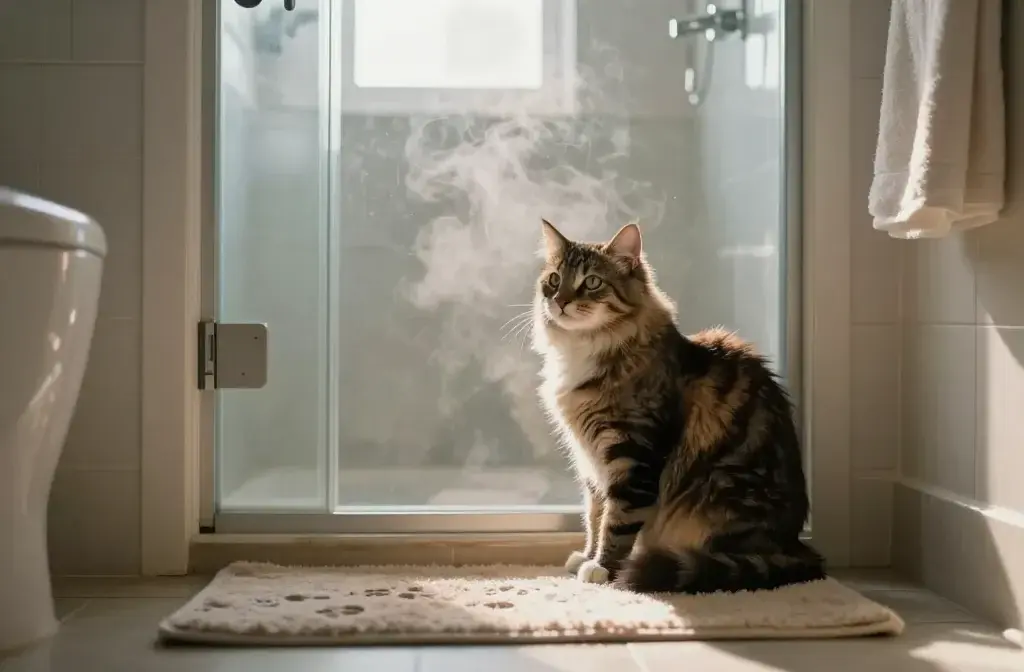
You close the bathroom door and—boom—tiny paws scratch from the other side like a horror movie with whiskers. Your cat could ignore you all day but suddenly treats your shower like prime-time TV. What gives? Short answer: it’s not just nosiness. Your cat cares about you, feels attached, and sees the bathroom as a weirdly perfect bonding zone.
The Bathroom: Cat Disneyland (Minus the Rides)
Bathrooms hit a lot of feline buttons. They’re small, quiet, and mostly free of threats—ideal for a cat who wants to hang out without getting ambushed by the vacuum. Also, you’re in there alone and still (for once). That’s a prime opportunity for uninterrupted attention.
Your bathroom also smells like you. Tiles hold scent, towels hold scent, you hold scent—you get it. Cats navigate the world through smell, and the bathroom is basically your scent museum. No wonder they act like tour guides.
Attachment: Yes, Your Cat Is Bonded to You
Cats form strong attachments to humans. We’ve got research backing this up: many cats show secure attachment styles similar to dogs and infants (FYI, science finally caught up with what cat people already knew). When you disappear behind a door, your cat tracks you because you matter.
In plain terms: your cat follows you to the bathroom because you’re their person. They want proximity, reassurance, and maybe a chance to supervise you like a tiny, furry life coach.
Signs Your Cat’s Attachment Is Healthy
- They follow you sometimes but can also relax alone.
- They greet you at doors but don’t panic if you leave.
- They show affection without clinging 24/7.
Routine, Rituals, and The “You Always Sit Here” Effect
Cats worship routine. Bathrooms add predictability. You go in, you sit or stand for a set amount of time, and you can’t run away from petting duties. Cats notice patterns, then stick to them like it’s their job.
Bathroom time = consistent, captive audience. They bring you gifts (toilet-paper shreddings), you offer head scritches, and the ritual cements your bond. IMO, they think you finally embraced stillness and they want in.
The Closed-Door Drama
Your cat might react strongly when you close doors. This isn’t just diva energy. Closed doors block access to their territory (and their favorite human). So they paw, meow, and flop dramatically outside because they want inclusion. It’s less “privacy invasion” and more “membership request.”
Curiosity and FOMO: Classic Cat Motivators
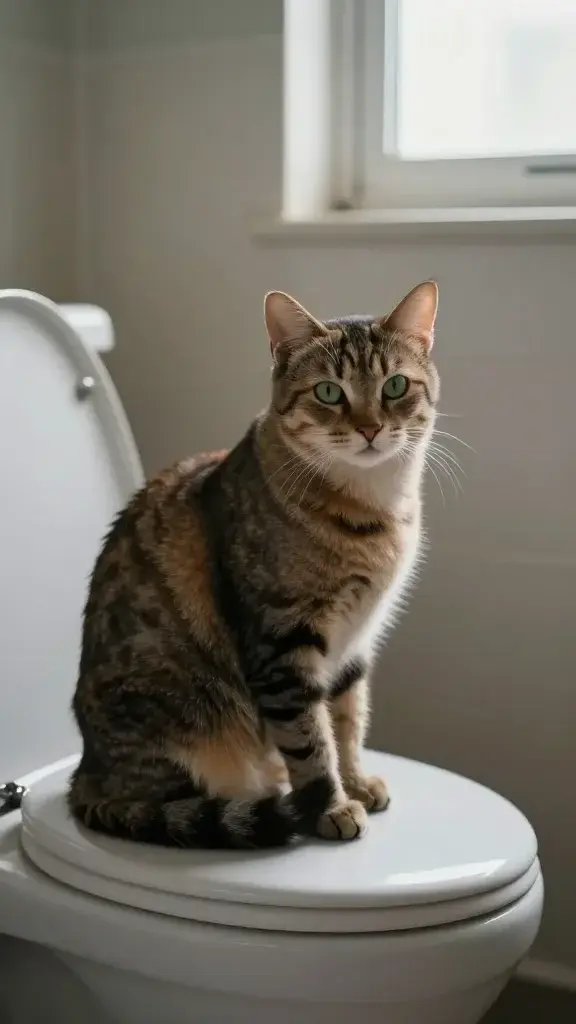
Cats need to know what you’re doing. Water sounds, crinkly paper, a swinging robe belt—so many mysteries. Bathrooms have intriguing textures and temperatures too: cool tile, smooth porcelain, echoey acoustics that make meows sound operatic. Cat heaven.
They check on you because they don’t want to miss a thing. If you’re in there, something important must be happening. Or not. Either way, they need front-row seats.
Why the Sink Nap?
Because it’s a purr-fect cat bowl. The curve fits their loaf shape, the porcelain stays cool, and the height gives them a lookout. Nature didn’t give them sinks, but if it had, cats would’ve domesticated us sooner.
Affection, Not Neediness: The Social Side of Bathroom Buddies
Cats show affection in subtle ways. Following you to the bathroom is social proximity. It’s the feline version of “I’ll sit near you but pretend I don’t care.” They rub against your legs to mingle scents, which strengthens your social bond in cat language.
Head bumps, slow blinks, and gentle purring = social trust. Your cat uses bathroom moments to update the “family scent profile” and reinforce your membership in their inner circle.
When It Might Signal Anxiety
If the following turns into shadowing every single step, you may see separation anxiety or stress. Red flags:
- Loud vocalizing when you leave rooms
- Destructive behavior near doors
- Changes in eating, grooming, or litter habits
If any of that rings true, increase play, add enrichment, and talk to your vet. Anxiety isn’t drama; it’s discomfort.
Practical Tips: Balance Affection and Boundaries
Want to keep the bathroom fan club but set some limits? Totally doable.
- Build pre-bathroom playtime: 5–10 minutes with a wand toy releases energy so they relax while you, uh, handle business.
- Offer a door-side perch: Place a comfy mat or bed near the bathroom. Invite them to hang out close by without crowding.
- Reward quiet waiting: When you come out, give a treat or a cuddle if they stayed calm. You reinforce chill behavior.
- Use scent security: Leave a worn T-shirt in a favorite spot so your scent travels beyond the bathroom.
- Teach “wait” or “sit”: Yes, cats learn cues. Keep it short and positive with treats.
Enrichment That Makes a Difference
- Foragers or puzzle feeders to occupy their brains
- High perches or window seats for safe surveillance
- Daily interactive play + solo toys (kick sticks, crinkle balls)
- Cat TV: bird feeders outside windows, short wildlife videos
Decoding the Quirks: Water, Towels, and Toilet Paper Crime
Some cats fixate on water. Dripping faucets trigger curiosity and play, and some cats prefer running water for drinking. If your cat tries to drink from the tap, consider a fountain. Hydration goals, achieved.
Toilet paper? It’s a shreddable jackpot. If they redecorate your bathroom with confetti, flip the roll so the paper feeds from the back or stash it in a holder. Also, rotate in better toys. Cats don’t choose chaos when good enrichment exists—usually.
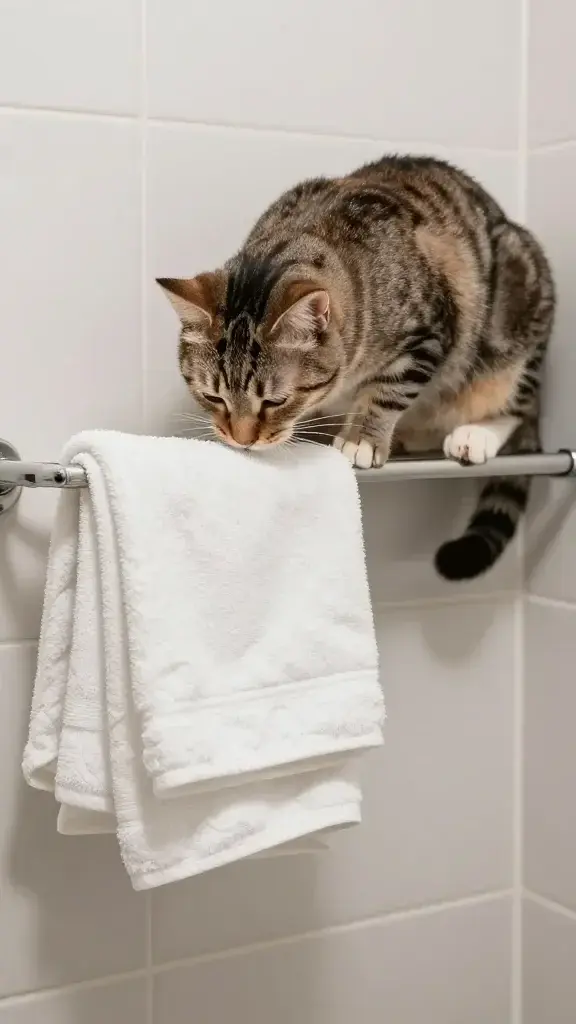
Towel obsession happens because towels hold concentrated human scent. That’s comfort central. Bonus: towels are soft and warm. Who could resist?
What Your Cat Gets Out of It (And What You Get Too)
Your cat gets predictability, attention, and reassurance. You get companionship, comic relief, and a dependable audience during your most vulnerable moments. Love, but make it awkward.
IMO, let them keep their bathroom membership unless it causes stress. It’s an easy way to reinforce your bond with minimal effort—just exist and provide scritches.
FAQ
Is my cat being clingy or just affectionate?
If they follow you sometimes and relax otherwise, that’s affection. If they panic when you’re out of sight, vocalize excessively, or show behavior changes, that leans clingy or anxious. Pair more play and enrichment with calm departures, and consult your vet if it persists.
Why does my cat only follow me, not other family members?
You might be the primary feeder, groomer, or play-buddy, so your scent and routines feel safest. Cats form preferences based on positive associations. You basically became the designated comfort human.
Should I let my cat in the bathroom or close the door?
Either works. If you allow it, you reinforce bonding time. If you prefer privacy, use enrichment and rewards for waiting calmly. Consistency helps—don’t switch randomly or you’ll confuse your tiny bathroom bouncer.
Why does my cat meow loudly outside the door?
Closed doors block access to their territory and to you. The meowing is a request for inclusion, not manipulation. Offer a post-bathroom greeting and add a comfy waiting spot to make the separation feel less intense.
Is following me to the bathroom a sign of separation anxiety?
Not by itself. Look for clusters: destructive behavior near doors, changes in litter box use, or refusals to eat when alone. If you notice these, talk to your vet and create a structured routine with play, feeding puzzles, and predictable comings and goings.
Why does my cat jump in the tub or sink after I shower?
They’re curious about water droplets and the changing scent environment. The tub cools quickly and smells strongly like you and soap. It’s basically a scratch-and-sniff book for cats.
Bottom Line
Your cat follows you to the bathroom because attachment, routine, and curiosity converge in one tiled, echoey room. It’s not weird—it’s social. If the behavior stays light and you both enjoy it, let the bathroom bestie era thrive. If it tips into anxiety, add enrichment, set gentle boundaries, and loop in your vet. Either way, those little paws outside the door? That’s love—just with better reflexes.