
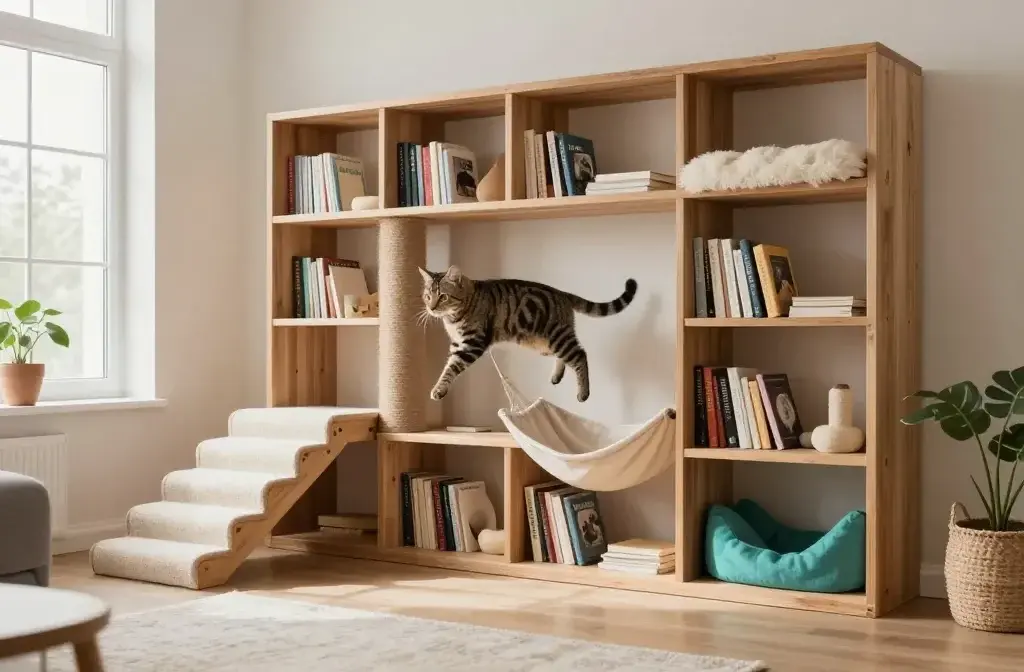
You’ve got an old bookshelf collecting dust, and a cat who thinks cardboard boxes are luxury condos. Perfect. Let’s transform that sad shelf into a full-blown feline theme park. Minimal tools, decent budget, maximum cat chaos. Ready to make your bookshelf the coolest thing since laser pointers?
Take Stock: Is Your Shelf a Solid Candidate?
Before you start bolting ramps and hammocks everywhere, check the basics. Cats jump. Hard. Your shelf needs to handle it without wobbling like a newborn giraffe.
- Material check: Solid wood or a sturdy composite works best. Super-cheap particleboard might flake and flex. If it feels flimsy, reinforce or skip it.
- Stability test: Give it a shake. If it wiggles, secure it to the wall with anti-tip brackets. Always assume your cat will treat this like a parkour course—because they will.
- Depth matters: Shelves 10–12 inches deep give most cats room to stretch and loaf comfortably.
- Height considerations: Taller isn’t always better. If your ceiling is low or the shelf towers over your couch, plan landing zones to keep jumps safe.
Plan the Layout: Think Like a Cat (Yes, Seriously)
Cats want routes, vantage points, and cozy nap zones. Map out levels: climb, explore, lounge, and hide.
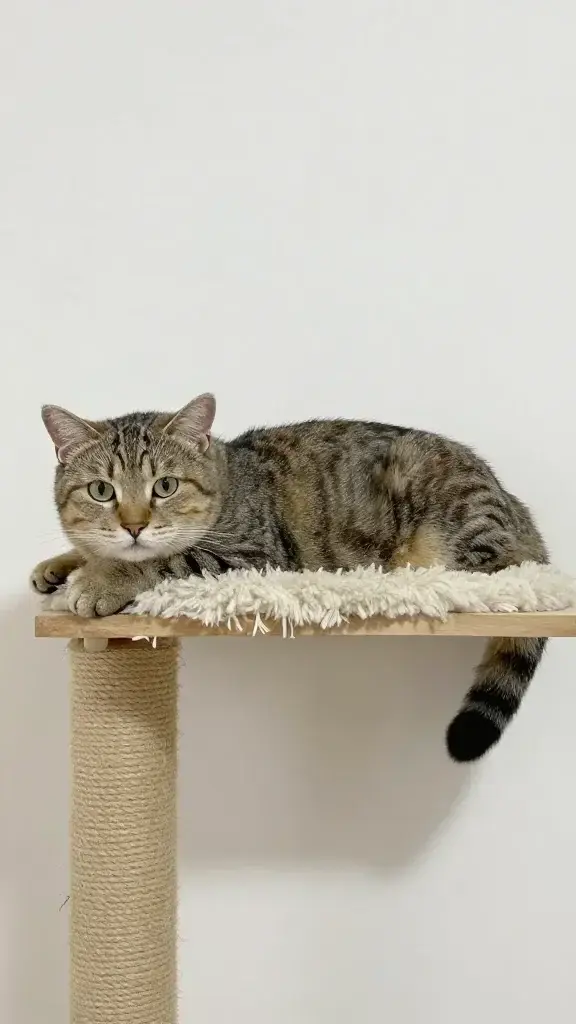
- Top level = throne: Reserve the highest shelf as a perch with a cushy bed and a view. FYI, cats love judging you from above.
- Middle levels = movement: Stagger open paths left-to-right so your cat can zigzag up. Avoid dead ends that require awkward leaps.
- Bottom level = base camp: Place a wide, stable entry point. Add a scratcher or mat to encourage proper use.
- Privacy pocket: Dedicate one cubby as a hideaway with a curtain or box cutout. Introvert cats appreciate boundaries. IMO, all cats are introverts with chaos bursts.
Sketch It Out
You don’t need architectural blueprints. Draw the shelf, mark levels, and note where you’ll put ramps, beds, and toys. This saves you from mounting a hammock directly above the litter box. You’re welcome.
Supplies: The Lowdown on What You Actually Need
You can go fancy, but you don’t have to. Aim for safe, sturdy, and easy to clean.
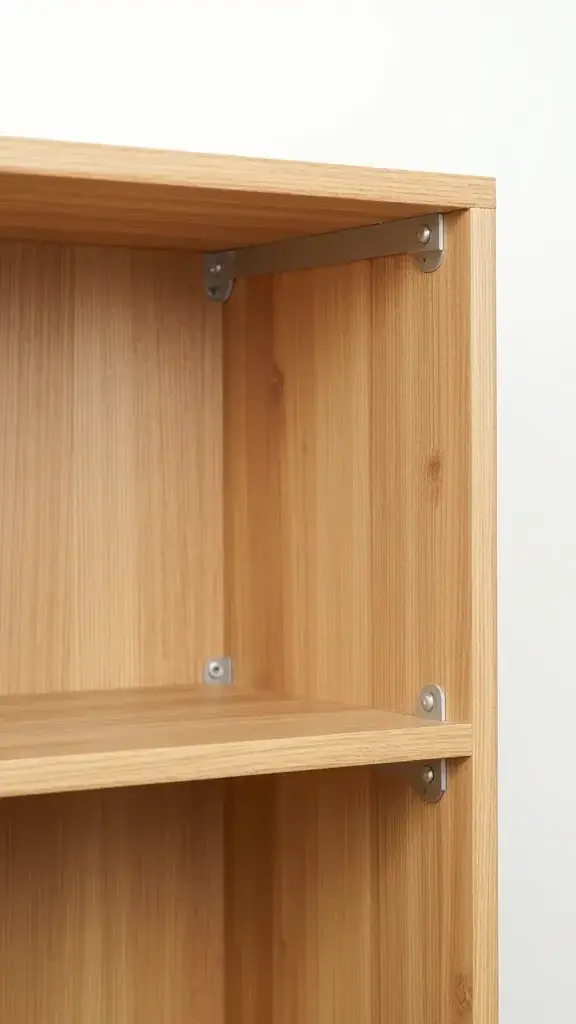
- Securing hardware: Wall anchors, L-brackets, and anti-tip straps. Non-negotiable.
- Surfaces: Carpet tiles, sisal rope, rubber shelf liners, or cork pads. These add traction and reduce dramatic slides.
- Comfy spots: Washable cat beds, fleece pads, or memory foam cut to fit. Velcro strips help keep them in place.
- Scratching components: Sisal-wrapped posts or panels. Or wrap one shelf support with sisal rope for a built-in scratch column.
- Ramps and bridges: Pre-made cat ramps, sturdy wood planks with grip tape, or fabric hammocks rated for pets.
- Enrichment: Dangly toys on elastic, puzzle feeders, and cat-safe plants like cat grass.
Tools You’ll Likely Use
- Drill and screws
- Measuring tape and pencil
- Staple gun or strong adhesive for fabric and rope
- Utility knife for carpet tiles
- Stud finder if mounting to the wall (highly recommended)
Build It: Step-by-Step Without the Drama
Let’s keep it simple and safe. You can finish this in an afternoon with coffee and a podcast.
- Anchor the shelf. Attach anti-tip brackets to studs if possible. Use heavy-duty wall anchors if you can’t hit a stud. Test the stability by pushing on different levels.
- Add traction. Cut carpet tiles or cork to fit each shelf. Secure with double-sided tape or adhesive dots so you can replace them easily.
- Create paths. Install a small ramp from floor to first shelf. Add a second ramp or a stepping plank between middle levels. Keep angles gentle for senior cats.
- Define zones. Top shelf gets a bed. Middle shelves get toys and scratch spots. One shaded cubby becomes the hideaway with a curtain or box front.
- Install scratch points. Wrap a side support or a dowel with sisal rope. Staple the ends on the underside so claws don’t catch.
- Finish with enrichments. Attach toy strings to the underside of a shelf, add a puzzle feeder on a stable level, and place cat grass somewhere sunny.
Safety Checks You Shouldn’t Skip
- Edge security: If shelves are shallow, add low front rails (thin wood strips) or bed bolsters to prevent roll-offs.
- No dangling hazards: Keep cords short and secure. Avoid anything that can loop around a neck.
- Weight test: Press down hard on each modified area. If you hear creaking, reinforce it.
Make It Cozy: Comfort and Style (Yes, For Your Cat)
Function first, but you can still make it cute. Your living room doesn’t need to look like a pet store exploded.
- Match your decor: Neutral carpet tiles, wood-toned ramps, and linen-look curtains blend in nicely.
- Washability rules: Choose removable, machine-washable fabrics because fur and mystery crumbs will happen.
- Lighting: A small, warm LED puck light under a shelf creates a cozy reading nook vibe—for your cat. They won’t read, but you will feel fancy.
- Noise control: Felt pads under anything that might clack or rattle. Quiet equals chill cat.
For Multi-Cat Households
Provide at least two clear routes up and down. Add multiple “ownership” zones: two beds, two scratchers, two exits. Fewer turf wars, fewer dramatic side-eyes.
Encourage Exploration Without Bribery (Okay, Maybe Some Bribery)
Some cats sprint onto new furniture like it’s Black Friday. Others need therapy and three references. Warm them up gradually.
- Scatter treats along the ramps and shelves to create a treasure trail.
- Use scent: Rub a blanket they love on the surfaces. Familiar smells = instant approval.
- Playtime: Start wand-toy sessions around the base and lead them up.
- Respect the “nope”: If your cat hesitates, give them space. Curiosity will win eventually. IMO, patience beats forcing every time.
Maintenance: Keep It Safe and Fresh
Your cat will use this daily. Keep it in top shape with quick routines.
- Weekly: Lint-roll beds, shake out mats, tighten any loose screws, and rotate toys.
- Monthly: Wash fabrics, replace worn scratch rope, and deep-clean shelves with pet-safe wipes.
- Seasonal: Swap enrichment (new puzzle feeder, different textures) to prevent boredom.
- Annual safety check: Re-anchor hardware and inspect for cracks or splinters.
Quick Troubleshooting
- Cat ignores it: Move it near a window, add a bed with a view, or sprinkle catnip. Also, remove competing beds temporarily.
- Too much zoomies: Add rails or taller bolsters to top levels. Higher traction prevents slip-and-yeet incidents.
- Scratches furniture instead: Increase sisal coverage and place scratch points at common entry/exit spots.
Budget Tips That Don’t Feel Cheap
You can build this on a budget and still deliver five-star fun.
- Use carpet remnants from hardware stores or old rugs cut to size.
- Repurpose boxes as hideaways with cute cutouts. Reinforce edges with tape, then cover with fabric.
- DIY ramps with pine boards and stair tread tape. Sand edges to avoid splinters.
- Thrift for baskets that fit shelves. Add a cushion and boom: instant bed.
FAQs
Do I need to bolt the bookshelf to the wall?
Yes. Always. Cats launch themselves off furniture like tiny missiles, and you don’t want the shelf tipping. Use anti-tip straps or L-brackets into studs for maximum safety.
What if my bookshelf is particleboard?
You can still use it, but reinforce it. Add corner braces, avoid heavy add-ons, and focus on traction mats instead of thick screws into flimsy areas. If it bows or creaks under pressure, retire it from cat duty.
How do I keep my cat from chewing the rope or fabric?
Choose natural sisal and tightly secure rope ends with staples on hidden sides. Avoid loose threads, and trim frays as they appear. If your cat chews obsessively, swap to cork or rubber traction and offer safe chew toys.
Can I add a litter box to the bottom shelf?
You can, but only if the shelf sits in a low-traffic area and you can clean it easily. Add ventilation gaps and a mat for litter tracking. Personally, I prefer keeping the “spa” and the “gym” separate. FYI, most cats do too.
Is this setup okay for senior cats?
Absolutely, with adjustments. Use gentle ramps, lower perches, and extra traction. Skip big jumps and provide a cozy hideaway at mid-height so they don’t need to climb all the way up.
How do I make it renter-friendly?
Use anti-tip straps that anchor into studs or heavy-duty freestanding stabilizers. Opt for removable adhesive hooks for toys and Velcro for pads. Keep drilling minimal and patchable.
Wrap-Up: Your Cat’s New Favorite Place
That old bookshelf? Now it’s a feline wonderland with climbing routes, cozy retreats, and prime people-watching real estate. You anchored it, padded it, and made it pretty—gold star. Give your cat a day or two to explore, then enjoy the smug satisfaction of a DIY win. And IMO, nothing beats sipping coffee while your cat surveys their kingdom from a throne you built.