
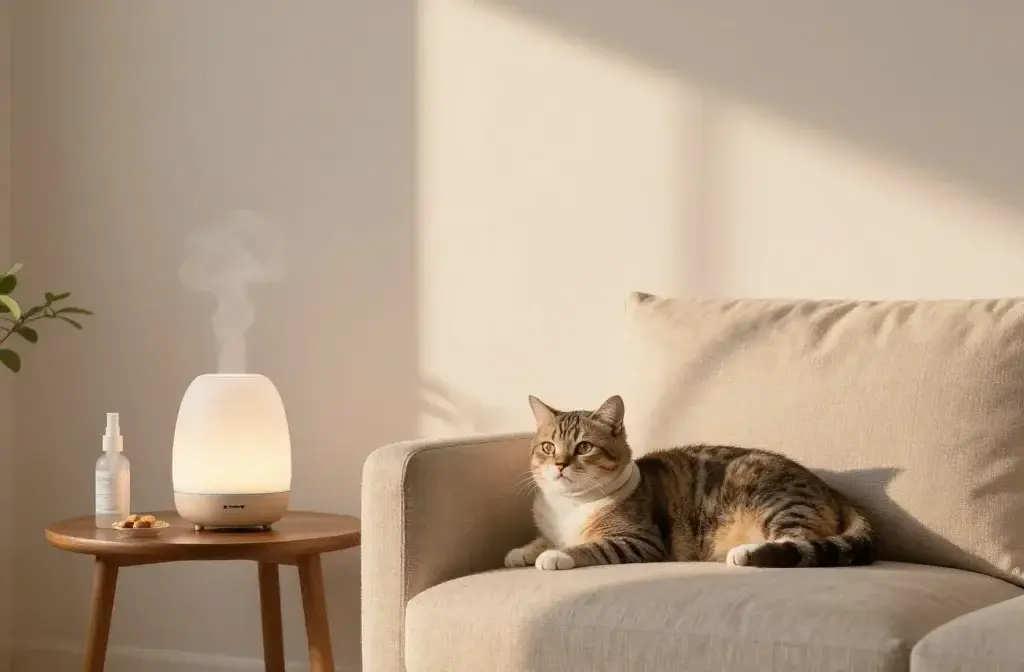
Your cat rules your house, your heart, and your schedule—and sometimes your nerves. If you’ve Googled “why is my cat screaming at 3 a.m.,” you’re in the right place. Calming products can help smooth out stress from vet trips, fireworks, new babies, or just your cat’s ongoing feud with the vacuum. Let’s compare diffusers, collars, sprays, and supplements so you can pick what actually works for your tiny house tiger.
How Cat Calming Products Actually Work
Most cat-calming tools lean on one of two things: pheromones or calming nutrients. Pheromones copy the “I feel safe here” signals cats naturally leave when they rub their faces on stuff. Nutrient-based products use ingredients like L-theanine, tryptophan, and valerian to relax the nervous system.
Big picture:
- Pheromone products (diffusers, collars, sprays) = environmental reassurance
- Supplements = internal chill pill (not literal pills, sometimes tasty chews)
You can use them alone or stack them for extra support. Think of it like noise-canceling headphones plus a calm playlist.
Diffusers: Set It and Forget It (Mostly)

Plug-in diffusers release feline facial pheromones into the air. They create a general “home base” vibe that tells your cat, “You’re safe. No need to redecorate the sofa with your claws.”
Best for:
- Multi-cat households with turf wars
- New home setups, renovations, or moving
- General anxiety, marking, or scratching
Pros:
- Provides constant background calming
- Hands-off once installed
- Good coverage for multiple rooms with multiple units
Cons:
- Coverage limits (usually one room per diffuser)
- Needs refills every 30–45 days
- Won’t help much outside the home (car rides, vet trips)
Tips for Using Diffusers
- Place at cat height in the room your cat uses the most.
- Avoid blocking with furniture or curtains.
- Start 1–2 weeks before stressful events for best results.
Calming Collars: Pheromones on the Go
Collars release similar pheromones but travel with your cat. Imagine a portable comfort zone. For adventurous cats, anxious rescues, or epic car yowlers, collars can be clutch.
Best for:
- Travel, vet visits, boarding
- Cats who roam different rooms or outdoors (supervised)
- Single-cat households where you want targeted support
Pros:
- Works wherever your cat goes
- No plugs, refills, or setup
- Often lasts 30 days
Cons:
- Some cats hate collars (dramatic flop routine, anyone?)
- Must fit properly to work and to be safe
- Not ideal for cats who can’t safely wear collars
Fit and Safety Notes
- Use breakaway collars only. Safety first, style second.
- Two-finger rule: snug but not tight.
- Replace when the scent fades (usually monthly).
Sprays: Spot Treatments for Stressy Situations

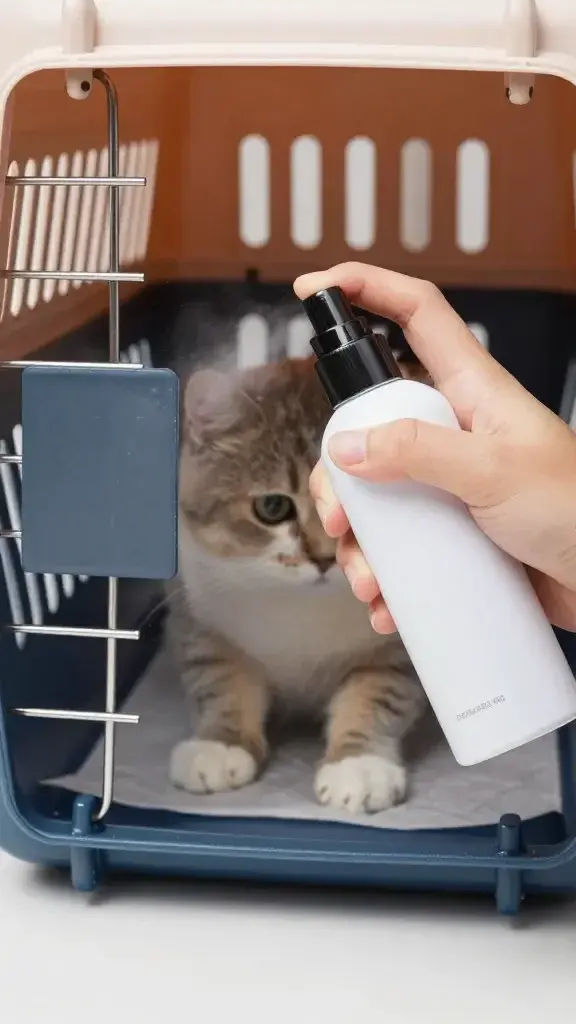
Sprays offer fast, targeted pheromone support for specific locations. You mist the carrier, bedding, door frames, or that one couch corner your cat treats like a scratching post audition.
Best for:
- Carriers and car rides
- Introducing new furniture or cat trees
- Doorways and windows where neighbor cats trigger drama
Pros:
- Immediate, focused help
- Portable and affordable
- Pairs well with diffusers or collars
Cons:
- Short-lived (reapply every few hours)
- Some cats dislike the initial wet scent
- Easy to forget to use until chaos has already begun
How to Use Calming Sprays
- Spritz 10–15 minutes before your cat arrives to let the alcohol base evaporate.
- Don’t spray directly on your cat—ever. Surfaces only.
- Reapply before long car rides or stressful appointments.
Supplements: Calm From the Inside Out
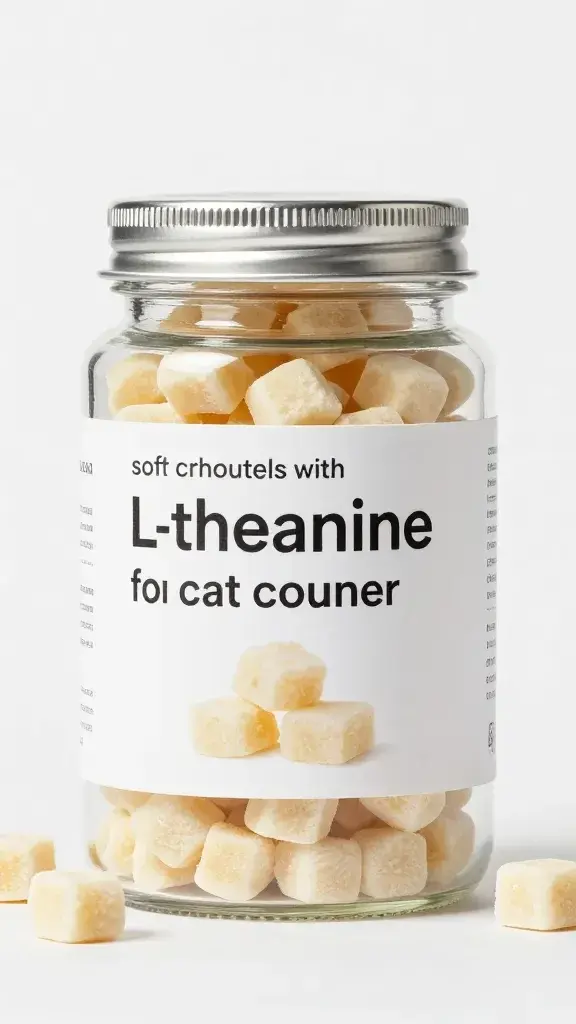
Supplements aim to support the nervous system with gentle, non-sedating ingredients. You’ll see chews, liquids, powders, and even treats that taste suspiciously like chicken.
Common ingredients:
- L-theanine (from green tea): smooths anxiety without sedation
- L-tryptophan: precursor to serotonin
- Alpha-casozepine: milk-derived peptide for relaxation
- Valerian and chamomile: herbal calmers (some cats respond better than others)
- Melatonin: sometimes used for sleep cycles—ask your vet first
Pros:
- Can help moderate ongoing anxiety and reactivity
- Good for cats who need daily support
- Stackable with pheromone products
Cons:
- Response varies by cat and formula
- Taste matters—picky cats may say “nope”
- Not all supplements have robust research, so choose reputable brands
Choosing and Using Supplements
- Talk to your vet if your cat takes other meds or has health issues.
- Start low, go slow. Track behavior over 2–4 weeks.
- Look for brands with clear dosing, batch testing, and transparent ingredient lists.
What Works Best for Which Problem?
Let’s match tools to common cat woes. IMO, combining approaches usually wins.
- Marking/spraying or scratching indoors: Diffuser in main room + spray on hot spots. Add a collar if it’s territory-related with neighbor cats peeking in.
- Travel and vet visits: Collar + spray in carrier. Bonus points for a familiar blanket and zero eye contact during the yowling solo.
- Multi-cat tensions: Diffusers in shared spaces + structured reintroductions. Supplements for the most reactive cat can help.
- New home, renovations, or guests: Diffuser 1–2 weeks prior + safe room setup. Add supplements short-term if your cat spirals easily.
- Night zoomies or general jitters: Daytime play + puzzle feeders + supplements. FYI: burnt energy = calmer brain.
When Behavior Work Matters More
Calming products help, but they won’t fix unmet needs. Pair them with:
- Predictable routines (meals, play, quiet time)
- Vertical space (cat trees, shelves, window perches)
- Litter box bliss (one per cat + one extra, cleaned daily)
- Slow introductions for new pets or people
Side Effects, Safety, and Realistic Expectations
Pheromone products are generally very safe. They don’t sedate, so your cat should act normal—just less “chaotic gremlin.”
Supplements can cause mild GI upset in some cats, especially at first. Start small, and stop if you see vomiting, diarrhea, or major behavior changes. Always loop in your vet if your cat has a medical condition, is on meds, or you plan to use multiple products long-term.
Expectations check:
- Give it time—often 1–2 weeks for pheromones, 2–4 weeks for supplements.
- Not every cat responds to the same thing. Trial and error is normal.
- If your cat shows sudden, intense anxiety or aggression, rule out pain first.
Quick Comparison Cheat Sheet
- Diffusers: Best for whole-room calm and multi-cat homes. Low effort, ongoing cost.
- Collars: Portable calm for travel and exploration. Needs proper fit and monthly replacement.
- Sprays: Targeted, fast help for carriers, furniture, and doors. Short-lived, needs reapplication.
- Supplements: Internal support for ongoing anxiety. Vet guidance recommended; picky eaters may protest.
FAQs
Do these products actually work, or is this cat aromatherapy?
Many cats respond well, especially to pheromone products. They mimic the signals cats use naturally, so it’s not random “nice smell” stuff. Results vary by individual, but plenty of owners and vets see clear improvements.
Can I use a diffuser, collar, and supplement together?
Yes, you can layer them. A common combo is diffuser at home + spray for the carrier + daily supplement for extra support. Monitor your cat and adjust if they seem too zonked or upset (rare, but listen to your gut).
How long before I see results?
Sprays can help within minutes to hours. Diffusers often show benefits within 1–2 weeks. Supplements usually need 2–4 weeks for full effect, especially for chronic anxiety.
Are there any cats who shouldn’t use these?
Pheromone products are broadly safe. For supplements, check with your vet if your cat has kidney, liver, or GI issues, is very young or senior, or takes other medications. When in doubt, ask—five-minute call, big peace of mind.
What if my cat ignores all of this and keeps acting wild?
First, rule out medical causes like pain, UTIs, or hyperthyroidism. Then level up the behavior plan: structured play, environmental enrichment, and possibly a consult with a feline behaviorist. FYI, some cases benefit from prescription meds—no shame in that game.
Will these stop fighting between my cats?
They can help lower tension, but you still need proper reintroductions and resource management. Use diffusers in shared areas, feed separately, add more litter boxes, and rebuild trust slowly. Think “roommates with boundaries,” not “instant BFFs.”
Conclusion
You’ve got options, and that’s the good news. Diffusers set the mood, collars bring calm on the go, sprays handle hot spots, and supplements support from within. Mix and match, add smart behavior tweaks, and give it a little time. IMO, your cat can absolutely find their chill—then you might finally sleep past dawn without the 3 a.m. opera.