
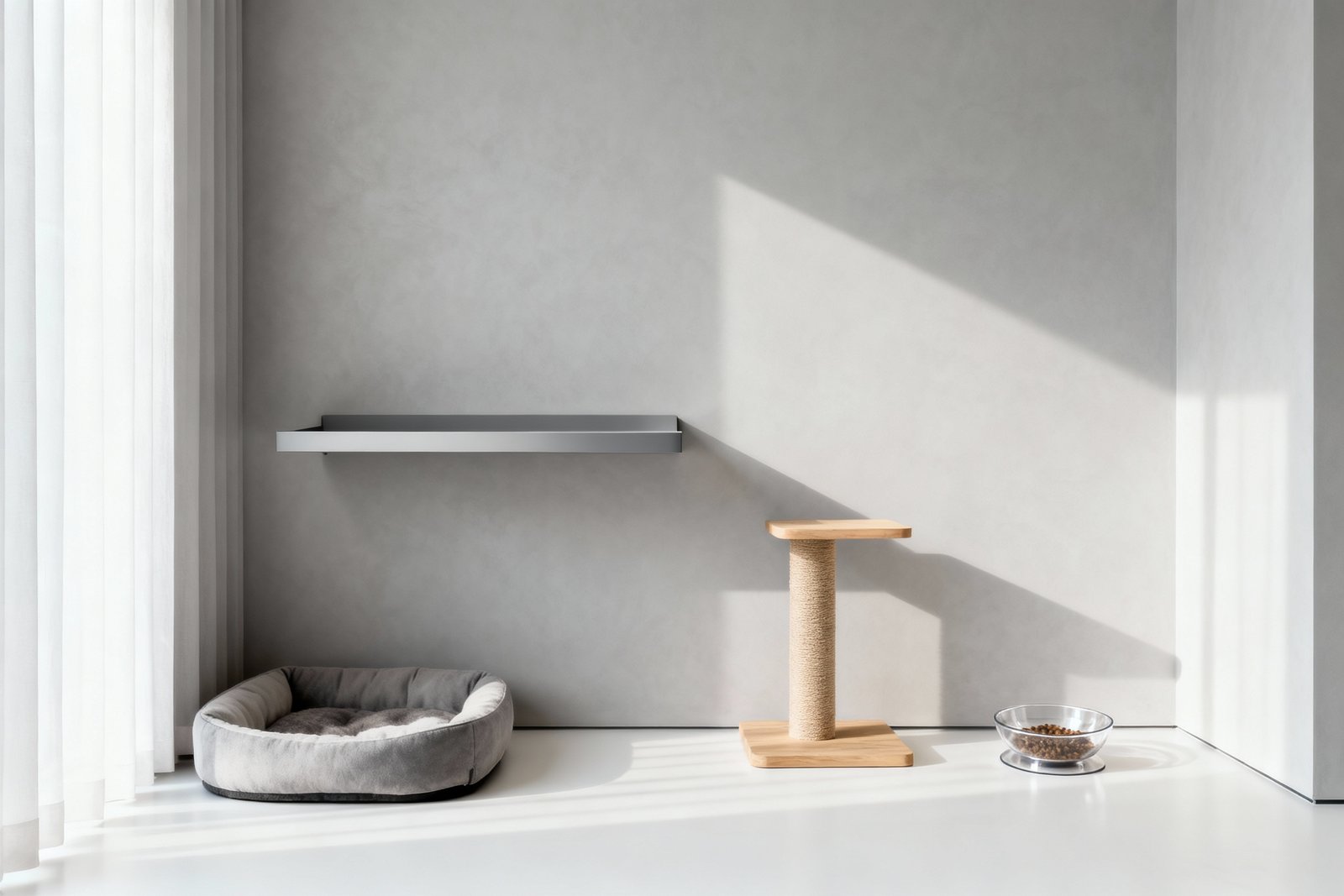
Your home loves clean lines, calm colors, and exactly zero visual clutter. Your cat loves… chaos. The key is designing a cat room that respects your minimalist vibe without turning your living room into a neon pet store.
Ready to make a serene space that your feline will adore and you’ll actually want to show off? Let’s build a cat room that’s sleek, smart, and 100% fur-lord approved.
Choose a Minimalist Color Palette (That Hides Fur)

Keep the palette tight and soothing. Think warm whites, soft greys, greige, or muted earth tones.
Your cat doesn’t care about Pantone, but you do.
- Stick to 2–3 colors max for furniture, textiles, and walls.
- Match fabrics to your cat’s fur color, FYI. It hides shedding like a cheat code.
- Add texture, not patterns: linen, felt, wool blends, and smooth wood.
Material picks that look chic (and survive claws)
- Solid wood shelves and platforms: easy to clean, timeless look.
- Performance fabrics for cushions: tight weave resists snags.
- Low-pile rugs or indoor-outdoor rugs: quick vacuum, no drama.
Integrate Vertical Space Without Visual Clutter
Cats crave height like you crave a clean countertop. Give them vertical pathways that blend into the room.
- Floating shelves in the same stain as your trim or floor keep the look cohesive.
- Wall-mounted steps with hidden brackets feel airy and intentional.
- Use one accent wall for climbing.Keep other walls clean to avoid visual overload.
Layout tips for smooth cat traffic
- Start low and ladder up: 12–16 inches between steps works for most cats.
- Offer at least two routes down to reduce “stair boss” behavior.
- Place a perch near a window. Sunbeam + birds = feline Netflix.

Pick Furniture That Doubles as Decor
You don’t need a giant carpet tower that screams “college apartment.” Choose pieces that blend in and multitask.
- Ottoman with hideaway: storage on top, cozy cubby below. Minimalist win.
- Bench with cushion: add a side entry for a nap nook.
- Cylinder scratchers in natural sisal or cork: sculptural and functional.
Scratching without the eyesore
- Mount a vertical sisal panel near doorways (prime scratching territory).
- Place a horizontal scratch tray by sunny spots for loaf sessions.
- Choose neutral tones and geometric forms for a gallery-like vibe.
Streamline the Litter Situation (Yes, It Can Look Good)
You can keep a minimalist home and a litter box.
You just need a plan.
- Hidden litter cabinets with rear ventilation keep smells and visuals under control.
- Cut a side entrance and use a mat inside and out to trap litter.
- Top-entry boxes look clean and reduce scatter, but older cats may hate them—IMO always prioritize function over Pinterest.
Odor and cleanup hacks
- Place the box on a washable mat or vinyl tile for easy wipe-downs.
- Seal the cabinet interior with polyurethane to prevent odors sticking to wood.
- Use a covered bin with baking soda for scoop waste. Keep it nearby but discreet.

Create a Calm Zone With Smart Textures
Minimalist doesn’t mean sterile. Your cat wants cozy surfaces, not an art gallery they can’t touch.
- Low-profile cat beds in neutral boucle or felt provide warmth without fluff overload.
- Layer a shearling-style throw on a bench or window ledge to encourage lounging.
- Use removable cushion covers.Wash often, keep it crisp.
Sound matters too
- Add a rug for sound dampening and soft landings.
- Soft-close hinges on cabinets = no jump-scares.
- A small white noise machine near the litter area helps shy cats relax.
Minimalist Toy Strategy: Less Stuff, Better Play
You don’t need 47 feather wands. Rotate a small set and store the rest out of sight.
- Limit to 5–7 toys in the room; rotate weekly to keep them “new.”
- Choose wood, felt, or leather toys for a minimal look that ages nicely.
- Use a lidded bin or drawer to stash toys fast when guests come over.
Enrichment without clutter
- Wall-mounted foraging boards or treat puzzles that double as decor.
- Compact track toys with a neutral base.
- Laser pointers for play sessions, then poof—zero footprint.
Lighting and Greenery: Keep It Soft and Cat-Safe
Good lighting makes everything look intentional. And plants?
Great—if they won’t send your cat to the vet.
- Warm LED strips under shelves create a soft glow and highlight climbing routes.
- Plug-in sconces with simple shades add style without a wiring project.
- Choose cat-safe plants like calatheas, pilea, or areca palm. Skip lilies, pothos, and philodendrons—tempting, but nope.
Window real estate = premium
- Install a slim window perch that matches your trim color.
- Add sheer curtains for diffused light and bird-watching privacy.
- Keep cords secured; cats believe blind cords exist to be conquered.
Storage That Disappears (Almost)
Minimalist rule: everything has a home. Especially the cat stuff.
- Wall cabinets above the litter area for litter, liners, and cleaners.
- Under-bench drawers for backups: food, meds, extra toys.
- Label discreetly on the inside.Your shelves don’t need to scream “LITTER SCOOPS.”
Daily cleanup routine (fast and painless)
- Two-minute scoop after breakfast.
- Quick lint-roll of beds and perches.
- 30-second toy reset and wipe of the most used surface.
Consistency keeps the space zen. Your future self will thank you.
FAQ
How big should a cat room be in a minimalist home?
You can make magic in even 20–30 square feet. Focus on vertical space and smart storage.
If you don’t have a dedicated room, a defined corner with shelving, a perch, and a hidden litter setup works beautifully.
What’s the best minimalist-friendly scratching option?
A wall-mounted sisal panel or a slim vertical post in natural wood tones. They blend in, last longer, and look like part of your design rather than an afterthought. Place one where your cat already scratches, not just where it looks cute.
Can I keep the litter box in the same room as feeding and sleeping areas?
Yes, but zone it.
Keep the litter area at least a few feet away from beds and bowls, ideally behind a divider or inside a ventilated cabinet. Cats prefer separation, and you’ll keep smells contained.
What if my cat ignores the fancy shelves?
Make the shelves rewarding. Add a non-slip mat or felt pads, place treats or catnip there, and start with lower steps.
Play sessions that end on the shelves teach your cat “this is where the fun happens.” If all else fails, a sunny window perch wins hearts.
Which plants are safe and still look minimalist?
Go for calathea (many varieties), parlor or areca palms, spider plants, pilea, and basil if you want edible greenery. Keep anything toxic (lilies, pothos, philodendron, sago palm) out of the house—better safe than a frantic vet run, IMO.
Do I need a dedicated cat room, or can I integrate it?
Integration works great in minimalist spaces. Blend the cat zone into your living room or office using matching finishes and hidden storage.
The goal: a space that reads as “intentional design,” not “pet supply aisle.”
Conclusion
Minimalist cat rooms don’t mean sterile spaces or bored cats. They mean clean lines, smart storage, and cozy textures that serve both of you. Start with a tight color palette, prioritize verticals, hide the messy stuff, and keep play gear curated.
Your home stays calm, your cat stays happy, and your friends ask, “Wait, how is this so tidy?” FYI: that’s the dream.