
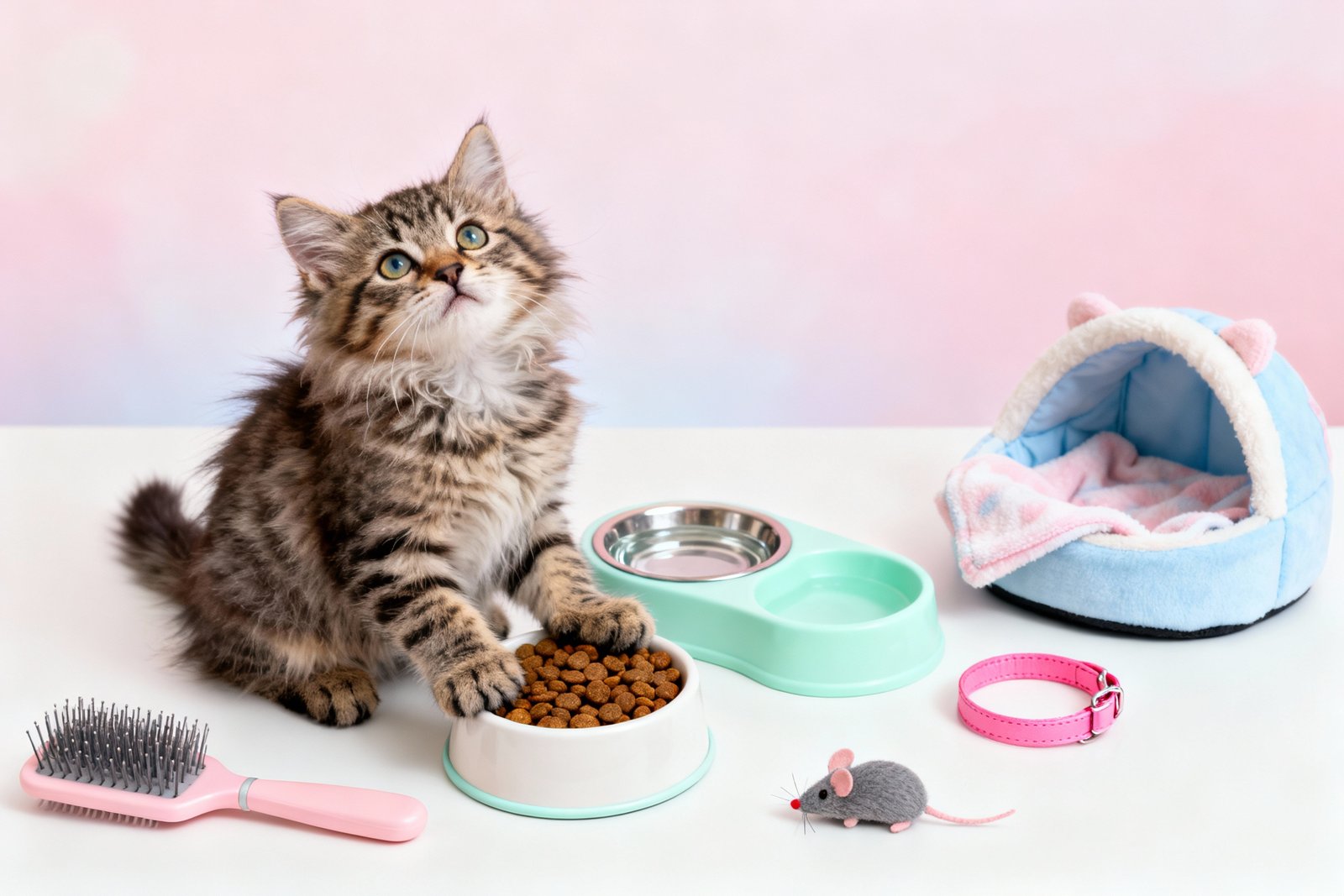
Kitten Care 101: A Complete Beginner’s Guide

You brought home a tiny purr machine—congrats and buckle up. Kittens are adorable chaos, and they don’t come with a manual (until now). This guide gives you the must-knows to keep your fluff nugget safe, healthy, and thriving.
We’ll cover food, sleep, litter, scratching, and all the “why are you biting me?” moments. Ready?
Setting Up the First 48 Hours
Your kitten needs a safe-zone, not free rein of your entire home. Pick a quiet room with a door, and set up essentials: litter box, food, water, bed, and some toys.
Let them explore that small space first, then expand their world as they gain confidence. Make the room kitten-proof. Hide wires, block nooks under appliances, and remove toxic plants. You’d be amazed where a two-pound fuzzball can squeeze.
The kitten essentials checklist

- Litter box: Low-sided, unscented litter, placed far from food.
- Food and water: Shallow bowls or a slow-water fountain.
- Bed: Soft, washable, and slightly enclosed for security.
- Scratching options: Vertical post and horizontal mat.
- Toys: Wand toys, crinkle balls, puzzle feeders—rotate to keep it fresh.
Feeding Your Mini Lion

Kittens grow fast, which means they eat like tiny athletes. Choose a high-quality kitten food labeled “complete and balanced.” You can go wet, dry, or both—IMO wet food helps with hydration and keeps them interested. How much and how often? Most kittens do best with 3–4 small meals daily.
Check the feeding chart on your food, then adjust for body condition. You should feel ribs under a thin layer of padding, not a jelly belly.
Wet vs. dry: the quick take
- Wet food: Hydrating, tasty, easier on tiny teeth.
- Dry food: Convenient, good for grazing, but watch portions.
- Combo: Usually the crowd-pleaser and easiest to manage.
Absolutely avoid: Cow’s milk (tummy upset), garlic/onion, chocolate, grapes/raisins, and anything labeled “dog” (not the same nutrients). FYI, treats should be under 10% of daily calories.
Litter Box Success Without Tears
Cats like privacy, quiet, and cleanliness—same as you.
Place the litter box away from loud appliances and walkways. One box per kitten plus one extra works well if your space allows. Training is simple: After meals and naps, set your kitten in the box. If they scratch or dig, praise and back away.
Scoop daily and fully change litter weekly—your nose will thank you.
Common litter problems (and fixes)
- Accidents near the box: Box might feel unsafe or too dirty. Clean more, move location, or try a lower entry.
- Refusing litter: Switch to unscented, finer-grain litter. Many kittens hate perfume and big pellets.
- Sudden accidents: Could be stress or a health issue.If it continues, call your vet.
Sleep, Play, Repeat
Your kitten will nap hard, then zoom like a tiny comet. That’s normal. Plan two or three intentional play sessions daily with wand toys—think 10–15 minutes each. Why play matters: It burns energy, reduces “midnight zoomies,” and teaches bite control.
End each session with a tiny snack to mimic hunt-eat-groom-sleep. Yes, we’re biohacking your cat.
Best toys (and what to skip)

- Do: Wand toys, soft balls, kicker toys with catnip, treat puzzles.
- Maybe: Laser pointers—but end with a physical toy to “catch.”
- Skip: Loose string, hair ties, ribbon—swallowing hazard.
Health Basics: Vet Visits and Vaccines

Book a vet appointment within a week of adoption. Bring any records you have.
Your vet will check for parasites, ear mites, and overall health, and start a vaccine schedule. Typical kitten care timeline (general guide):
- 6–8 weeks: First vaccines (FVRCP), deworming, fecal test.
- 10–12 weeks: Booster shots; discuss FeLV vaccine if appropriate.
- 14–16 weeks: Final boosters; rabies depending on local laws.
- 4–6 months: Spay/neuter; microchip if not already done.
Watch for red flags: Lethargy, diarrhea, vomiting, sneezing fits, goopy eyes, not eating for 12+ hours. Kittens can crash fast—call the vet if you worry. FYI, no question is “silly” to your vet.
They’ve heard it all.
Grooming, Claws, and Your Furniture’s Survival

Kittens don’t need spa days, but they do need some routine. Start early so they learn that handling equals treats and praise. Weekly quick-groom:
- Brushing: Short coats once a week; long coats several times weekly.
- Nail trims: Every 1–2 weeks—tiny snips off the tips. Reward immediately.
- Ears and eyes: Wipe gently with a damp cotton pad if you see gunk.
- Baths: Rarely needed unless they get into something gross.
Scratching: redirect, don’t scold
Cats scratch to stretch, mark, and maintain nails.
Put scratching posts near nap spots and next to any “forbidden” furniture. Sprinkle catnip or use a pheromone spray to make posts more inviting. Cover the couch corner with a protector while they learn.
Be consistent—your sofa will live.
Bitey Gremlin Mode (Aka Socialization and Training)
Kittens learn bite inhibition from siblings and from you. If they chomp your hand, freeze and say “ow,” then stop play for a few seconds. Offer a toy instead.
Repeat like a broken record. Socialization to sounds and people:
- Introduce one new thing at a time: doorbells, vacuums, visitors, carriers.
- Use short sessions with treats and calm praise—keep it chill.
- Handle paws, ears, mouth daily for a few seconds so vet visits don’t feel scary.
Littermates vs. solo kittens
Two kittens often play each other tired and learn manners faster. If your lifestyle allows, a pair can reduce boredom and destructive behavior. IMO, two kittens is the ultimate chaos… but the good kind.
Safety: Your Home Through Kitten Eyes
They will climb, chew, and launch themselves off furniture like parkour champions.
Build a safe playground rather than saying “no” all day. Kitten-proofing hits:
- Secure windows and screens; cover balcony gaps.
- Store cleaners and medications out of reach.
- Tie up cords; use cord protectors for chargers and blinds.
- Skip candles and hot stovetops when they’re roaming.
- Check washers/dryers before use—kittens love warm, dark spots.
Indoor vs. outdoor
Indoor cats live longer, period. If you want adventure, try a harness and leash or a secure catio. Start harness training early with short, positive sessions.
FAQ
How much should my kitten weigh, and how fast will they grow?
Most kittens gain about 3–4 ounces per week.
By four months, many hit 4–5 pounds, but breeds vary. Track weight weekly with a baby scale. If growth stalls or jumps dramatically, ask your vet.
When should I switch from kitten to adult food?
Most kittens switch around 12 months, or 18 months for larger breeds like Maine Coons.
Transition over 7–10 days by mixing increasing amounts of the new food. Watch stool quality and appetite during the switch.
Why does my kitten attack my feet at 3 a.m.?
Because feet are obviously prey. Schedule an evening play session and a small snack before bed.
Close the bedroom door if needed and provide a warm bed and a nightlight in their space.
Do kittens need supplements?
Not if you feed a complete, balanced kitten diet. Extra calcium or random supplements can cause harm. The only supplement I green-light without hesitation is a vet-approved probiotic during diet changes or after deworming, if your vet agrees.
Can I train my kitten to enjoy the carrier?
Yes, and you should.
Leave the carrier out like furniture, add a soft blanket, and toss treats inside daily. Do short practice drives paired with rewards so vet trips don’t equal doom.
What about fleas and deworming?
Your vet will recommend safe, kitten-specific preventives. Never use dog products on cats.
Deworming usually happens in a series early on; bring a stool sample to your first visit for a parasite check.
Conclusion
Raising a kitten feels like juggling glitter—messy, sparkly, and totally worth it. Set up a safe space, feed well, play daily, and keep the vet on speed dial. Do that, and you’ll trade chaos for cuddles in no time.
Enjoy the tiny toe beans while they last—they grow up fast, and yes, you’ll miss the squeaky meow.