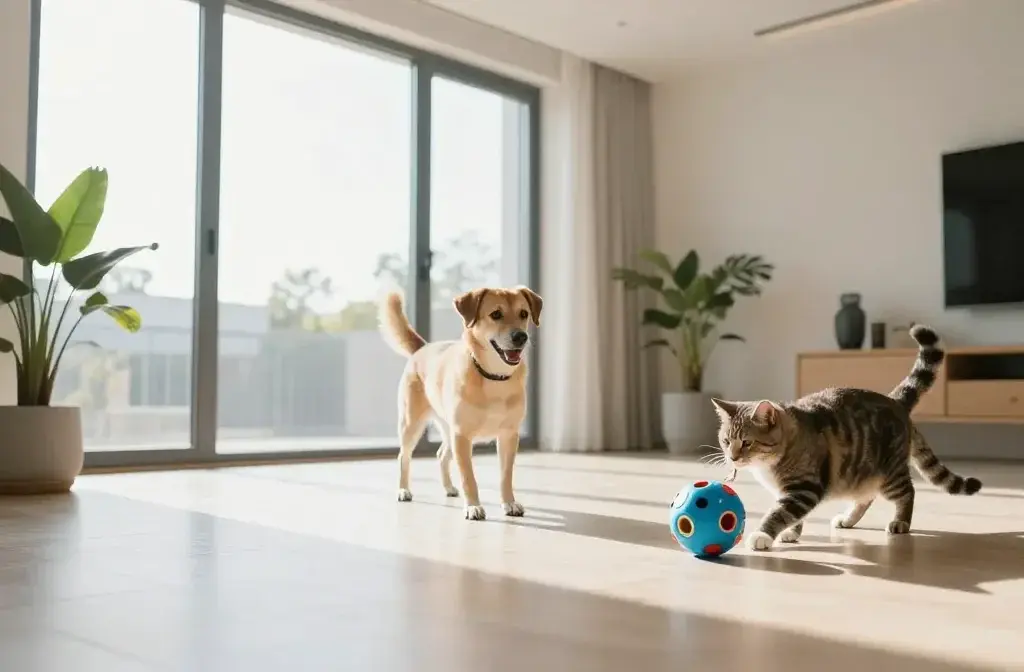
You love your pet like a tiny furry overlord, but your boss loves you at your desk. So how do you keep your best bud entertained while you’re stuck in meetings? Simple: interactive toys that do the heavy lifting when you can’t. Let’s set your pet up with solo play that actually works—and gives you fewer “boredom crimes” to come home to.
What Makes a Toy Great for Solo Play?
Not all toys pass the “I can handle myself” test. The best solo toys check a few boxes:
- Automated movement or puzzles: They react, move, or offer variable challenges without you.
- Safe and durable: No small parts, no choking hazards, and built like a tank (or close).
- Mental + physical engagement: Burn brain energy and zoom energy at once.
- Low maintenance: Easy to clean, long battery life, and not a pain to set up.
FYI: You don’t need a toy with five apps and a PhD in firmware updates. You need something your pet will actually use.
Top Picks for Dogs Who Play Solo
Dogs get bored easily, then immediately become interior decorators. These picks help.
Smart Ball Launchers
These machines fire tennis balls on their own and keep fetch-obsessed pups busy.
- Great for: High-energy dogs who live for fetch.
- Why it works: Movement + unpredictability = happy dog brain.
- Look for: Adjustable launch distance, auto shutoff, and a hopper that’s easy to load.
Pro tip: Start supervised. Some dogs try to eat the launcher. You know who you are, Labradors.
Treat-Dispensing Puzzle Toys
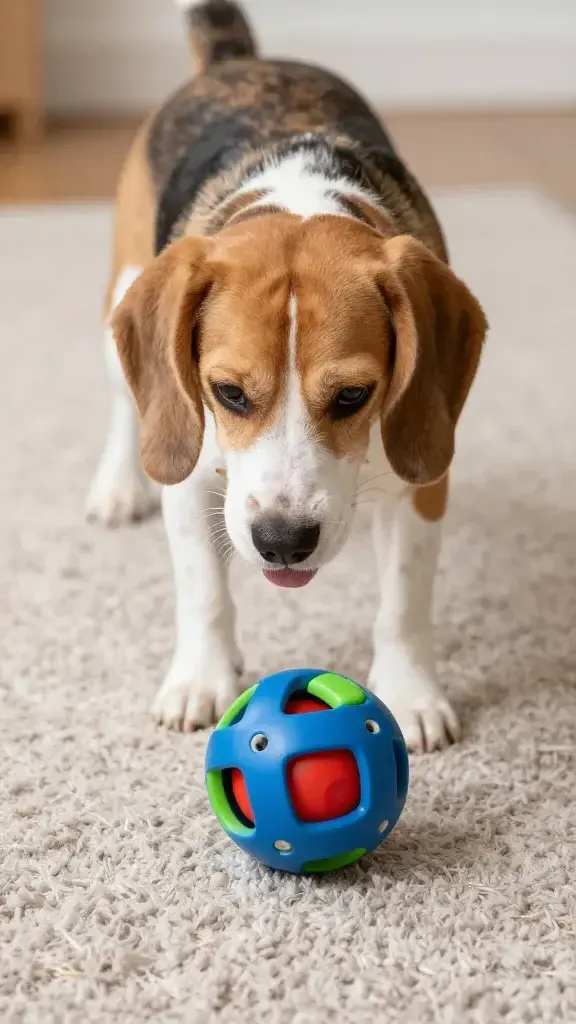
Roll, nudge, poke—get snacks. It’s Dog Netflix.
- Great for: Food-motivated pups (so… most of them).
- Why it works: Small wins keep them engaged longer than a basic chew.
- Look for: Adjustable difficulty, dishwasher-safe parts, and quiet operation.
Interactive Chew Toys with Flavors
Think durable rubber or nylon with built-in flavor or refillable treat grooves.
- Great for: Chewers who need an outlet.
- Why it works: Satisfies chewing instincts and keeps furniture alive.
- Look for: Vet-approved materials, size-appropriate toughness.
Motion-Activated Toys
A toy that wiggles, vibrates, or “runs away” when booped.
- Great for: Curious, playful dogs who chase anything that moves.
- Why it works: Triggers the chase instinct without you tossing anything.
- Look for: Replaceable batteries, safe textures, and quiet motors.
Best Solo Toys for Cats (Because They’re Born Freelancers)
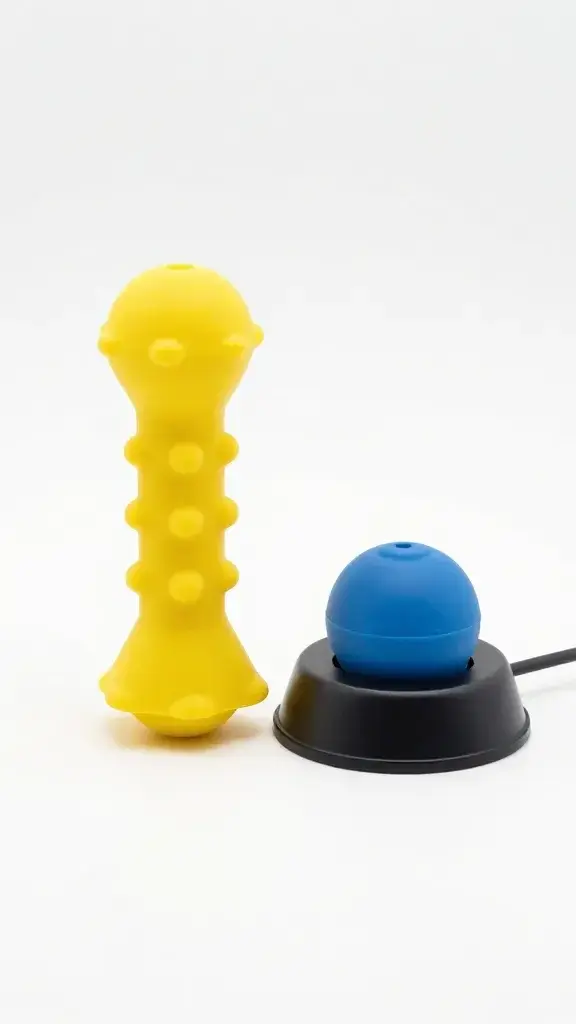
Cats pretend they don’t need you. Give them toys that respect the vibe.
Automatic Laser Toys
Lasers pulse, bounce, and change patterns so you don’t have to be the human tripod.
- Great for: Most cats who chase dots like it’s their side hustle.
- Why it works: Unpredictability = stimulation.
- Look for: Timers, safe angles (no eye-level beams), and quiet motors.
Robotic “Prey” Toys
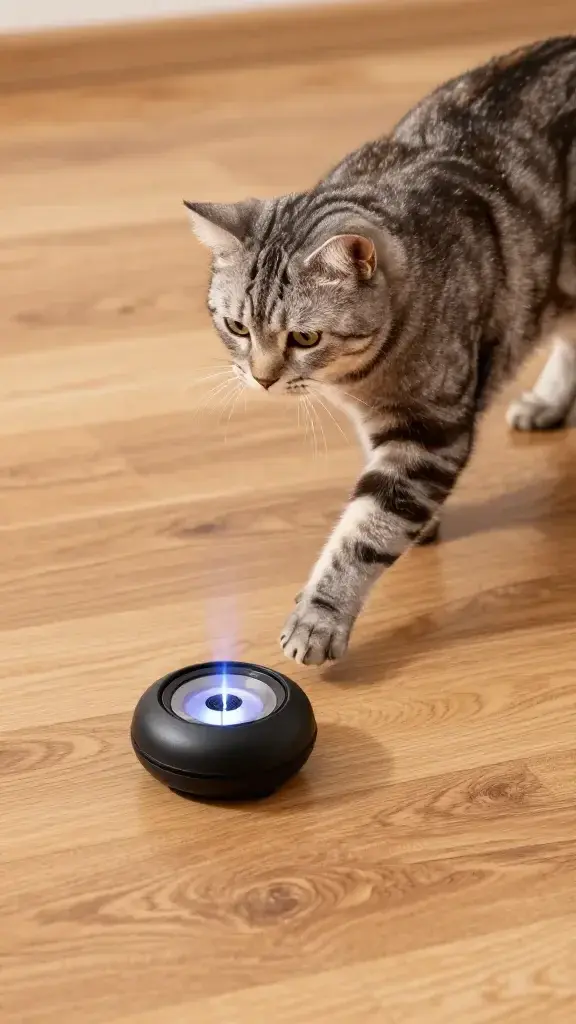
Tiny bots skitter around like confused bugs—cats go feral (in a good way).
- Great for: Hunters who stalk anything that twitches.
- Why it works: Mimics prey with random movement and pauses.
- Look for: Auto shutoff, obstacle navigation, replaceable tails/feathers.
Food Puzzles and Slow Feeders
Make them work a little for treats or kibbles. Keeps brains busy and binge-eating down.
- Great for: Food-motivated cats or grazers who need pacing.
- Why it works: Mental challenge + reward loop.
- Look for: Stable bases, easy-to-wash parts, non-slip bottoms.
Track Toys with Rolling Balls
Circular tracks with trapped balls are cat Reddit—endless scrolling, no commitment.
- Great for: Kittens and play-curious adults.
- Why it works: Self-rewarding swats and spins keep going.
- Look for: Sturdy build, replaceable balls, scratcher combo tops.
Budget-Friendly DIY Options That Actually Work
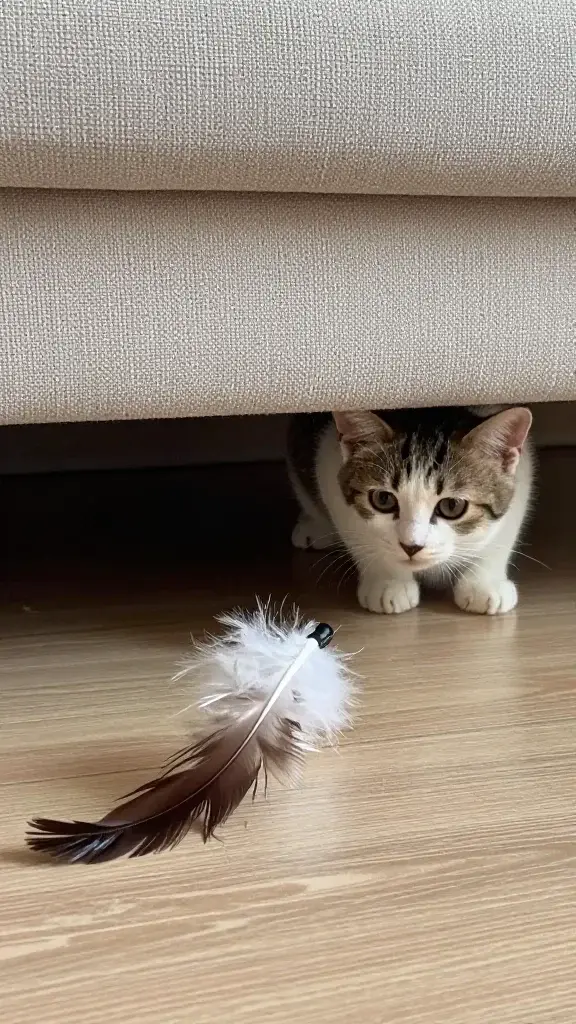
You don’t need to drop big cash to fight boredom.
- Muffin tin puzzle: Put treats in cups, cover with tennis balls. Chaos ensues.
- Cardboard box “foraging”: Crumple paper with treats tucked inside; cut small paw holes for cats.
- Frozen lick bowls: Freeze broth or wet food with kibble sprinkles in a shallow dish for dogs.
- Paper bag safari (cats): Toss a toy inside a paper bag. Crinkly mystery = A+ enrichment.
IMO, DIY shines when you rotate often. Novelty beats price tag.
Safety First: Set It and Forget It… Mostly
You want hands-off, not brain-off. Keep it safe with a few rules:
- Match toy to size and chew style: No tiny toys for big chewers. Ever.
- Start supervised: Watch the first few sessions to spot bad habits.
- Timers and auto shutoff: Prevent overstimulation and battery drains.
- Durability check: Toss anything cracked, frayed, or leaking filler.
- Battery safety: Ensure compartments lock. No “surprise snacks.”
How to Build a Foolproof Solo-Play Routine
Want your pet to actually use the toys? Build a rhythm.
- Morning energy dump: 10–15 minutes of play or a short walk. Then introduce the solo toy.
- Rotate toys: Keep 2–3 in circulation; swap weekly so they feel “new.”
- Use feeding time: Pair breakfast with a puzzle to stretch engagement.
- Midday automation: Schedule auto toys to run for short bursts.
- Evening wind-down: Calm play or licking mats to settle the zoomies.
FYI: Boredom often comes from predictability. Change the game, keep the peace.
Feature Checklist Before You Buy
When comparing products, prioritize:
- Noise level: Quiet toys = fewer stressed pets and neighbors.
- Cleaning ease: Removable parts, dishwasher-safe where possible.
- Power: Long battery life or USB recharge beats frequent swaps.
- Materials: BPA-free plastics, natural rubber, or food-grade silicone.
- Difficulty settings: Start easy, level up to sustain interest.
IMO, I’ll take “boring-looking but reliable” over flashy junk every time.
FAQ
How long can I safely leave my pet with an interactive toy?
Aim for short, timed sessions—15 to 30 minutes—especially for motorized toys. Food puzzles can last longer if they don’t cause frustration. Use timers and check wear regularly.
What if my pet ignores the toy?
Make it easier and more rewarding. Use higher-value treats, start with you demonstrating, or play together briefly to “seed” interest. Rotate it out for a few days, then reintroduce like it’s brand new.
Are lasers safe for cats and dogs?
Yes, with caveats. Keep beams off eyes and end each session with a tangible toy or treat so your pet doesn’t feel perpetually “unsuccessful.” That reduces stress and obsession.
Can food-dispensing toys cause weight gain?
Not if you budget calories. Measure your pet’s daily food and allocate part of it to the toy. Choose low-cal treats or use regular kibble to keep things balanced.
What’s the best option for heavy chewers?
Choose tough rubber or nylon chews labeled for power chewers and avoid plush. Skip any toy with glued-on bits. For mental work, pair a durable lick mat with frozen, pet-safe spreads.
Do cats really need variety?
Absolutely. Cats habituate fast. Rotate textures (feathers, crinkle, rubber), move toy locations, and vary motion patterns to keep interest high.
Conclusion
You can’t clone yourself (rude), but you can give your pet toys that think and move on their own. Pick a couple standouts, rotate them smartly, and let automation handle the midday madness. With the right mix of puzzles, motion, and chewables, you’ll come home to a happier pet—and fewer redecorating surprises.