
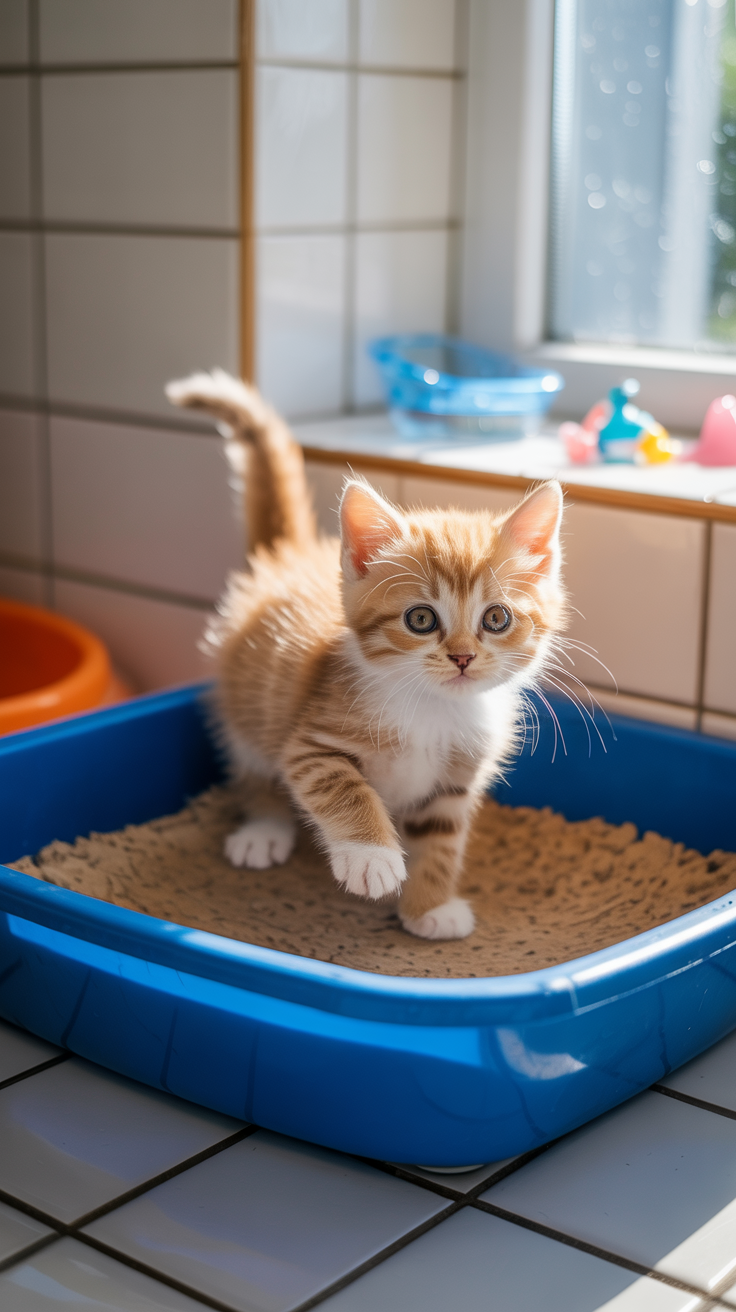
If your tiny fur gremlin keeps treating your rug like a sandbox, take a breath. Kittens learn fast—faster than your coffee gets cold. You just need the right setup, consistent cues, and a smidge of patience.
Give me a few minutes, and I’ll show you how to litter train your kitten quickly without losing your sanity (or your carpet).
Set Up the Perfect Litter Station
Your kitten won’t use a box that feels like a haunted cave. Make it easy and inviting.
- Choose the right box: Low sides (2–3 inches) for easy access. Covered boxes look cool, but most kittens prefer open, airy spaces.
- Pick a soft, unscented clumping litter: Their tiny paws hate sharp crystals.Strong fragrances can repel them.
- Box-to-kitten ratio: One kitten? Get two boxes. Multi-level home?One box per floor. Convenience matters.
- Location, location, location: Quiet, accessible, and away from food and water. No loud laundry rooms or chaotic hallways.
Placement Tips That Actually Work
- Keep boxes in the kitten’s core territory where they already hang out.
- Use a litter mat to catch the sprinkles and keep cleaning simple.
- If the kitten naps in one room a lot, put a box nearby.Short distance = fewer accidents.
Teach the Routine (This Is the Fast Track)
Kittens use the litter box instinctively, but they need reminders. You’re basically their GPS.
- Put them in the box after wake-ups, meals, and play sessions. That’s when the urge hits.
- Guide, don’t force: Gently place them in the box and scratch the litter with your fingers.Monkey see, monkey do.
- Repeat consistently for 2–3 days. Most kittens get it fast if you stick to the rhythm.
Crate or Room Confinement (Short-Term)
If accidents keep happening, confine your kitten to a small room with their box, bed, food, and toys for a day or two. Smaller space = fewer mistakes. It’s not punishment—it’s a shortcut.
Keep It Clean (But Not Too Clean)
Cats love clean bathrooms.
Same here.
- Scoop twice daily. Yes, twice. You’d bail on a gross restroom too.
- Top off the litter to 2–3 inches deep. Too shallow = digging frustration.
- Full change every 1–2 weeks with a mild, unscented cleaner.Avoid bleach/ammonia fumes.
FYI: Don’t Switch Litter Suddenly
If your kitten uses the box, keep the brand and texture consistent. Change one thing at a time if you must (IMO, wait at least two weeks before experimenting).
Handle Accidents the Smart Way
Accidents happen. Don’t scold—ever.
Punishment just teaches your kitten to hide… and pee in secret.
- Blot and clean with an enzymatic cleaner. It breaks down cat urine proteins, so they won’t re-mark the same spot.
- Block repeat zones with a food bowl, bed, or double-sided tape. Cats don’t potty where they eat or sleep.
- Redirect calmly: Catch them mid-squat? Scoop and place them in the litter box, then praise when they finish there.
Pro Tip: Use the “Scent Trail” Trick
If your kitten keeps missing, place a tiny bit of soiled litter in the correct box.
That scent says “bathroom goes here.” It works surprisingly well.
Dial In Comfort and Confidence
Stressed kitten = messy kitten. Set them up emotionally too.
- Keep the box easy to reach at night. Close doors = tragedy on your carpet.
- Give them safe spaces: A cozy bed, a hidey cube, and a predictable routine reduce stress.
- Play more. Tired kittens sleep instead of mischief-ing. Post-play potty breaks are magical.
Food and Water Placement
Keep dishes several feet from any litter box.
Cats prefer a clean dining area. You would too, IMO.
Common Mistakes That Slow Everything Down
Let’s avoid the potholes.
- Box too big/tall for a tiny kitten. Start small, upgrade later.
- Strong-scented litter or deodorizing sprays.Their noses, your regret.
- Hiding the box in a loud, scary, or faraway room.
- Changing too many variables at once. Keep litter and box consistent while training.
- Not enough boxes in multi-pet or multi-floor homes.
- Skipping the scoop routine. If it smells off, they’ll bail.
What If They Still Won’t Use the Box?
If you’ve nailed the basics and still struggle, troubleshoot like a detective.
- Try a different texture. Some kittens love ultra-fine clumping litter. Others prefer non-clumping clay.
- Lower the entry even more. Very young or tiny kittens need super-low sides or a shallow tray.
- Provide multiple options: Two types of litter in two boxes side-by-side.Let them choose.
- Rule out medical issues. Frequent peeing, straining, or avoiding the box? Call the vet.
- Separate from other pets during training. Intimidating older cats can block box access.
Transitioning From Breeder/Shelter Litter
Some kittens come home with pellet litter habits.
Mix 75% old litter with 25% new, then shift ratios over a week. Gentle transitions keep the peace (and your floors clean).
FAQs
How fast can I litter train a kitten?
Many kittens learn in 2–3 days with consistent guidance. Some take a week or two.
Stick to the routine—post-nap, post-meal, post-play—and keep the setup simple and accessible.
Should I use training sprays or attractants?
A litter attractant can help, especially with stubborn kittens. Sprinkle a bit in the box and see if interest improves. Don’t rely on it alone—good placement and cleanliness do most of the heavy lifting.
Can I move the litter box later?
Yes, but do it slowly.
Shift the box a few feet each day toward the new location. Sudden moves confuse kittens and cause accidents. If you must move it fast, leave a second box in the old spot for a week.
What if my kitten eats the litter?
Young kittens explore with their mouths.
If they snack on clumping litter, switch to a non-clumping, unscented variety temporarily and talk to your vet if it continues. Most kittens grow out of it quickly.
How deep should the litter be?
About 2–3 inches. Deep enough for digging and covering, shallow enough to avoid avalanche vibes.
Top it off after scooping to keep it consistent.
Do I need a lid or fancy automatic box?
Not for a kitten. Start with a simple, open, low-sided box. You can upgrade later if you want convenience.
Many cats prefer the basic setup forever, FYI.
Conclusion
Litter training a kitten doesn’t require wizardry—just smart setup, repeatable routines, and quick cleanups. Keep the box easy, the litter soft and unscented, and the vibe calm. Praise the wins, ignore the oops, and your tiny house tiger will master bathroom etiquette faster than you can say “who knocked over the plant?” You’ve got this.
And IMO, your rugs will forgive you.