
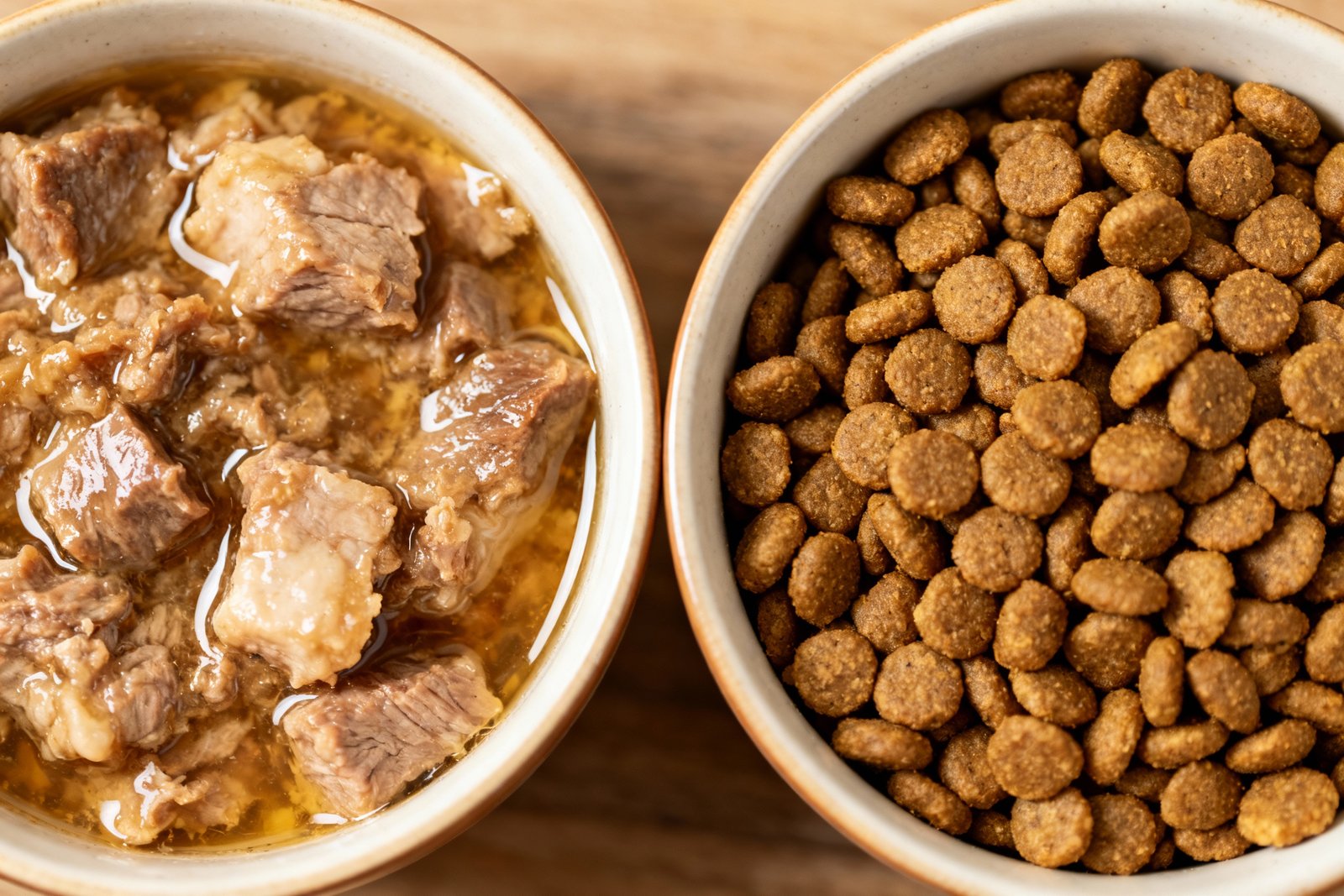
You stare at the pet food aisle like it’s a test you forgot to study for. Cans? Kibble?
Fancy pouches that sound like spa treatments? Take a breath. You don’t need a nutrition degree to figure this out—just a few key tips, some real talk, and a little trial-and-error.
Let’s help you choose between wet and dry food without summoning a spreadsheet.
What “Wet” and “Dry” Actually Mean

Wet food usually comes in cans, trays, or pouches. It’s soft, high in moisture, and smells like something your pet will inhale in 3.5 seconds. Dry food (kibble) is crunchy, shelf-stable, and easy to scoop without getting your hands gross.
Both can be complete and balanced if you choose the right formulas. Key difference: moisture. Wet food is typically 70–80% water. Dry food is around 10%.
That changes everything—from hydration to serving size.
Pros and Cons (The Honest Version)
Let’s skip the hype and get to what matters.
Why people like wet food
- Hydration boost: Great for pets that don’t drink much water (looking at you, cats).
- High palatability: Picky eaters usually say “yes, chef.”
- Easier on teeth and mouths: Helpful for seniors or pets with dental issues.
- Lower calories per bite: Volume helps with portion control during weight loss.
Wet food downsides
- Cost: Usually more expensive per calorie.
- Storage: Opened cans need refrigeration. Waste happens.
- Dental health: Doesn’t scrub teeth. You’ll need to brush or use dental chews.
Why people like dry food
- Convenience: Scoop, seal, done.Great for puzzle feeders.
- Budget-friendly: Lower cost per calorie.
- Dental benefit (sort of): Crunch can help a bit, but it’s not a toothbrush.
- Storage: Long shelf life when kept airtight.
Dry food downsides
- Less moisture: Not ideal for some cats or pets with urinary issues.
- Palatability: Some picky eaters refuse it unless bribed.
- Overfeeding risk: Calorie-dense, so portions must be measured.

Your Pet’s Health Should Drive the Decision
Different pets, different needs. Don’t pick based on the cutest bag.
- Hydration issues or urinary problems: Lean wet. It naturally boosts water intake.
- Dental disease: Either is fine, but add dental care.IMO, brushing beats relying on kibble “scrub.”
- Weight management: Wet can help because it’s filling; or use measured kibble with high fiber.
- Sensitive stomach: Either can work—focus on simple recipes, quality proteins, and slow transitions.
- Picky eaters: Start with wet or mix a little wet into dry to win them over.
- Puppies/kittens: Higher caloric needs—choose growth-formulated foods; textures may help with teething or tiny mouths.
- Seniors: Wet can be easier to chew and digest; watch protein quality for muscle maintenance.
Read the Label Like a Pro (Without a PhD)
You don’t need to decode every ingredient. Focus on the big stuff.
- Look for AAFCO/NRC statement: It should say “complete and balanced” for your pet’s life stage.
- Check the protein source: Named meats (chicken, salmon) beat vague terms (“meat by-product”). FYI, by-products aren’t evil, just… vague.
- Guaranteed analysis: For wet food, remember it’s mostly water.Compare on a dry matter basis if you’re nerdy like me.
- Calorie content (kcal/cup or per can): You need this for portion control.
- Added benefits: Omega-3s for skin/joints, probiotics for gut, joint support for seniors.
Wet vs Dry: Nutrient Myths
- Myth: “Dry food equals better protein.” Not necessarily—quality varies by brand and formula.
- Myth: “Wet food rots teeth.” Plaque forms from carbs + time. Brushing matters more than texture.
- Myth: “Grain-free is always better.” Not always. Choose based on your pet’s tolerance and vet advice.

Money, Convenience, and Your Sanity
Yes, your life matters too.
You won’t stick to a plan that’s annoying.
- Budget: Dry wins per calorie. Wet adds cost but can be used strategically (toppers, partial meals).
- Storage: Dry needs sealed containers; wet needs fridge space and covers.
- Feeding style: Free-feeding dry can lead to sneaky weight gain. Scheduled meals keep things tidy.
- Odor factor: Wet smells stronger.Your pet loves it. You? Maybe not.
Team Hybrid: You Can Use Both
You don’t have to pick one forever.
Plenty of pets thrive on a combo.
Easy combo strategies
- Wet topper: Add a spoonful of wet to dry for flavor and moisture.
- Half-and-half meals: Morning wet, evening dry (or vice versa) to balance cost and hydration.
- Puzzle play: Put dry in slow feeders and save wet for medication or special treats.
Tip: Introduce changes slowly over 5–7 days to avoid tummy drama. Mix increasing amounts of the new food daily.
Portions: Don’t Guess, Measure
The scoop you “eyeball” is lying to you. Use the calorie info on the package and your pet’s weight goal to calculate portions.
Then measure with an actual cup or a scale. Recheck every few weeks—weight creeps happen fast.
How to adjust
- Too much begging? Add fiber or switch part of the meal to wet for volume.
- Soft stools? Slow the transition, pick a simpler formula, or add a probiotic (with vet approval).
- Weight changes? Tweak calories by 5–10% at a time. Not dramatic swings.
Practical Scenarios (Because Real Life)
- Indoor cat that barely drinks: Lean wet, or do a combo.Consider a water fountain too.
- Large-breed dog owner on a budget: Quality dry as the base, wet as a topper for taste and variety.
- Senior pet with missing teeth: Wet or moistened dry. Texture matters more than brand wars.
- Picky diva: Try wet first, or rotate flavors within the same brand line. Warm it slightly to boost aroma.
FAQ
Is wet food healthier than dry food?
Not by default.
Both can be complete and balanced. Wet helps with hydration and palatability; dry helps with convenience and cost. Choose based on your pet’s health, your budget, and what they actually eat without staging a protest.
Does dry food clean my pet’s teeth?
Only a little, and not enough.
Some dental kibbles have proven benefits, but nothing beats brushing. IMO, plan on dental care no matter what you feed.
Can I switch between wet and dry?
Yes, and many pets do great on a mix. Transition slowly over a week to avoid digestive upset.
Keep calories consistent when swapping formats.
How much should I feed?
Use the package’s calorie info, your pet’s weight goal, and your vet’s guidance. Start with the label’s recommendation, then adjust by 5–10% based on body condition over 2–4 weeks. Measuring cups or a kitchen scale will save you from guesswork.
Are grain-free diets better?
Not automatically.
Some pets thrive on grains; others don’t tolerate them. Talk to your vet, especially about dogs and any concerns around certain grain-free formulations. Choose results over trends, FYI.
What about raw or homemade?
That’s a bigger conversation.
If you go there, do it with a vet or nutritionist to avoid nutrient gaps and safety issues. For most people, a reputable commercial wet or dry diet is simpler and safer.
Bottom Line
You don’t need to pick a side like it’s a sports team. Wet shines for hydration and taste; dry wins on cost and convenience.
Many pets thrive on a combo that fits their health and your routine. Start with your pet’s needs, read labels for the essentials, measure portions, and tweak as you learn. Simple, doable, and everyone eats dinner on time—win.