
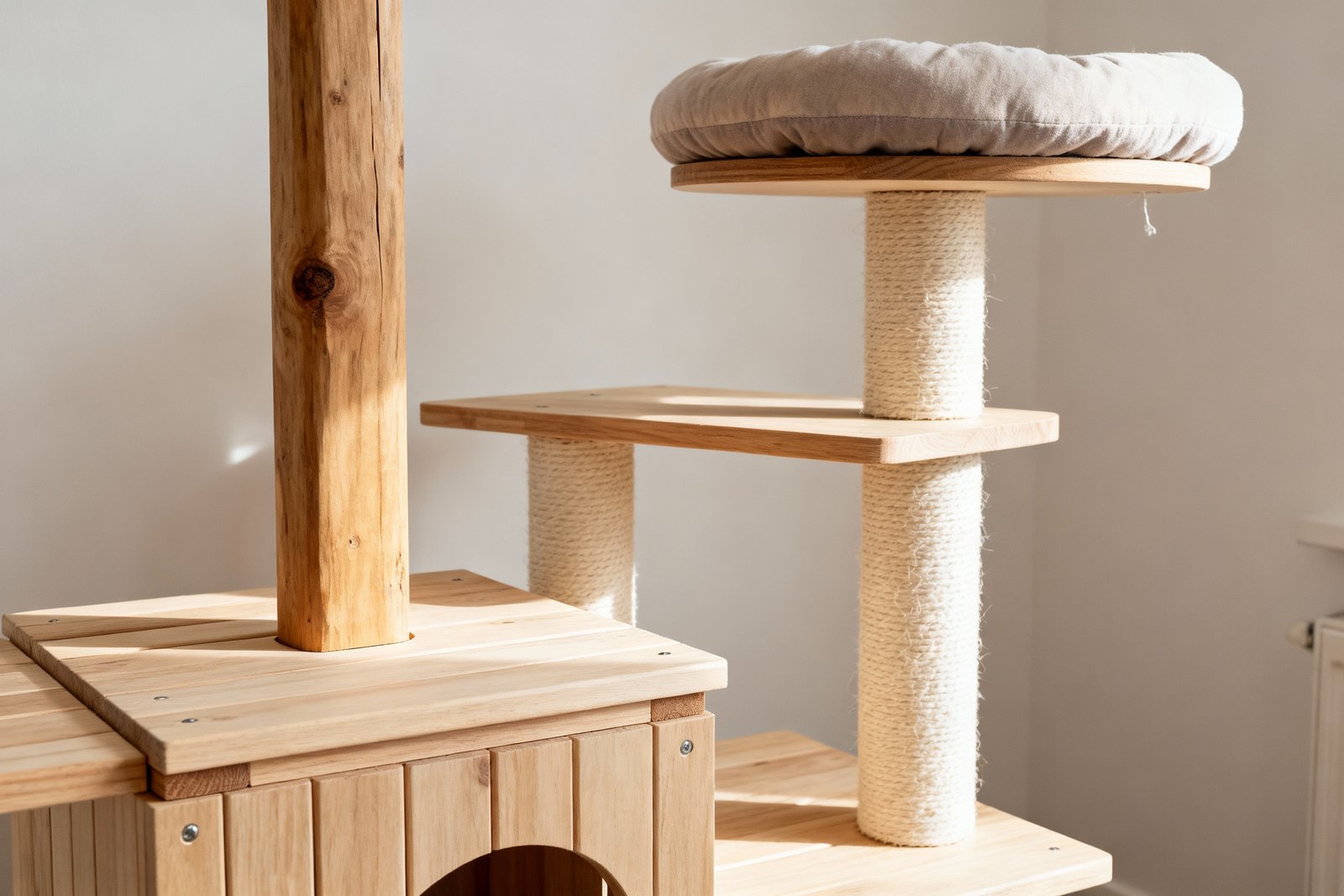
Your cat owns your couch. Let’s fix that—without torching your bank account. A DIY cat tree gives your goblin a private jungle gym and saves your furniture (and sanity).
You’ll build it with cheap materials, simple tools, and a couple of afternoons. Ready to become your cat’s favorite human? Let’s climb.
Plan Before You Saw: What Your Cat Actually Wants

Your cat doesn’t want a Pinterest-perfect sculpture.
Your cat wants height, texture, and naps. So design with that in mind.
- Height: Aim for 4–6 feet if you have the ceiling space. Cats feel safer when they can supervise your life choices.
- Multiple levels: Plan at least 3 platforms.
Stairs? Optional. Chaos?
Guaranteed.
- Scratching zones: Wrap posts with sisal rope or rough carpet. Your sofa will thank you.
- Cozy spots: Add a box or hammock for naps. Bonus points for a soft faux fur pad.
- Stability: Wide base, solid center post, anchors if needed.
Wobbly trees become decorative firewood.
Sketch It Out (Badly Is Fine)
Draw your plan with rough measurements. Think in rectangles and circles. Mark:
- Base size (24″ x 24″ minimum, 30″ x 24″ for jumbo cats)
- Post heights and positions
- Platform sizes (12″–16″ deep, 14″–20″ wide)
- Where scratching zones and ladders go
FYI, your sketch won’t win awards.
It will save you three trips back to the hardware store.
Cheap Materials That Don’t Look Cheap
Here’s the budget-friendly shopping list. Scavenge where you can. Hit discount bins.
Ask friends for leftover carpet.
- Plywood: 1/2″ or 3/4″ sheet for base and platforms. You can grab cutoffs to save cash.
- 2×2 or 4×4 posts: For vertical supports. 4×4 makes a rock-solid main trunk.
- Sisal rope (1/4″–3/8″): The scratching MVP. Cotton rope works in a pinch.
- Carpet remnants or rug pieces: Free or cheap from carpet stores.
Avoid super shaggy stuff (claw trap!).
- Upholstery staples and wood screws: 1 5/8″–2 1/2″ wood screws do most jobs.
- Brackets/L-brackets: For extra stability at joints.
- Fabric or faux fur: For cozy pads. Old blankets work too.
- Optional: PVC pipe (for lightweight posts), cardboard tube from carpet roll (free!), felt pads, wall anchor strap.
Pro tip: Ask the carpet store for empty cardboard tubes. They’re perfect for posts and usually free.

Tools You Likely Already Own
No fancy workshop required.
You can build this with basic tools.
- Drill/driver and bits
- Hand saw or circular saw (hardware store can cut pieces for you)
- Staple gun
- Measuring tape, pencil, square
- Sandpaper (120–220 grit)
- Utility knife (for carpet and rope)
- Optional: Countersink bit, stud finder, clamps
Step-by-Step: Build the Beast
You’ll build from the ground up. Literally.
1) Make a sturdy base
- Cut the base from 3/4″ plywood, 24″ x 24″ minimum. Bigger cat?
Go 30″ x 24″.
- Sand edges so you don’t donate blood to the DIY gods.
- Wrap the base in carpet. Pull tight. Staple every 2–3 inches on the underside.
- Stick felt pads at corners if the floor needs love.
2) Build and wrap the main post
- Cut a 4×4 post to your target height (4–6 feet).
Sand splinters.
- Pre-drill through the base and screw the post from underneath with 3–4 long wood screws. Add L-brackets for extra strength.
- Wrap the bottom 2–3 feet with sisal: start with a staple at the base, then pull tight and spiral up, stapling every few rows. For a cleaner look, use hot glue every few inches.
3) Add platforms
- Cut platforms: 14″ x 16″ works great.
Round corners with a saw or sandpaper for a softer look.
- Cover platforms with carpet or fabric. Staple underneath.
- Attach the first platform about 18–24″ from the base. Pre-drill through the platform into the post.
Use 2–3 screws and add a hidden corner bracket below for security.
- Stagger the next platforms around the post so the cat can hop between them.
4) Add secondary posts and a top perch
- Install one or two smaller posts (2x2s or carpet tubes) to support higher platforms.
- Secure posts to the base with screws and brackets. Wrap with sisal or carpet.
- Create a top perch: a 14–16″ circular or square platform with a soft pad. Your cat will treat it like a throne, IMO.
5) Create a cozy hideout
- Use a small wooden crate, old nightstand drawer, or simple plywood box.
- Carpet the interior floor and add a soft cushion.
Darkness equals nap magic.
- Mount the hideout on a mid-level platform or directly onto a post with brackets.
6) Tidy the edges and test stability
- Run your hands everywhere. If you find a staple pointy enough to murder socks, pull and reset it.
- Shake the tree firmly. If it wobbles, add more brackets or a wider base.
Wall-anchor if your cat parkours like a tiny ninja.
Rule of paw: If you’d climb it after two coffees, it’s stable enough for the cat.

Budget Hacks That Actually Work
You can build a great tree for the price of a takeout order if you source smart.
- Scavenge materials: Leftover plywood, carpet offcuts, old shelves—people give this stuff away.
- Choose sisal by weight: 200–300 feet usually wraps one large post. Buy a big spool for better value.
- Use paint instead of carpet on areas your cat won’t scratch: Then add small carpet tiles only where needed.
- Repurpose furniture: Bookshelves with added perches become instant cat condos.
- Skip pricey hammocks: Screw two eye bolts under a platform and hang an old tote bag or fabric sling. Instant hammock.
Design Ideas Your Cat Will Brag About
Want bonus points?
Try a couple of these simple upgrades.
- Ramp or ladder: Great for kittens or seniors. Cover a 6–8″ wide board with carpet and hinge it between levels.
- Dangly toy station: Eye screw + elastic + feather toy = entertainment. Keep it replaceable.
- Window perch extension: Angle a platform toward the window for bird TV.
Ratings: 10/10.
- Leafy jungle vibe: Wrap posts with faux vines (securely). Your living room becomes Cat Amazon.
- Detachable pads: Velcro fabric pads to platforms for easy washing. Your nose will thank you.
Safety First, Because You Like Your Security Deposit
Look, cats test physics.
Make the tree tougher than they are.
- Pre-drill every screw hole to avoid splits, especially on 2x2s.
- Use long screws into posts (2 1/2″ where possible). Short screws loosen, then chaos.
- Anchor tall trees to a wall stud with a furniture strap if your cat goes Godzilla mode.
- Avoid loose strings and small staples where paws can pry them out.
- Check monthly for wobbles and re-tighten screws. Maintenance > emergency vet visits.
FAQ
How much does a DIY cat tree cost?
You can build a solid mid-size tree for $30–$70 if you scavenge materials.
Expect plywood and sisal to be the biggest costs. If you buy everything new, plan on $80–$120, which still beats most store-bought options, FYI.
Is sisal rope or carpet better for scratching posts?
Both work. Sisal rope gives great texture and lasts longer. Carpet looks cozy but can teach some cats to attack your rugs. Try a mix: rope on the main post, carpet on a side post.
How do I clean a cat tree?
Vacuum weekly and lint-roll the platforms.
Spot-clean with a pet-safe cleaner. If you used removable pads, wash them monthly. Replace sisal when it frays into fluff—cheap and easy refresh.
What size should the platforms be?
Most cats lounge nicely on 14″ x 16″.
Big chonkers appreciate 16″ x 20″. Keep depth at least 12″ so they feel secure. Round the corners to save shins and keep it cute.
Can I build one without power tools?
Yes, with a little planning.
Have the store cut plywood and posts to your measurements. Use a manual screwdriver (or borrow a drill). A heavy-duty staple gun handles the fabric work.
It takes longer, but totally doable, IMO.
How do I introduce my cat to the new tree?
Place it near a window or their favorite nap zone. Sprinkle catnip, add a blanket that smells like them, and play with wand toys on the platforms. Don’t force it—cats pretend they hate new things until they don’t.
Wrap-Up: Your Cat’s New Favorite Altitude
You just built a cat empire without emptying your wallet.
The tree looks good, your furniture sighs in relief, and your cat now judges you from six feet up. Keep an eye on screws, refresh the sisal when needed, and tweak the design as you learn what your furry tyrant loves most. Now step back and admire—then snap a photo, because the internet needs more cats on thrones.