You could keep buying those adorable (and pricey) little cat treats in crinkly bags… or you could make your own in less time than it takes your cat to ignore you and nap on your laptop. Homemade cat treats taste fresher, cost less, and let you control every ingredient. Bonus: your cat will act like you’re a Michelin-star chef, which is the kind of validation we all need.
Why Make Treats at Home?

Homemade treats give you control.
You skip fillers, excess salt, and mystery preservatives. You pick simple, cat-safe ingredients and keep it clean. You also score major flexibility.
Got a chicken-obsessed feline? Use chicken. Tuna fiend?
Go fish. You can tailor treats to your cat’s preferences and sensitivities, which is handy if they get picky or have a sensitive tummy. And honestly, it’s fun. You get a tiny culinary project, and your cat gets to supervise like a tiny furry Gordon Ramsay.
Everybody wins.
Ingredients Cats Actually Want
Cats crave protein first. When in doubt, choose animal-based ingredients and keep the list short. Here’s a quick cheat sheet:
- Proteins: Canned tuna in water, salmon, sardines, cooked chicken, turkey, or beef liver (sparingly), eggs.
- Binders: Egg, a little oat flour or rice flour, canned pumpkin (plain), pureed sweet potato.
- Flavor boosters: A sprinkle of catnip, bonito flakes, a touch of parmesan (optional), or a smidge of tuna water.
- Fats: A drip of salmon oil or olive oil helps texture and shine.Don’t overdo it.
Avoid: Onion, garlic, chives, raisins/grapes, chocolate, xylitol, alcohol, excess salt, and lots of dairy. FYI, most cats don’t digest lactose well, so keep cheese minimal.

Recipe 1: Three-Ingredient Tuna Nibbles
Simple, fast, and basically irresistible. Your cat might propose marriage.
- Ingredients:
- 1 can tuna in water, drained
- 1 egg
- 3–4 tablespoons oat flour (or rice flour)
- Instructions:
- Preheat oven to 325°F (165°C).Line a baking sheet with parchment.
- Blend tuna and egg until smooth. Stir in flour until you get a thick paste.
- Spoon 1/2 teaspoon mounds or pipe tiny dots for bite-sized pieces.
- Bake 12–15 minutes until set and lightly golden. Cool completely.
Storage: Refrigerate up to 5 days or freeze up to 2 months.
Keep portions small; these pack flavor.
Make It Fancy
Add 1 teaspoon finely chopped catnip or a pinch of bonito flakes to the batter. Cats call this “umami,” IMO.
Recipe 2: Chicken Crunch Bites
For the poultry-obsessed feline who treats tuna like a suggestion.
- Ingredients:
- 1 cup cooked chicken breast, finely chopped or shredded
- 1 egg
- 2–3 tablespoons chicken broth (low sodium)
- 1/2 cup oat flour (add more if needed)
- Instructions:
- Mix chicken, egg, and 2 tablespoons broth.
- Stir in flour until the mixture forms a scoopable dough. Add a touch more broth if dry.
- Roll into pea-sized balls and flatten slightly.
- Bake at 325°F (165°C) for 15–18 minutes until firm and dry at the edges.
Crunch Factor Tip
Turn off the oven and let treats sit inside for 10 minutes.
They’ll dry a bit more and get crunchier without burning.

Recipe 3: Salmon “Softie” Squares
Perfect for older cats or those with dental drama. Soft, fragrant, and yes, a little stinky—but worth it.
- Ingredients:
- 1 can salmon, drained
- 1 egg
- 2 tablespoons plain canned pumpkin
- 1/3–1/2 cup rice flour
- Optional: 1 teaspoon salmon oil
- Instructions:
- Blend salmon, egg, pumpkin, and oil (if using) until smooth.
- Stir in flour until it becomes a thick batter.
- Spread in a thin layer on a parchment-lined pan, about 1/4 inch thick.
- Bake at 325°F (165°C) for 15–20 minutes until set. Cool, then cut into tiny squares.
Texture tweak: Bake longer for firmer squares, shorter for softer ones.
Cats have opinions. You’ll learn them.
No-Bake Options (Because Sometimes We’re Lazy)
Short on time? Try these minimal-effort, maximum-reward ideas.
- Freeze-dried magic: Rehydrate freeze-dried chicken or salmon with warm water, then reform into tiny bites and refreeze for 30 minutes.Instant “homemade.”
- Tuna pops: Mix tuna water with a little canned pumpkin and water, pour into mini silicone molds, and freeze. Summer treat, zero effort.
- Egg scramble: Scramble one egg with a splash of water (no salt or butter). Cook, cool, chop into bits.Done.
Portion Control, Friend
Treats should stay under 10% of your cat’s daily calories. That’s like 5–10 small bites for most cats. Yes, they’ll tell you that’s not enough.
Stand strong.
Cat-Safe Flavor Boosters
Want your treats to go from “meh” to “me-wow”? Add smart extras.
- Catnip or silvervine: Stir into dough or sprinkle on finished treats.
- Bonito flakes: Mix into batter or use as a crunchy coating.
- Parmesan: A tiny pinch adds savory kick. Keep it minimal.
- Broth cubes: Freeze low-sodium broth in an ice tray.Melt a cube to replace water in any recipe for extra flavor.
What Not to Add
Skip salt, onion/garlic powders, and sweeteners. Xylitol is toxic to pets, even in tiny amounts. If a label says “sugar-free,” be suspicious.
Texture and Shape Tips
Cats can be weird about texture. (Relatable.) Dial it in with these tweaks:
- Crunchier: Use less moisture, flatten pieces thin, and bake low-and-slow, then let them dry in the warm oven.
- Softer: Add pumpkin or a splash of broth, and bake just until set.
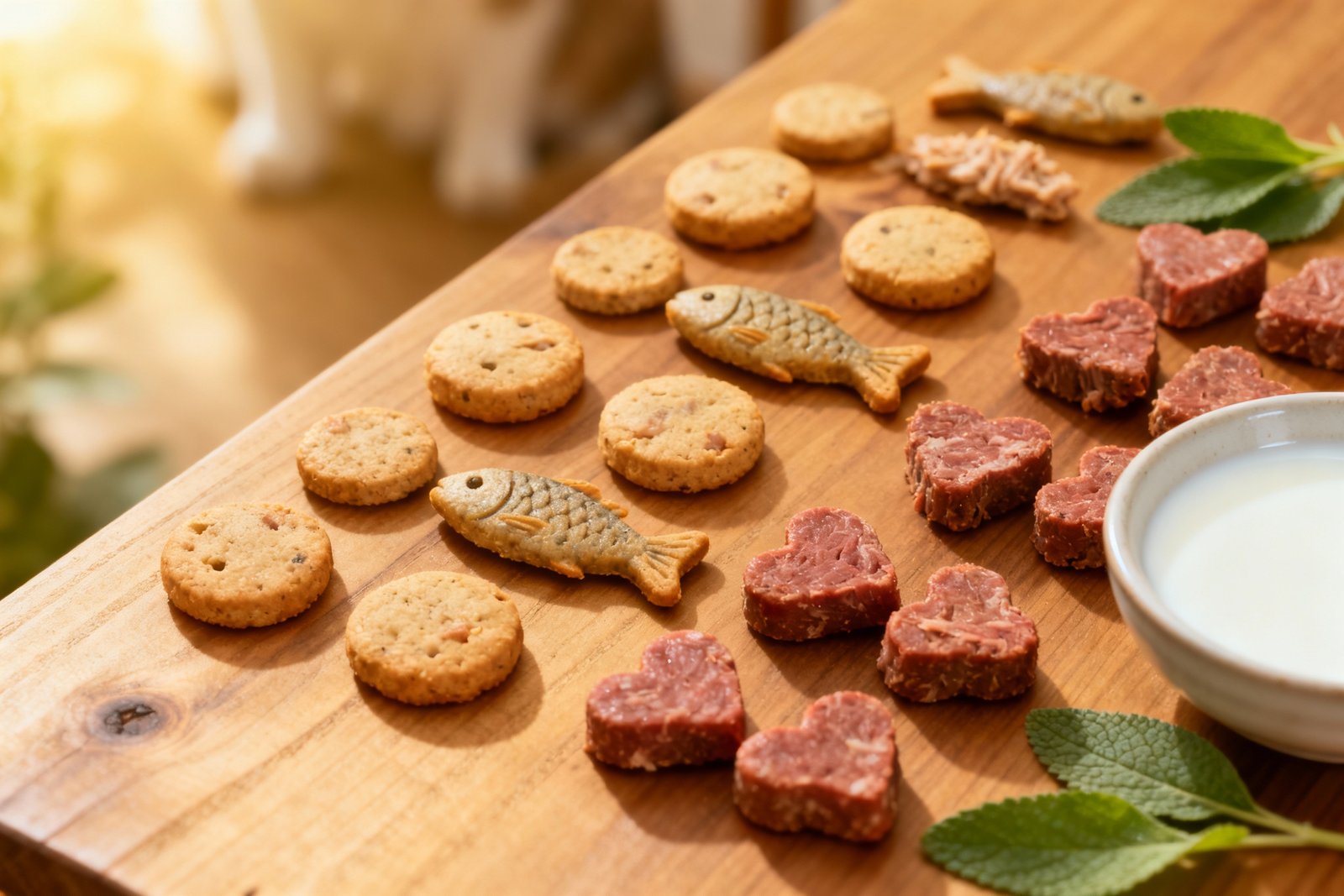
- Shapes: Pea-sized dots work best. You can cut cute shapes, but your cat will not care.At all. IMO, save your sanity.
Storage and Safety Basics
Keep treats fresh and your cat’s tummy happy with a few simple rules.
- Cool completely before storing to prevent sogginess and mold.
- Refrigerate homemade treats in an airtight container for up to 5 days. Freeze extras in small bags for up to 2 months.
- Introduce new treats slowly: Start with 1–2 small pieces and watch for any tummy upset.
- Label batches: Date and flavor.You’ll forget, and then your freezer becomes a mystery box.
When to Call the Vet
If your cat has kidney disease, pancreatitis, or food allergies, check with your vet before trying new treats. High-protein fish treats and extra fat might not suit every cat. Your vet can suggest safe tweaks.
FAQ
How many treats can I give my cat per day?
Keep treats under 10% of daily calories. For a typical 10-pound cat, that usually means 5–10 small treats.
Spread them out and adjust if your cat gains weight or begs like a tiny con artist.
Can I use regular wheat flour?
You can, but many cats do better with oat or rice flour since they’re gentler on digestion. Use what works for your cat and what you have on hand. The key is using just enough to bind.
Are fish-based treats safe every day?
Occasionally, yes.
Daily, not ideal. Rotate proteins to avoid too much mercury and to keep your cat from becoming a tuna-only diva. Mix in chicken or turkey treats during the week.
Can I make grain-free treats?
Absolutely. Use egg and pureed meat or fish as the base.
You can add a bit of pumpkin or sweet potato to bind. Bake until firm and cut small.
My cat’s super picky. Any tricks?
Warm treats slightly to boost aroma.
Add a sprinkle of bonito flakes or a drop of tuna water. Start by crumbling treats over regular food so the smell becomes familiar.
Do I need special equipment?
Nope. A bowl, a fork, and a baking sheet handle most recipes.
A blender helps for smooth textures, but it’s optional.
Final Whisker Thoughts
Homemade cat treats don’t need to be fancy. Keep ingredients simple, shapes small, and flavors bold. Your cat will vote with their whiskers, so tweak as you go and keep the hits in rotation.
And when your feline food critic meows for seconds? That’s the five-star review you made at home, FYI.