
First-Time Cat Owner? Here’s the Only Checklist You’ll Ever Need

You brought home a tiny tiger. Congrats! Your floors will never be clean again, and your heart will never be the same.
Let’s set you up so you spend more time cuddling and less time Googling at 2 a.m. Here’s the no-fuss, real-talk checklist every new cat owner needs—no fluff, except the kind that ends up on your black clothes.
Set Up the Essentials Before Arrival

Your cat doesn’t care about your decor; they care about safety and snacks. Get the basics ready before paws touch the floor.
- Litter box + litter: One box per cat, plus one extra.Covered boxes trap odors; most cats hate them. Go big and open.
- Food + water bowls: Choose wide, shallow bowls to avoid whisker fatigue. Stainless or ceramic > plastic.
- High-quality food: Match the food to their age and health.Kittens need kitten formulas. Sudden food changes = upset tummies.
- Carrier: Hard-sided or sturdy soft-sided with good ventilation. Keep it out as a cozy den, not just for scary vet trips.
- Scratching posts: Vertical and horizontal options.Sisal rope and cardboard are crowd-pleasers.
- Safe space: A quiet room with their stuff so they can decompress. Think spa day, but with more purring.
What About Water Fountains?
Many cats drink more from a flowing fountain. If your cat acts like water is suspicious (valid), keep a normal bowl too.
Clean fountains weekly or they become swamp chic.
First-Day Game Plan
Your cat just moved entire universes. Make it chill and predictable.
- Start in one room. Bedroom or home office works great. Let them explore at their own pace.
- Keep it quiet. No grand tour, no neighbor parade.You’ll have years for that.
- Offer hiding spots. Beds, cardboard boxes, or a draped chair. Hiding is healthy, not rude.
- Use a familiar scent. A blanket from the shelter or foster helps a ton with nerves.
- Don’t force interaction. Sit on the floor, talk softly, blink slowly. Yes, the slow blink works.It’s cat for “sup.”
Litter Box Placement 101
Place the box away from food and noisy machines. Cats want privacy, but not isolation. FYI: Tight corners or rooms with only one exit can stress them out.
Food: What, When, and How Much

Cats pretend they’re starving 94% of the time.
Stay strong.
- Type: Wet food supports hydration; dry food adds convenience. Mix if you want balance.
- Schedule: Kittens eat 3–4 small meals; adults 2 meals or measured free-feed. Consistency beats chaos.
- Portions: Follow the bag/can as a starting point, then adjust to keep a healthy waistline.You should feel ribs under a light layer, not a marshmallow suit.
- Treats: Keep treats under 10% of daily calories. Training treats are tiny for a reason.
Transitioning Foods Without Drama
Switch over 7–10 days. Start with 75% old/25% new, then 50/50, then 25/75, then fully new.
Sudden switches equal litter box horror stories. IMO, slow and steady saves everyone.
Litter Box Strategy That Actually Works
If you get this right, life stays fragrant.
- Number: One per cat, plus one extra. Multi-story home?One on each level.
- Size: Big enough for a full turn. If your cat backs out mid-business, the box is too small.
- Litter type: Unscented clumping wins. Scented litters are for humans, not cats.
- Cleaning: Scoop daily (twice for multiple cats).Deep clean weekly with mild soap.
- Location: Accessible, quiet, and away from food. Laundry rooms can work if the machines aren’t constantly thundering.
Scratching, Climbing, and Playing (aka “Saving Your Couch”)
Cats need to scratch. Give them the right spot and your furniture survives.
- Scratching options: Provide vertical posts and horizontal pads.Place near favorite hangouts and doorways.
- Cat trees: Give them a perch. High vantage points reduce stress and increase smugness.
- Playtime: 10–15 minutes, twice a day. Wand toys, kickers, and puzzle feeders burn energy and boredom.
- Rotate toys: Hide half and swap weekly.Novelty is magic.
- Deterrents: Use double-sided tape or furniture guards where needed, but always pair with a “yes” spot right next to the “no.”
Nail Trims Without Tears
Start when they’re sleepy. Handle paws often without clipping, then trim one or two nails at a time. Reward like you’re a game show host.
If it turns into a wrestling match, stop and try later.
Health and Safety Musts

You don’t need a vet degree. Just a plan and a calendar.
- Vet visit: Book a wellness check within the first week, even if your cat “looks fine.” Bring any records.
- Vaccines and parasite prevention: Core shots and flea/tick/heartworm prevention as recommended by your vet and region. Indoor cats still need protection.
- Spay/neuter: If not already done, schedule it.It prevents health issues and surprise karaoke at 3 a.m.
- Microchip + ID tag: Microchip with current contact info. Collar with a quick-release buckle and a tag—insurance you’ll be grateful for.
- Pet insurance or savings fund: Emergencies happen. Pick a plan or stash cash monthly.FYI: Dental care gets pricey fast.
Home Safety Sweep
Do a cat-level check:
- Plants: Remove toxic plants like lilies, pothos, philodendron. Replace with cat-safe options like spider plants.
- Wires: Hide or cover cords. Cable sleeves are your friends.
- Small objects: Hair ties, thread, needles—cat magnets.Store them high.
- Windows: Secure screens. A curious cat plus a loose screen equals panic.
Routine, Boundaries, and Vibes
Cats love predictability. Give them a schedule and clear rules.
- Daily rhythm: Feed, play, and quiet time at consistent times.Routine reduces anxiety and chaos zoomies.
- Boundaries: Decide early if counters, beds, and couches are fair game. Be consistent. Mixed signals confuse everyone.
- Handling: Keep sessions short and positive.Reward calm behavior. Respect “nope” signals like tail flicks and flattened ears.
- Enrichment: Window perches, bird videos, treat puzzles. Indoor life should still feel like an adventure.
Introducing Other Pets
Go slow.
Scent swap first (blanket exchange), then door meetings, then short visual intros with lots of rewards. Supervise until both parties look bored. Bored is the goal.
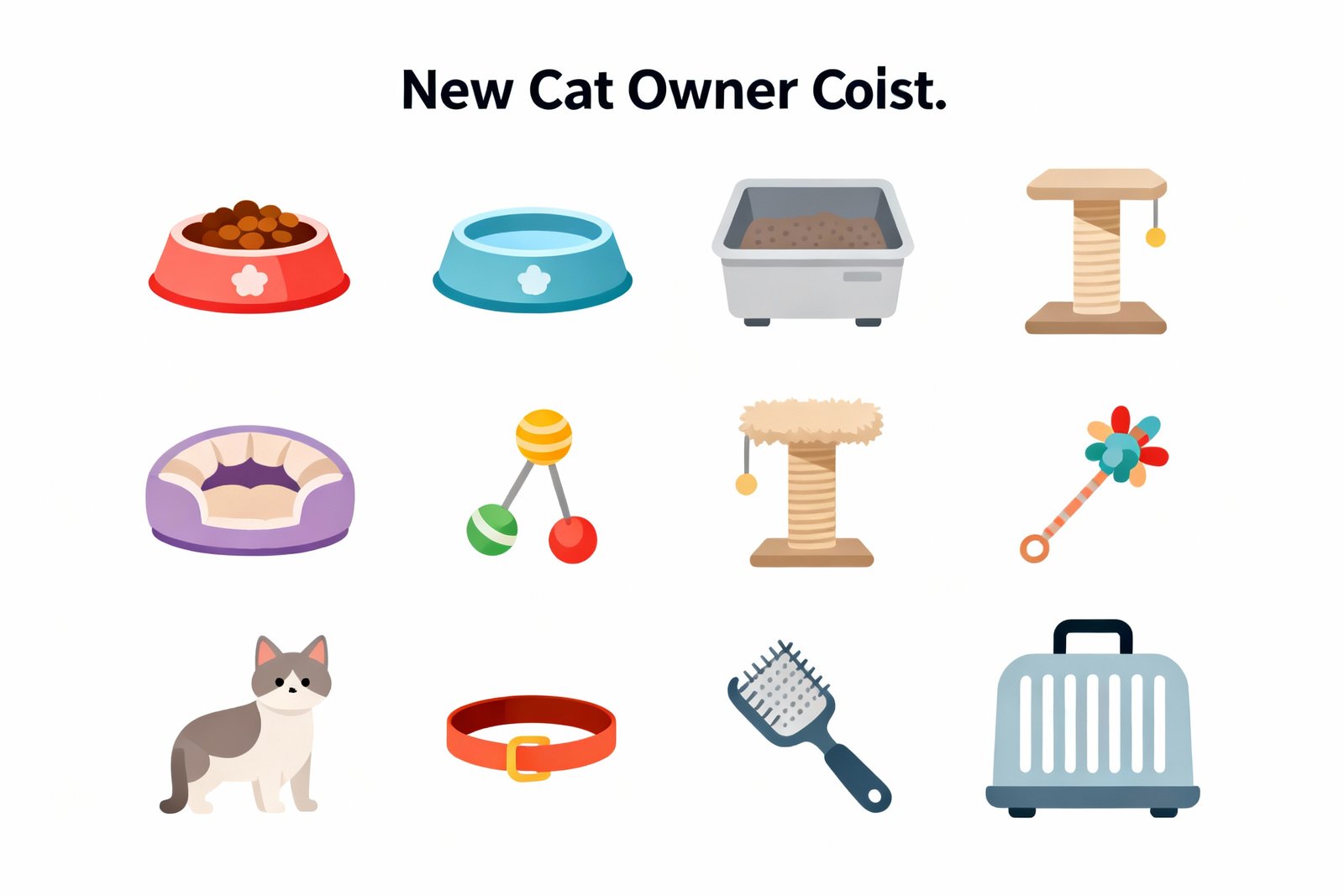
New Cat Owner Checklist (Printable-Style)
Because sometimes you just want the quick list to screenshot.
- Litter gear: Large open box, unscented clumping litter, scooper, mat
- Food + water: Age-appropriate food, wide bowls or fountain, treats
- Comfort + control: Carrier, bed, hiding spots, blankets
- Scratching/play: Vertical post, horizontal pad, wand toy, puzzle feeder, catnip
- Grooming: Brush for coat type, nail clippers, pet-safe wipes
- Health: Vet appointment, vaccine plan, parasite prevention, microchip, insurance/savings
- Safety: Remove toxic plants, secure screens, hide wires, ID tag/collar
- Setup: Quiet room starter zone, litter box placement, feeding station, routine
FAQs
How long will it take my new cat to settle in?
Every cat writes their own timeline.
Many relax in a few days; shy or previously stressed cats can take weeks. Keep the routine steady, offer gentle play, and let them approach you. IMO, patience builds the best bond.
Should I keep my cat indoors?
Indoor cats live longer and safer lives.
You can still offer adventure: window perches, catios, harness training, and interactive play. Outdoor access without planning equals vet bills and heartbreak.
What if my cat won’t use the litter box?
Rule out medical issues first, especially if this is new behavior. Then audit the setup: number of boxes, cleanliness, litter type, and location.
Remove stressors like noisy appliances and provide more “yes” options. Most issues have solvable, practical causes.
How do I stop my cat from waking me up at 4 a.m.?
Play a vigorous session in the evening, then feed a small meal right before bed. Ignore night-time yelling (I know, it’s hard).
Reinforcement works both ways—don’t reward the 4 a.m. serenade with snacks or attention.
Do I need pet insurance?
Not mandatory, but it can save you from financial gut-punches. If insurance isn’t your thing, build a dedicated savings fund. Emergencies don’t wait for payday.
What grooming does my cat need?
Short-haired cats benefit from weekly brushing; long-haired cats need several times a week to prevent mats.
Trim nails every 2–4 weeks and schedule dental cleanings as your vet recommends. Start slow, keep it positive, and reward generously.
Conclusion
You don’t need a palace or a PhD to be a great cat parent—you just need the right setup and a little consistency. Stock the essentials, create a cozy routine, and respect your cat’s pace.
Do that, and you’ll earn the ultimate prize: a head bonk and a very judgmental roommate who secretly adores you. FYI: you’re going to do great.