Diy Cat Food Recipe for Sensitive Stomachs That Works
Your cat’s stomach throws tantrums after every meal? Same. Nothing kills the vibe like a midnight hairball symphony or a post-dinner puke parade. Let’s fix that with a simple, gentle DIY cat food recipe designed for sensitive tummies—without turning your kitchen into a science lab. We’ll keep it tasty, balanced, and doable, so your little gremlin can digest in peace.
Why Some Cats Need a Gentle Menu
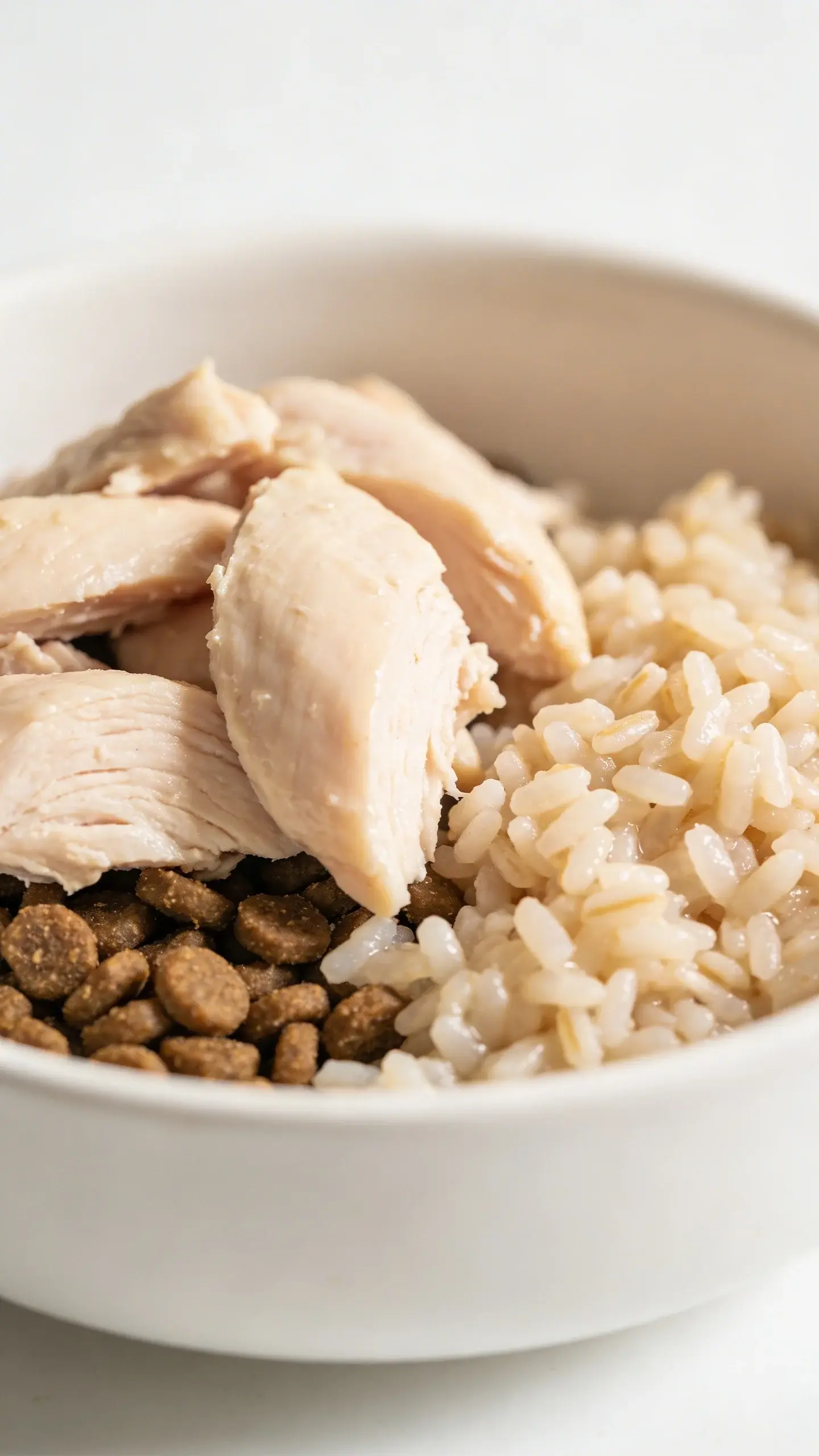
Sensitive stomachs happen for all kinds of reasons: food intolerances, hairballs, stress, or just being a cat (nature’s tiny drama queens). If your kitty struggles with vomiting, soft stools, or gas after meals, a bland, predictable diet can help. We’re talking easy-to-digest proteins, low-fat cooking, and zero sketchy fillers.
Rule of thumb: Cats are obligate carnivores. Meat leads, everything else supports. Fancy veggies? Cute, but optional—and in tiny amounts.
The Core Recipe: Simple, Soothing, and Cat-Approved
This base recipe keeps ingredients minimal and gentle. It’s not a long-term medical diet, but it’s a great place to start for mild sensitivity.
Ingredients (makes ~4-5 servings):
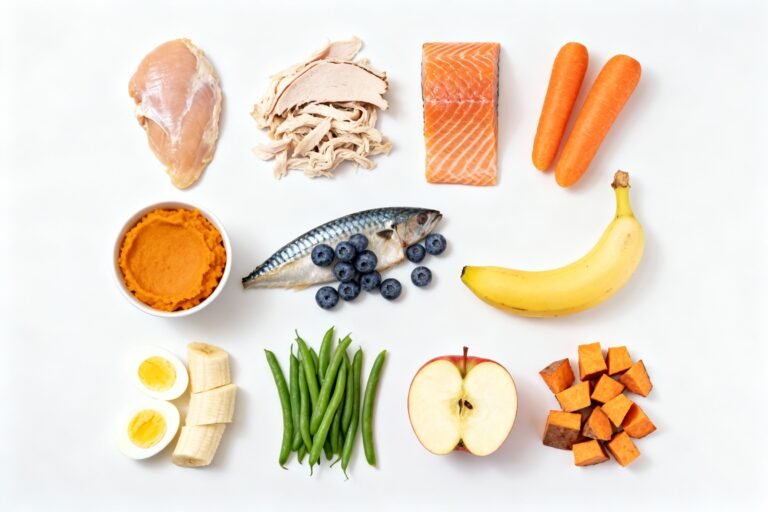
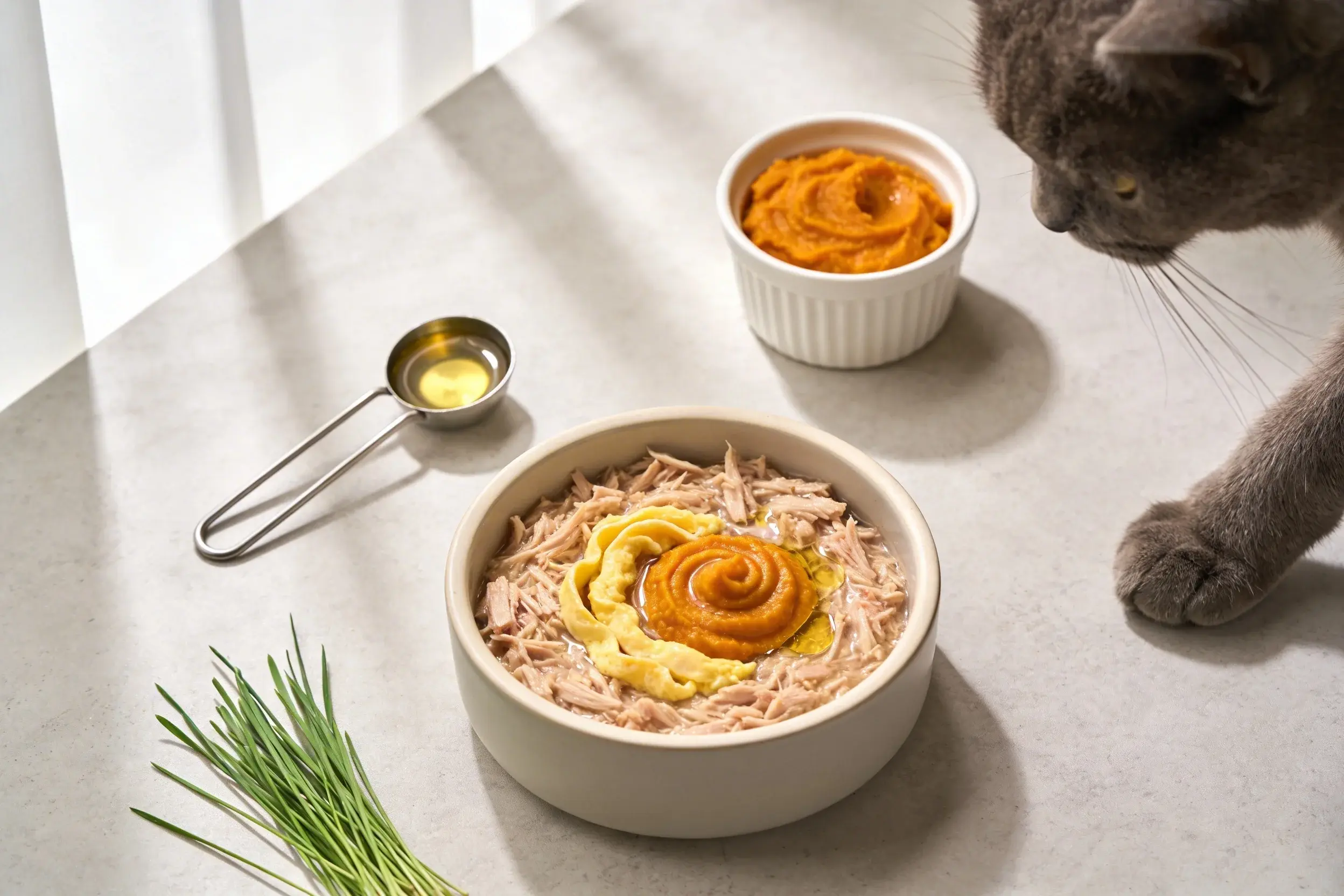
- 12 oz (340 g) skinless, boneless chicken thigh or turkey thigh
- 1 large egg (soft-scrambled, no milk or butter)
- 1/2 cup plain pumpkin purée or cooked mashed pumpkin (not pie filling)
- 1/2 cup low-sodium chicken broth or water
- 2 tsp salmon oil or sardine oil (for omega-3s)
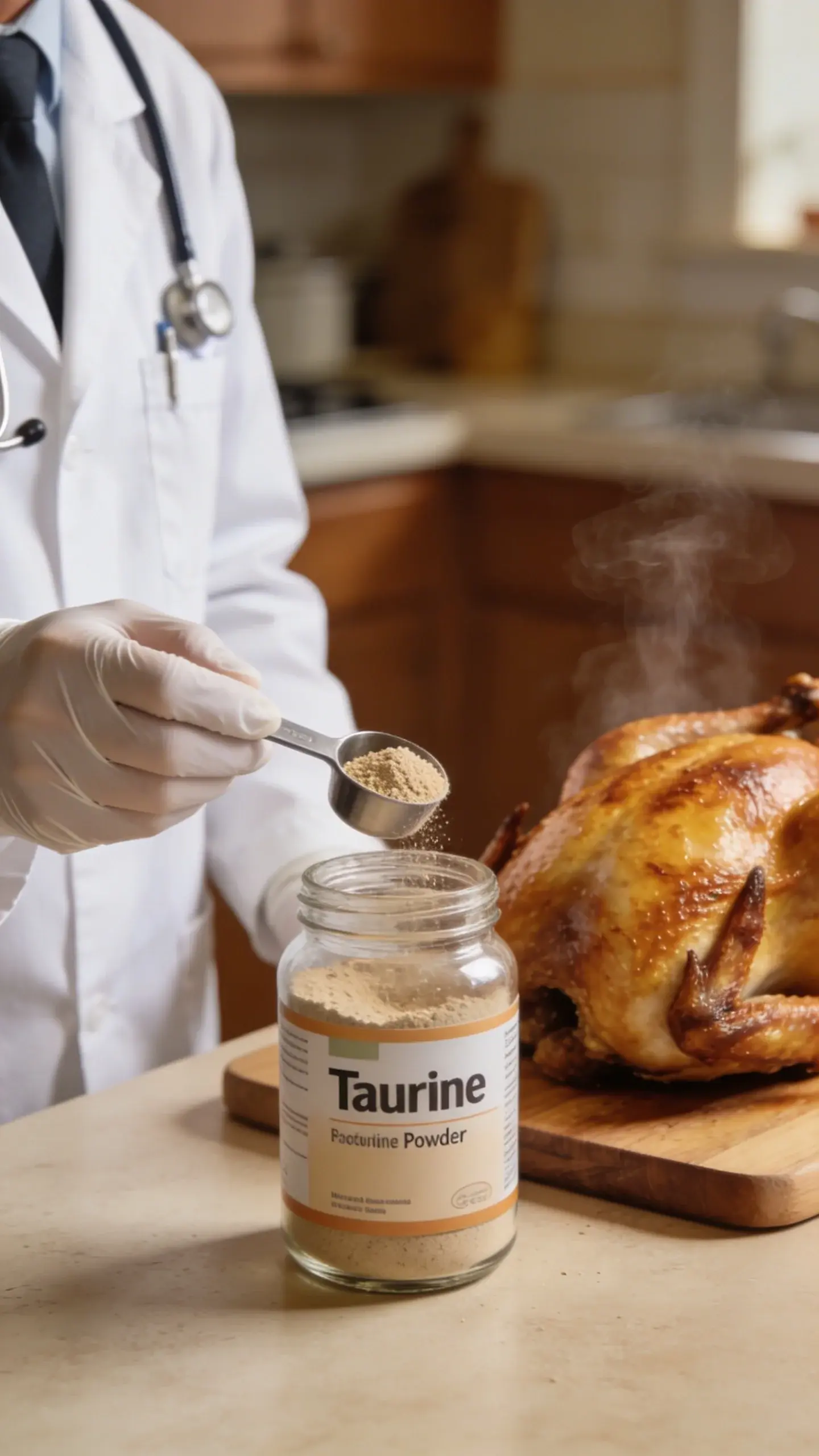
- Cat-specific taurine supplement (as directed on the label)
- Optional: 1-2 tbsp finely mashed, well-cooked white rice for extra blandness
Directions:
- Poach or bake the chicken/turkey until fully cooked. Keep it plain—no onions, garlic, seasonings, or oils.
- Chop the meat very fine or pulse it a few times in a food processor. Soft texture = easier to digest.
- Soft-scramble the egg in a nonstick pan with a splash of water. Break it up well.
- In a bowl, mix meat, egg, pumpkin, and broth/water until moist but not soupy.
- Stir in salmon oil and taurine once the mixture cools slightly.
- Portion into small containers and refrigerate for 2-3 days or freeze for up to 2 months.
Serving size: Most adult cats eat 4–6 oz (115–170 g) total food per day, split into 2–3 meals. Start small, watch your cat, and adjust. Cats are individuals (and critics).
Why These Ingredients Work
- Dark meat poultry: High-quality protein, more fat than breast meat (gentler on some cats, more flavor).
- Egg: Super digestible protein. It’s like tummy-friendly glue for this recipe.
- Pumpkin: Adds fiber to firm or smooth things out. Magic orange mush.
- Salmon oil: Omega-3s support skin, gut, and inflammation control.
- Taurine: Non-negotiable for heart, vision, and overall health.
When to Swap Ingredients (Without Ruining Everything)
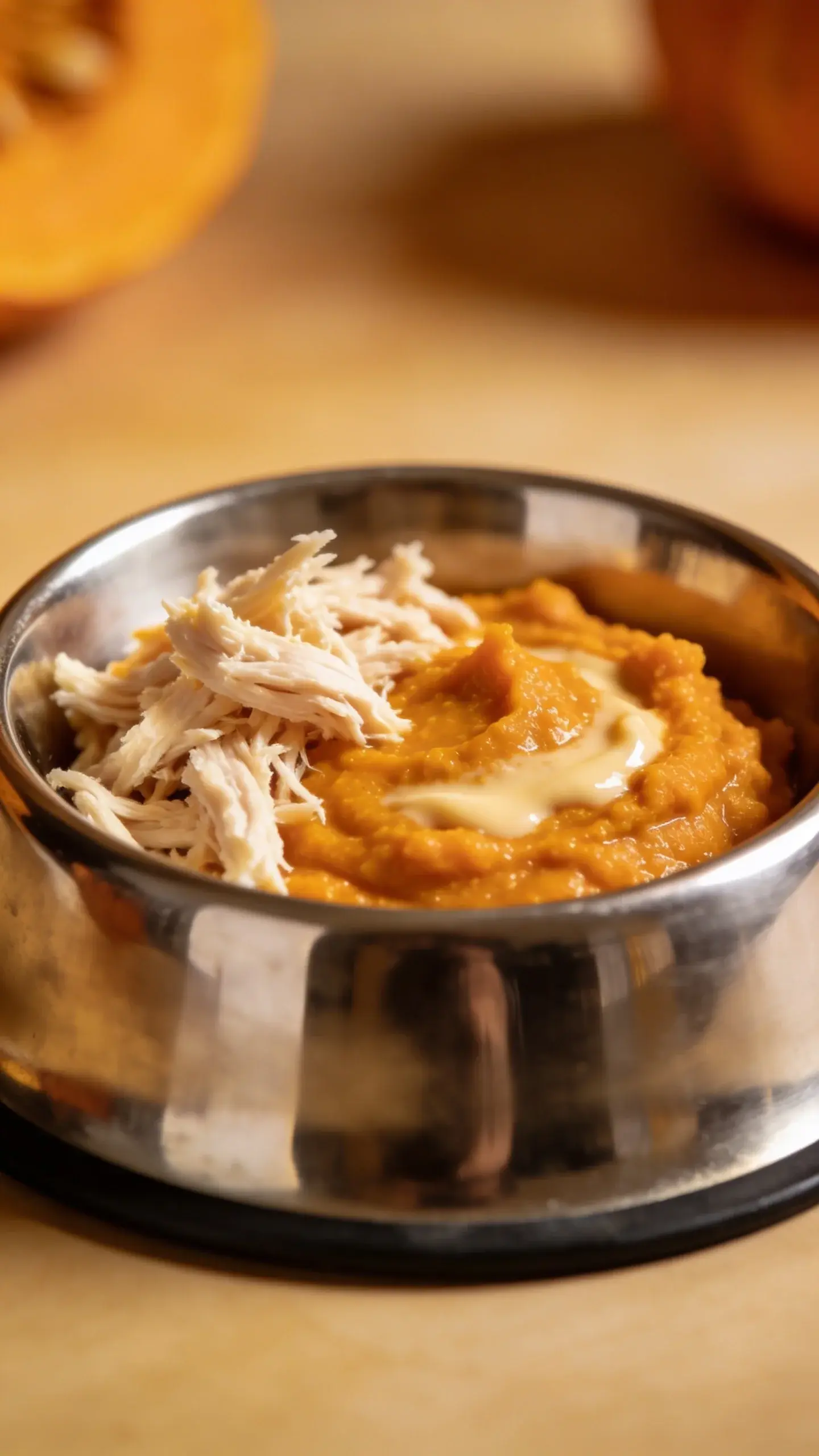
Some cats do better with different proteins or textures. Here’s how to pivot without chaos.
Protein Alternatives
- Turkey thigh: Easiest swap—very similar to chicken.
- Lean pork or rabbit: Great for cats with poultry issues. Cook well, trim fat.
- White fish (occasional): Use sparingly—too much can throw minerals off. Avoid tuna as a staple.
If Pumpkin Doesn’t Agree
- Mashed butternut squash or carrot: Tiny amounts only.
- Skip fiber: Some sensitive cats do better without added fiber. Go meat + egg only and watch results.
Avoid: Onions, garlic, chives, leeks, dairy, spicy seasonings, lots of liver, and high-fat cooking. FYI, artificial sweeteners (xylitol) are a hard no.
Balancing the Nutrition (Without a PhD)
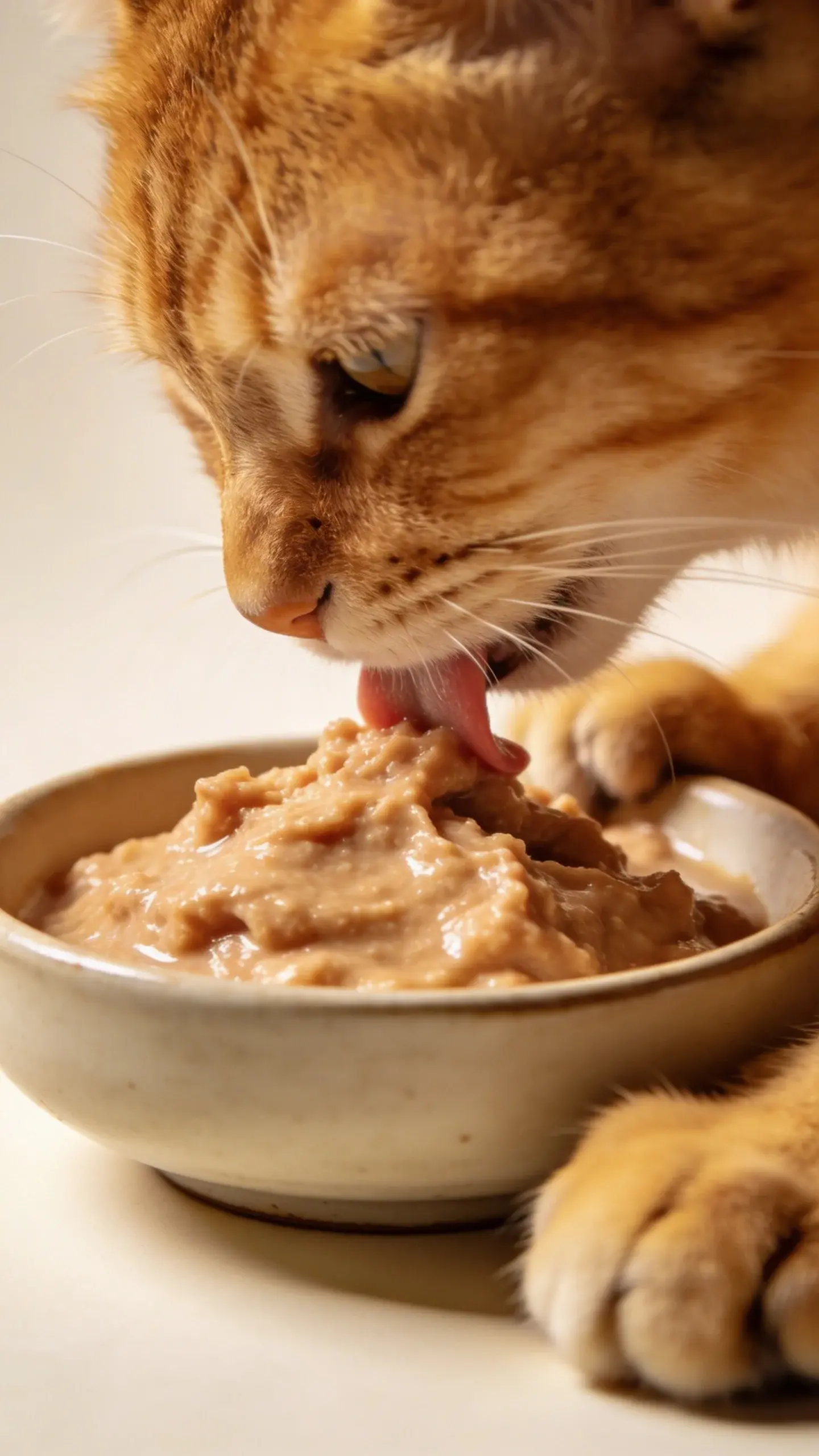
Homemade diets can slide off-balance fast. You don’t need to micromanage daily, but you should aim for balance over a week.
Easy Balance Add-Ins
- Taurine: Always add per label. Cooking reduces natural taurine in meat.
- Fish oil: 1/4–1/2 tsp per day for most cats. Don’t overdo—loose stools can happen.
- Calcium: If you don’t use bone-in meat, add a cat-safe calcium supplement per label a few times a week. Eggshell powder works too (finely ground, measured carefully).
- Vitamin/mineral premix: Consider a reputable feline-specific premix for true long-term feeding. IMO it reduces guesswork.
Texture Matters
- Finely minced or ground: Easier for sensitive tummies than big chunks.
- Moist food: Add extra warm water or broth right before serving for hydration.
Transitioning Without Drama
Switching too fast can derail even the best recipe. Go slow; your cat’s gut likes routine more than surprises.
7–10 day plan:
- Days 1–3: 25% new food, 75% current food
- Days 4–6: 50/50
- Days 7–10: 75% new, 25% old
- Then: 100% new if your cat looks and feels good
Watch for vomiting, diarrhea, gas, or refusal to eat. If things go sideways, pause at the previous step or revert, then try again slower. Cats prefer to be in control (don’t tell them we know).
Gentle Extras That Can Help
You don’t need all of these, but they can support sensitive guts.
- Probiotics (cat-specific): Helpful for digestion and stool quality.
- Slippery elm bark: Some folks use this as a soothing fiber; follow pet-specific dosing guidance.
- Hydration hacks: Add warm water to meals. Broth is fine if it’s low-sodium and onion/garlic-free.
- Small, frequent meals: Two or three feedings often beat one big feast.
Signs It’s Working
- Smaller, well-formed stools (no mushy messes)
- Less vomiting and gas
- Shinier coat, better energy, and cleaner litter box vibes
Storage, Safety, and Sanity
Food safety matters, especially with sensitive stomachs.
- Refrigerate: Use within 48–72 hours.
- Freeze portions: Thaw in the fridge, not on the counter.
- Warm gently: A little warm water brings out aroma—cats love drama and scent.
- Clean gear: Wash bowls daily. Bacteria = bad news.
FAQ
Can I feed this recipe long-term?
You can, but you should add a feline vitamin/mineral premix and calcium to keep it balanced over time. Without those, use it as a short-term tummy reset or rotation option. If your cat has medical issues, check with your vet first—worth it, IMO.
My cat won’t eat pumpkin. Now what?
Skip it or use a tiny amount of mashed squash. Some cats prefer just meat and egg. If stool gets too hard, add a teaspoon of water or a touch of fiber and recheck.
Can I use chicken breast instead of thigh?
You can, but thigh meat usually digests better thanks to a bit more fat and flavor. If you use breast, add a little extra oil to avoid dryness and keep calories up.
Is raw meat okay for sensitive stomachs?
Some people feed raw, but sensitive cats may react to bacteria more strongly. If you go raw, use high-quality sources and safe handling. Cooking lightly tends to be kinder on touchy bellies.
How fast should I see improvement?
Many cats settle within a few days to a week. If vomiting, diarrhea, or weight loss continues, stop and talk to your vet. Chronic symptoms can signal allergies, parasites, or other issues that food alone won’t fix.
Do I really need taurine?
Yes. Non-negotiable. Cooking reduces it, and cats can’t make enough on their own. Add it per the supplement label every time.
Wrapping It Up
Sensitive-stomach cats don’t need fancy tricks—just simple, gentle meals and a slow transition. Start with the base recipe, tweak protein if needed, and keep taurine and hydration on your radar. Watch your cat, adjust with small changes, and celebrate the quiet, puke-free nights. FYI, your laundry will thank you.