
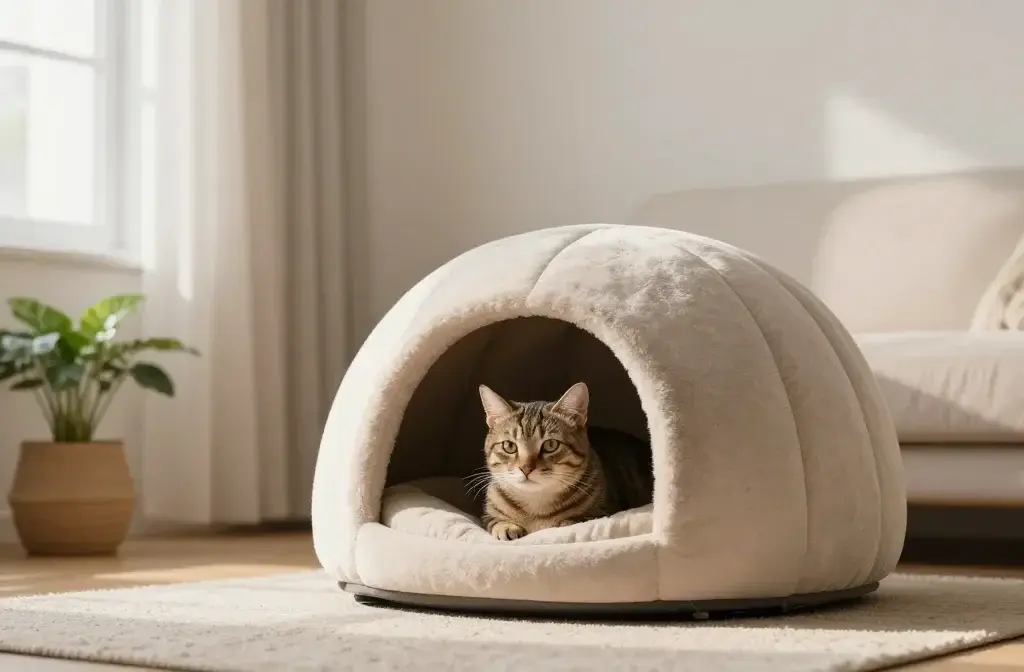
An anxious cat doesn’t need a lecture on mindfulness. They need a safe place, pronto. Enter the “calm corner”—a cozy, covered cat bed tucked into a quiet nook where your feline can decompress like a tiny, whiskered introvert. If your cat startles at dust motes or side-eyes the vacuum like it’s a villain, a calm corner can change the vibe at home fast.
You don’t need fancy equipment or a Zen garden. You need a plan, a covered bed, and a sprinkle of patience. Let’s build a sanctuary your cat actually uses (instead of that pricey toy they ignored).
Why Anxious Cats Love Covered Spaces
Cats crave control. When they can’t control the chaos—doorbells, guests, loud TV—they hide. A covered bed gives them walls, darkness, and comfort. Basically, a cat version of “do not disturb.”
You’ll see fewer startles and less frantic pacing when your cat has a retreat. They choose when to peek out, when to nap, and when to rejoin society—like a dignified, furry hermit.
The Science-ish Bit
– Covered spaces reduce sensory input (light, movement, noise), which lowers arousal.
– Cozy beds keep body temperature stable, which promotes relaxation and deeper sleep.
– Restricted openings = fewer perceived threats. Your cat can watch without being watched.
Picking the Right Covered Bed (Without the Drama)
You have options. Don’t overthink it, but do choose smart.
Look for:
- Size: Your cat should stand up, turn around, and stretch without squishing. Think “snug,” not “sardine.”
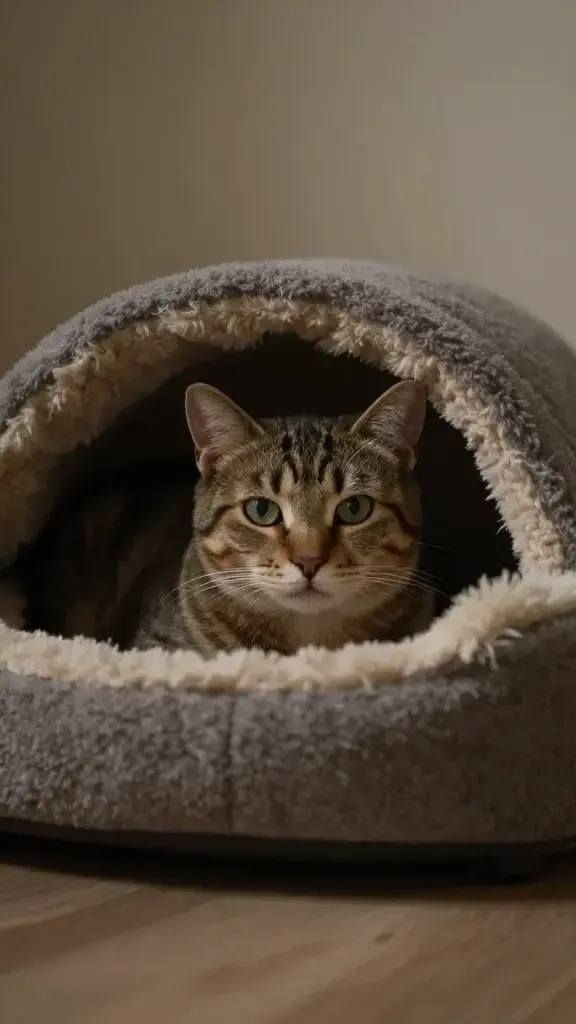
- Shape: Igloo, cave, or box-style beds work great. Tents with a single entrance feel safest.
- Materials: Soft, warm fabrics (fleece, faux fur) for comfort. Washable covers for your sanity.
- Structure: Semi-rigid sides hold shape, so it doesn’t collapse mid-nap. We respect nap time here.
- Entrance: A smaller opening feels secure, but not so tiny it traps heat or smells.
Avoid:
- Overly perfumed fabrics (your cat didn’t ask for “Lavender Ocean Breeze”).
- Crinkly materials that make noise with every twitch.
- Beds that wobble or slide—instability kills trust fast.
Budget vs. Bougie
– Budget: Foldable tunnels, cardboard box with a blanket, or a DIY fabric-covered crate—zero shame, still cozy.
– Bougie: Memory foam bases and wool-felt pod beds—great, if you want the Scandinavian cat aesthetic.
– IMO: Choose washable over Instagrammable. Your future self will thank you.
Setting Up the Calm Corner
Location matters. Put the bed where your cat already hangs out when nervous—under a table, behind a sofa, or in a quiet bedroom corner.
Key placement rules:
- Quiet but connected: Far from loud appliances and doorways, but not isolated in a scary back room.
- No through traffic: Avoid hallways or areas kids/pets zoom through.
- Visual cover: Add a small screen, plant, or furniture side to create a “wall.”
- Elevate slightly: If safe, a low shelf or sturdy stool adds a sense of control.
Layer in Comfort
– Add a familiar blanket that smells like your cat.
– Tuck in a soft toy or your worn T-shirt for scent reassurance.
– Use a non-slip mat underneath to keep the bed stable.
– FYI: Don’t cram it with stuff. Airflow + space = better naps.
Make It Feel Safe (And Actually Used)
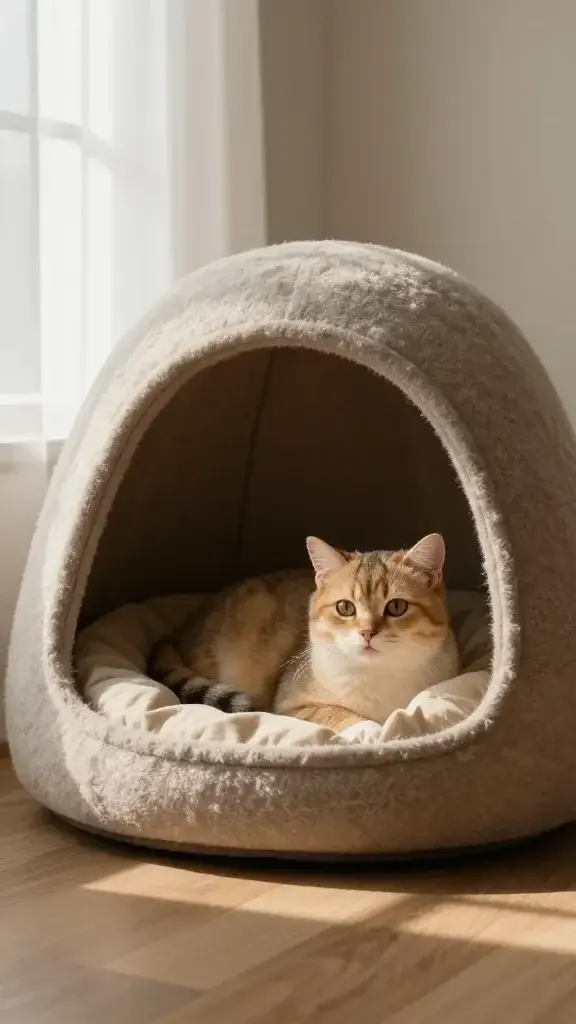
You built the corner. Now sell it to your feline like a pro marketer.
Entice gently:
- Drop a few high-value treats inside.
- Sprinkle catnip or use silvervine, if your cat likes it.
- Place a favorite wand toy nearby to build positive associations.
Set rules for humans:
- No reaching in to “say hi.” That’s like sticking your hand into someone’s blanket fort uninvited.
- Keep it predictable: No moving the bed every week.
- Let the cat choose: If they ignore it at first, that’s normal. Curiosity will kick in.
Light and Sound Hacks
– Use warm, dim lighting near the corner—avoid bright overheads.
– Add soft white noise to mask random bangs and barks.
– Close nearby blinds during noisy hours. Less stimulation, fewer flinches.
Stacking the Calming Effects
Want to supercharge the calm? Layer tools. Not all at once like a chaotic potion—try one at a time and observe.
Options to test:
- Pheromone diffusers or sprays: Mimic soothing cat scents. Spray bedding lightly.
- Weighted blanket alternatives: A slightly heavier throw on top of the bed can feel secure—don’t overdo it.
- Calming music: Classical or species-specific tracks help some cats unwind.
- Routine rituals: Short, predictable play sessions followed by a treat and calm time near the bed.
Timing Is Everything
– Play first to burn anxious energy, then guide your cat to the bed with treats.
– Use the calm corner after stressful events: visitors, storms, fireworks, vet days.
– Keep sessions short at first. End on a win—treat, praise, retreat.
Common Mistakes (And Easy Fixes)
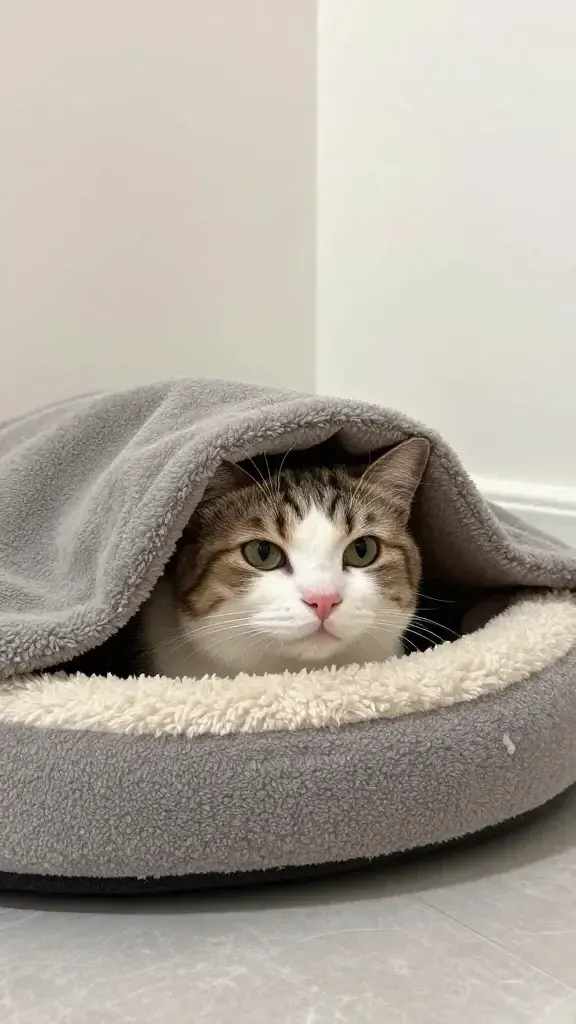
– You put the bed in the laundry room. It’s loud, it smells weird, and the dryer is a monster. Move it to a quieter, cozier nook.
– You bought a house-sized bed. Big spaces don’t feel safe to anxious cats. Size down.
– You keep peeking inside. I get it. Resist the urge. Let the bed be sacred.
– You washed away their scent five times. Wash as needed, but don’t erase all familiar smells. Balance hygiene with comfort—IMO, once every few weeks is fine unless… “accidents.”
What Success Looks Like
– Your cat naps in the bed more than the back of the closet.
– You see fewer bolting episodes during noise spikes.
– They emerge more confident, groom more, and show relaxed body language (soft eyes, slow blinks, tucked paws).
When Anxiety Runs Deeper
Some cats need more help than a cozy cave. If your cat hides constantly, overgrooms, stops eating, or startles at everything, talk to your vet. Medical issues (pain, hyperthyroidism) can amplify anxiety.
A vet or behaviorist can add:
- Anti-anxiety meds or nutraceuticals
- Structured desensitization plans
- Environment tweaks tailored to your home
Your calm corner still helps, but think of it as one tool in the kit.
FAQs
Should the calm corner be off-limits to other pets?
Ideally, yes. If you have dogs or multiple cats, give your anxious cat exclusive access. Use baby gates, vertical space, or a room divider. Respecting territory lowers stress and prevents “doorway drama.”
How many calm corners should I create?
Start with one. If your home has multiple hot zones (noisy living room, the Great Hallway of Doom), add a second option. Two or three well-placed hideaways beat one in the wrong spot.
What if my cat ignores the covered bed?
Try small tweaks. Move it a few feet, swap the blanket for something with their scent, or change the angle of the entrance. Offer treats near the opening for a week. Some cats need time to trust new real estate—no pressure.
Do I close the door to the room?
If the room feels safe and your cat uses it, partially closing the door can help. Don’t trap them. They need an escape route to feel secure. Freedom equals calm.
Can I use a crate as a covered bed?
Yes, with caveats. Pad it well, drape a breathable blanket over the top, and keep the door secured open. Never confine them there for “calming.” We’re building trust, not a jail.
How often should I clean the bed?
Spot clean weekly, deep clean monthly—or after messes. Use unscented detergent. Keep one spare cover on hand so you can swap without drama. FYI: preserve some familiar scent.
Conclusion
A calm corner with a covered cat bed gives your anxious cat control, comfort, and a place to reset. Choose a snug, stable bed, place it wisely, and layer in gentle supports—pheromones, routine, quiet. Then step back. Trust grows in safe spaces. With a little patience (and maybe a treat trail), your cat will claim their cozy kingdom and finally nap like the regal loaf they are.