
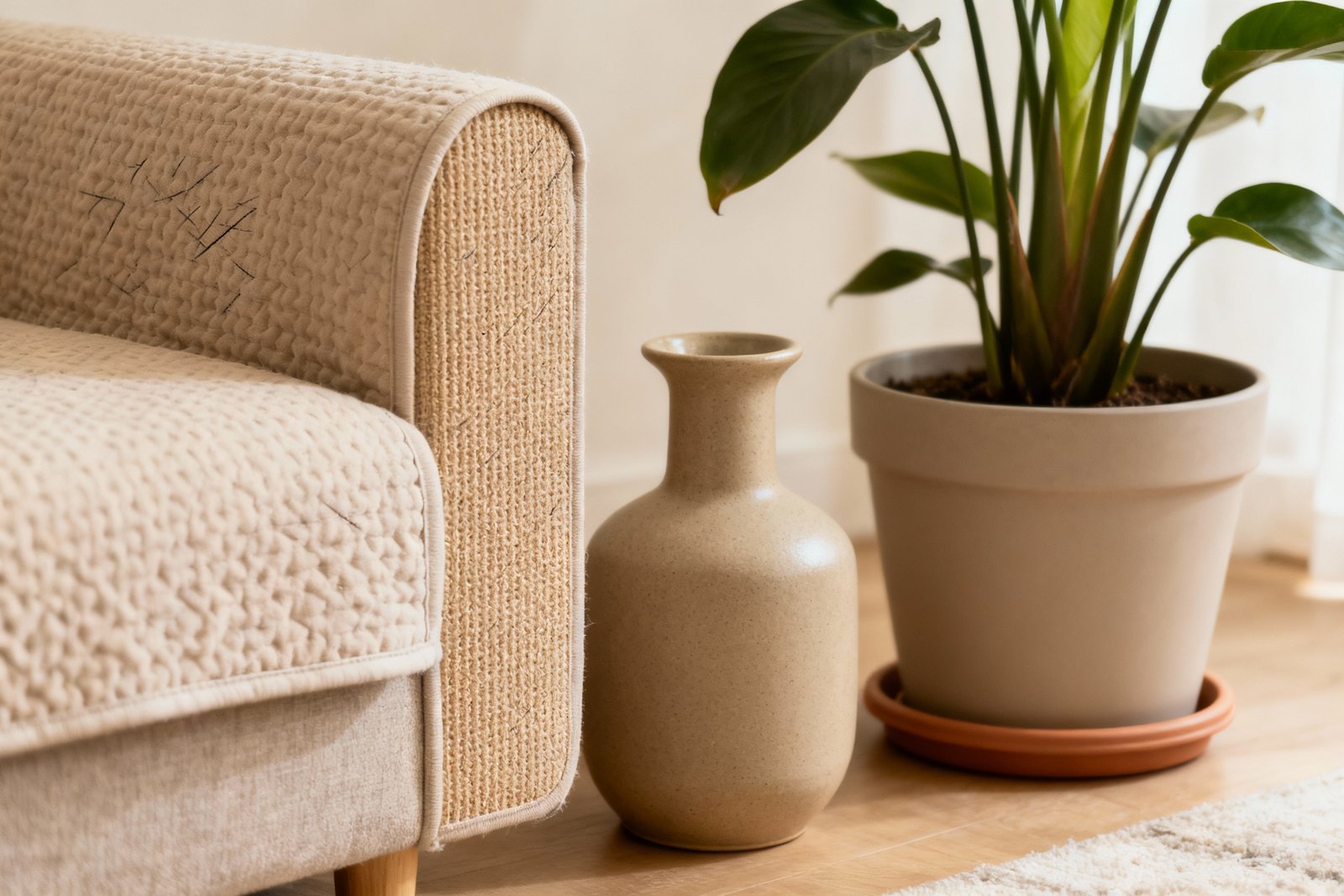
Your cat didn’t destroy your décor—your décor failed your cat. Let’s fix that. You can have chic furniture, lush plants, and a peaceful soul while living with a tiny, furry chaos machine.
The trick? Choose items that make your home look great and make your cat shrug and walk away. Or at least redirect their inner gremlin into acceptable outlets.
Scratch-Proof (Or Close Enough) Furniture

You can’t train a cat not to scratch—you can only give them better options.
Start with furniture materials that survive claws and still look good.
- Performance fabrics: Look for tight weaves like microfiber, canvas, or Crypton. They resist snags and clean up fast. Leather can work too, but choose top-grain or distressed finishes that hide marks.
- Wood with grain: Scratches disappear better on oak, ash, or reclaimed wood.High-gloss lacquer shows every crime scene—skip it.
- Metal legs: Cats love upholstered corners. Metal or squared wood legs leave them bored and you relieved.
Quick upgrade hacks
- Corner guards: Clear vinyl guards save sofa edges. Not gorgeous, but nearly invisible and extremely effective.
- Slipcovers: Get washable, heavy-duty slipcovers for high-traffic pieces.Choose a pattern to camouflage wear. IMO, stripes hide cat “art” best.
Scratch Stations That Don’t Scream “Pet Store”
Your cat needs scratch zones like you need coffee. Create stylish options they actually use.
- Horizontal + vertical: Offer both.Many cats prefer horizontal scratchers for shoulder stretch. A low, wide cardboard pad can save your rug.
- Natural materials: Sisal fabric (not rope) gives a satisfying texture. Wood slat posts look modern and last longer.
- Place with intention: Put scratchers near sleeping spots and where they already scratch.Yes, the living room. They want an audience.
Designer scratcher ideas
- Neutral-toned wave scratchers that double as loungers.
- Wall-mounted scratch panels that look like minimalist art.
- Table-leg wraps in sisal fabric—practical and oddly chic.

Cat-Resistant Rugs That Don’t Fray
Rugs take a beating, especially at edges. Choose materials that don’t become string cheese.
- Low pile, tight weave: Flatweave wool, indoor-outdoor polypropylene, or jute-sisal blends hold up well.The tighter the weave, the less claw appeal.
- Bound edges: Serged or leather-bound edges prevent fraying. Avoid tassels unless you enjoy chaos.
- Pattern power: Busy patterns hide fur and mini-snags. Solid plush rugs broadcast every hair and snag—FYI.
Stop the zoomie slide
- Use a quality rug pad that grips both rug and floor.Bonus: protects floors from water bowls and, uh, accidents.
- Consider modular carpet tiles so you can swap stained sections instead of replacing the whole rug.
Plants That Survive Curious Noses
You can keep greenery without playing daily “Is this toxic?” roulette. Choose pet-safe plants and protect them like your sanity.
- Cat-safe stunners: Calatheas, Parlour palms, Spider plants (cats love them—like salad), Areca palms, Haworthia.
- Stylish protection: Use elevated plant stands, wall planters, or hanging baskets. Heavy ceramic pots resist toppling.
- Deterrent top dressings: Add decorative stones or pinecones to soil to stop digging.Looks intentional, works wonders.
What to skip
- Lilies (seriously dangerous), pothos, philodendron, dieffenbachia, sago palm. Pretty, but not worth the ER visit.

Window Perches and Curtains That Don’t Get Shredded
You can’t stop a cat from bird-watching. But you can stop them from body-slamming your curtains.
- Install window perches: Sturdy screw-in perches beat suction cups long term.Add a washable cover that matches your décor.
- Choose smart curtains: Go for linen blends or performance polyester with tight weaves. Avoid silk. Avoid anything sheer and delicate.Trust me.
- Mount rods high and secure: If your cat climbs, you want a rod that laughs at gravity.
Blinds, but make them cat-friendly
- Skip fragile mini-blinds. Choose roller shades or cellular shades with cordless lifts.
- Leave shades slightly open at the bottom to prevent “paws-through” damage.
Stylish Storage to Hide Temptation

Cats investigate everything. Reduce the crime of opportunity with closed storage that still looks good.
- Closed baskets and bins: Lidded rattan or canvas bins hide yarn, cords, and small objects that magically disappear under sofas.
- Cable management: Use cord channels and fabric sleeves.Or choose furniture with built-in cord pass-throughs.
- Decorative trays: Corrals remotes and candles so they don’t become hockey pucks at 3 a.m.
Bookcase strategy
- Leave a cat shelf open for lounging. They’ll pick that one, not the one with your ceramic vase collection. Probably.
- Use museum putty to anchor breakables.Earthquake zone or cat zone—it works.
Cat Furniture That Blends In
You don’t need a beige carpet tower that looks like 1998. Choose pieces that match your style and keep your home cohesive.
- Modern trees: Wood platforms with felt pads or faux shearling look clean and sculptural. Wall-climbing systems can become a feature wall.
- Hidden litter boxes: Credenza-style enclosures disguise the box and trap scatter.Add a charcoal filter for smell control.
- Dual-purpose pieces: Side tables with built-in beds, ottomans with scratchable sides, benches with cubbies for cat baskets.
Placement tips
- Put cat furniture where you actually hang out. If you never use the guest room, your cat won’t either.
- Give them a high spot and a cozy cave in the main living area. That covers most moods.
Cleaning Tools You’ll Actually Use
Let’s be realistic.
Fur happens. Choose tools that make cleanup fast so you don’t resent your own sofa.
- Handheld vacuum with a motorized brush for sofas and stairs.
- Reusable lint brushes (the rubbery kind) for speed runs before guests arrive.
- Enzyme cleaner for accidents—breaks down odor so they don’t revisit the scene.
- Mat layers under litter boxes and food stations—washable and almost invisible.
Training Aids That Don’t Ruin Your Aesthetic
You can steer behavior without turning your living room into a booby trap.
- Catnip and silvervine spray on scratchers to make them irresistible.
- Double-sided training tape on off-limit areas. It’s temporary, not forever.
- Feliway diffusers for anxious scratchers.Calm cat = calm furniture.
- Reward station: Keep treats handy to reinforce good choices. Bribery? Absolutely.
FAQ
How do I stop my cat from scratching the sofa corners?
Put a high-quality scratcher right next to that corner and sprinkle catnip or silvervine on it.
Add clear corner guards and use double-sided training tape for a week or two. Once your cat prefers the scratcher, remove the tape and move the scratcher a few inches at a time to a better spot.
Are leather couches a bad idea with cats?
Not necessarily. Top-grain or distressed leather hides marks and ages nicely. Lower-quality or faux leather can peel and show scratches fast.
Keep a vertical scratcher nearby and trim claws regularly to reduce damage.
What’s the best rug material for a home with cats?
Go for flatweave wool or indoor-outdoor polypropylene. Both handle claws and spot clean easily. Avoid high-pile and looped rugs—they snag and pull, and you’ll spend weekends clipping loops like a textile surgeon.
How can I keep plants safe from my cat?
Choose non-toxic species and elevate them with stands or wall planters.
Add decorative stones to the soil to prevent digging. If your cat treats plants like a salad bar, offer cat grass in a cute pot as a decoy. IMO, placement beats scolding every time.
What décor items should I avoid completely?
Skip delicate textiles (silk curtains), fringe or tassels, breakable décor on open shelves, and anything with dangling cords.
If it swings, shines, or crinkles, your cat will test it. Save the drama for pillows—those you can replace.
Is a litter box enclosure worth it?
Yes, if you pick one with good ventilation and easy access for scooping. It cuts down on scatter and visual clutter.
Add a mat outside the entrance and you’ll halve the litter trail instantly.
Conclusion
You don’t need to choose between gorgeous décor and a happy cat. Pick materials that shrug off claws, give your feline irresistible alternatives, and hide the tempting stuff. A few strategic upgrades turn “please stop” into “wow, this works.” Your home stays stylish, your cat stays content, and everyone keeps their dignity—mostly.