
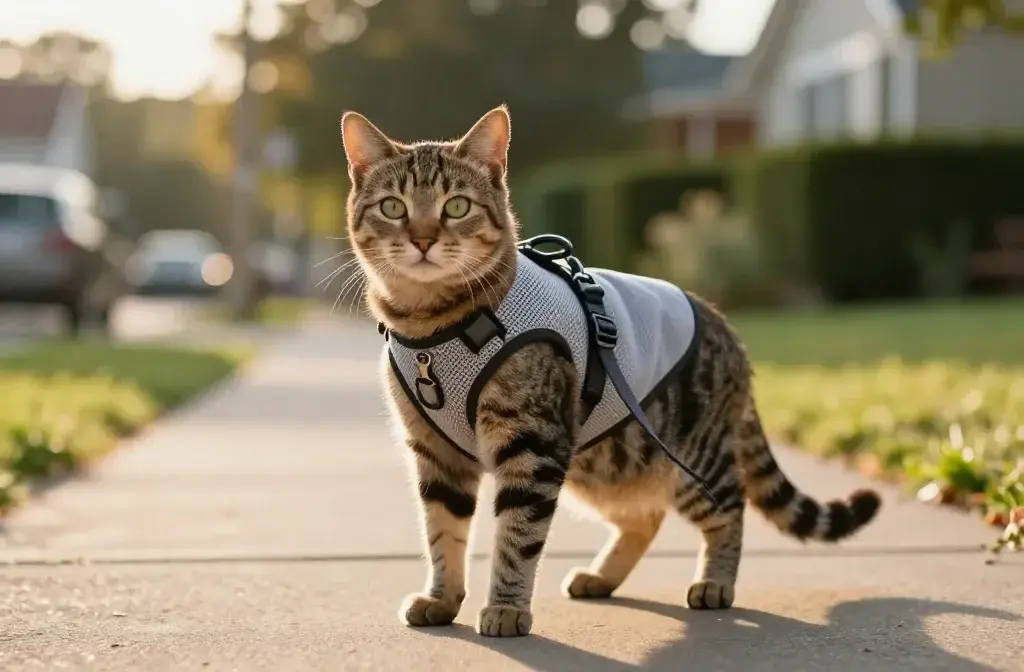
You’ve got a cat who stares out the window like it’s HBO, and you’re thinking, “Maybe we should try walks.” Great idea. But cats are not small dogs, and your average dog harness won’t cut it. You need the right escape-proof setup and a chill training plan so your feline explorer doesn’t Houdini their way into the bushes.
Why Try Harness Training at All?
You give your cat safe outdoor time, mental stimulation, and a chance to sniff the entire neighborhood gossip. Walks reduce boredom, help with weight management, and can calm anxious energy. Also, it’s a total flex to have a cat who heels better than your friend’s Labrador. Just saying.
What “Escape-Proof” Actually Means
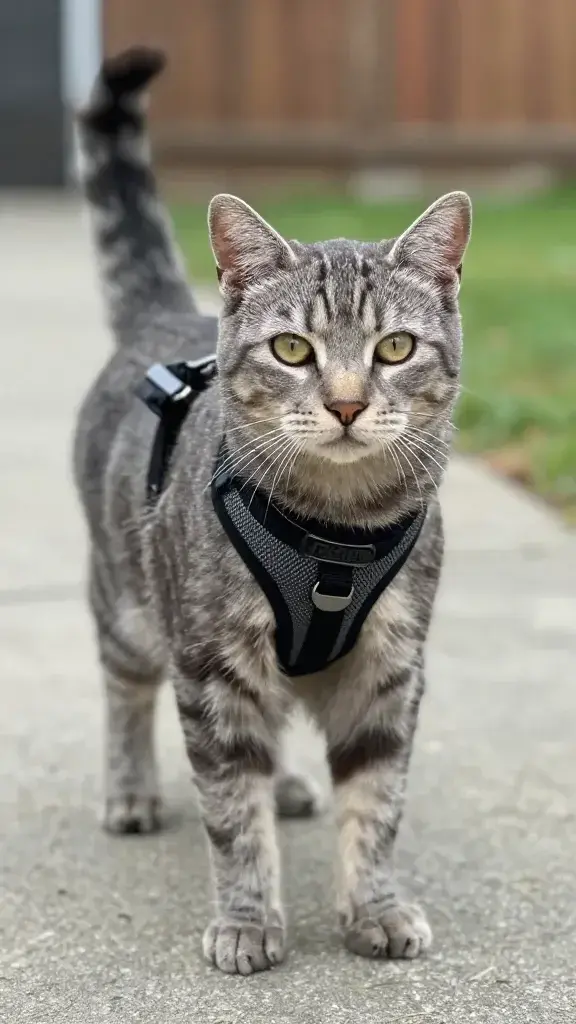
Not all “escape-proof” claims deserve your trust. Cats can reverse out of sloppy fits faster than you can say “tuna.” Look for designs and features that keep clever shoulders and flexible spines inside the harness.
Key Features to Look For
- Two anchor points: A vest or H-style with both neck and chest loops prevents backward slipping.
- Snug, adjustable fit: Multiple adjustment points ensure the harness hugs without pinching.
- Wide coverage panels: Vest-style distributes pressure and blocks squirmy escapes.
- Secure hardware: Metal D-rings, locking buckles, or Velcro + buckle combos. Redundancy is your friend.
- Breathable materials: Mesh or soft neoprene prevents chafing and overheating.
Fit Rule of Thumb
- Two-finger rule: Slide two fingers under the straps. Any looser, and your cat will moonwalk out.
- Check the “elbow zone”: Straps should sit behind the front legs, not in the armpit crease.
- Monitor fur compression: If long fur hides a loose strap, tighten a notch.
Harness Styles: Pros, Cons, and Who They Suit
You’ve got three main types. Each suits different body shapes and cat personalities. IMO, start with a vest unless your cat is part snake.
H-Style (Strap) Harness
- Pros: Lightweight, great for hot weather, lots of adjustability.
- Cons: Skilled escape artists can back out if not perfectly fitted.
- Best for: Calm cats, larger cats, and short-haired breeds.
Figure-8 Harness
- Pros: Simple, cheap, quick on/off.
- Cons: Easiest to escape, can tighten under pressure, not ideal for beginners.
- Best for: Confident cats who already walk well. FYI, not my top pick.
Vest (Jacket) Harness
- Pros: Most escape-proof, even pressure, comfy for longer walks.
- Cons: Warmer, can feel bulky at first, sizes vary wildly.
- Best for: Newbies, small or slender cats, “slip-and-dip” escape artists.
How to Measure Your Cat (Accurately!)
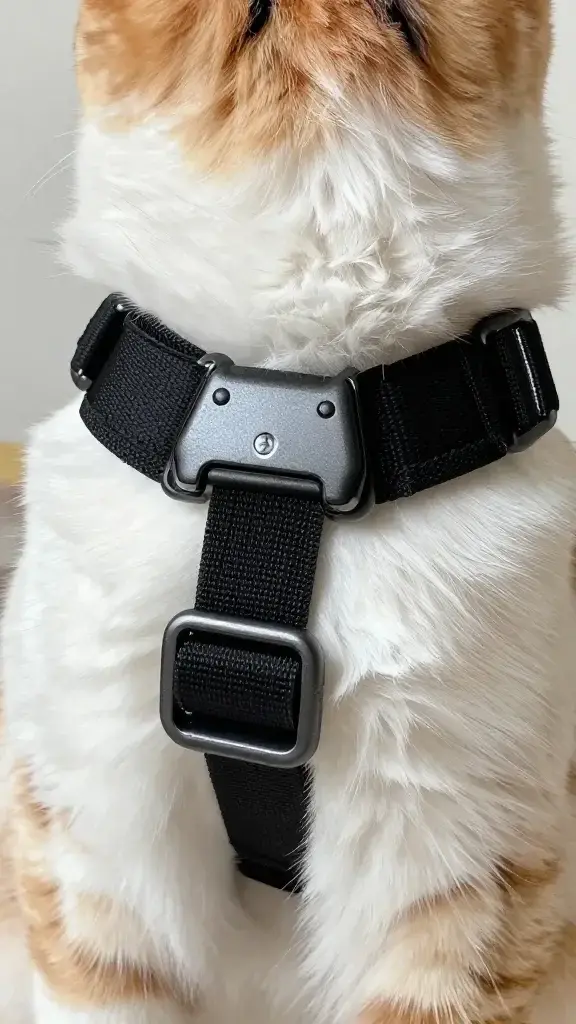
A flexible tape measure and a calm moment work wonders. Bribe with treats. Don’t judge.
Essential Measurements
- Neck girth: Base of the neck, where a collar would sit.
- Chest girth: Widest part behind the front legs.
- Back length: Base of neck to start of tail for some vest styles.
Pro tip: If your cat lands between sizes, go up one. Tighten down with the adjusters. Brands run small more often than large.
Leash Choices: Not Just an Afterthought
Your leash matters a lot. Don’t clip a heavy dog leash to your tiny house tiger and expect grace.
Best Leash Types for Cats
- Lightweight 4–6 ft nylon: Control + freedom balance. Perfect for sidewalks and parks.
- Bungee (shock-absorbing): Softens sudden lunges when a bird appears out of nowhere.
- Long line (10–15 ft): For quiet fields or yards. Always supervise and avoid busy areas.
Avoid retractable leashes for beginners. They teach pulling, they tangle fast, and the handles are clunky. Once you’ve got solid skills, sure, maybe. But I wouldn’t.
Training Plan: From Living Room Lizard to Backyard Explorer
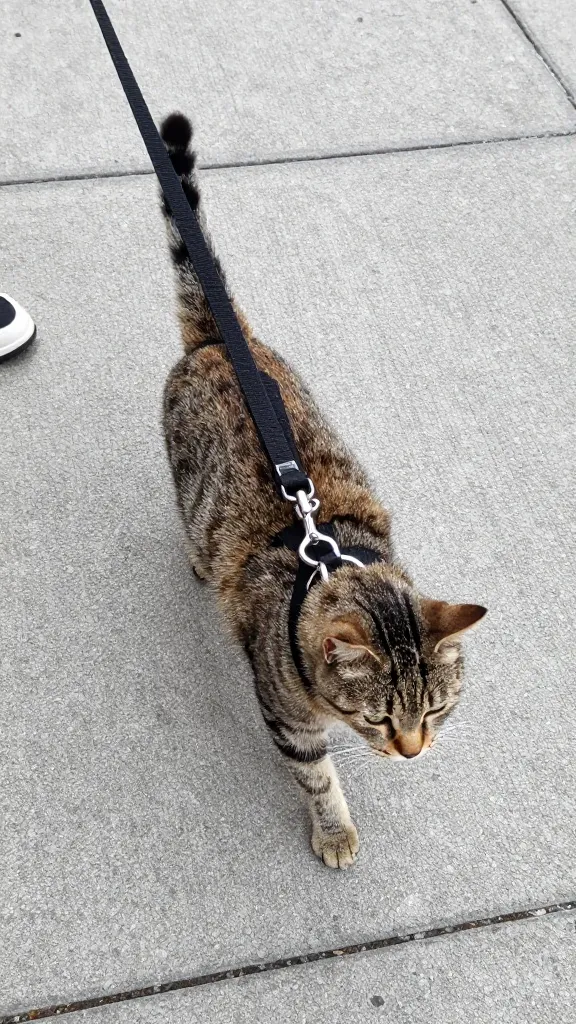
Think “slow burn,” not “Netflix binge.” You want micro-steps, lots of snacks, and zero drama.
Week 1: Harness = Treat Dispenser
- Let your cat sniff the harness. Feed treats every time it appears.
- Touch the harness to their body, then treat. Repeat. Keep sessions under 5 minutes.
- Clip it on for 30–60 seconds indoors. Treat like you mean it. Remove before they fuss.
Week 2: Move, Don’t Freeze
- Increase wear time to 5–10 minutes. Play with a wand toy so they forget it’s on.
- Clip the leash and let it trail (supervise). Reward calm movement and curiosity.
- Practice following a treat hand target around the room.
Week 3: Doorway Drills and Backyard Soft Launch
- Stand by the door without going out. Reward calm sits and looks.
- Step outside for 1–2 minutes in a quiet area. End on a win, then go back in.
- Increase duration gradually. Never drag. If they pancake, wait it out or retreat.
Remember: If your cat stiffens, pants, or widens pupils, that’s stress. Take a step back in training. Confidence beats speed every time.
Safety Checks Before Every Walk
Yes, every time. Cats evolve new escape strategies overnight, apparently.
- Fit check: Two fingers under neck and chest straps. Re-tighten after fluffing the fur.
- Hardware check: Buckles clicked? Velcro lint-free? D-ring secure?
- ID redundancy: Collar with ID + microchip. Harness tags can snag; keep them minimal.
- Environment scan: Dogs off-leash? Loud construction? Choose quiet routes first.
- Weather call: Hot pavement burns paws. Touch test: if it’s too hot for your hand, it’s a no.
Common Mistakes (And How to Avoid Them)
We’ve all been there. Learn from the chaos.
- Too loose, too soon: New harnesses stretch a bit. Recheck fit after the first 10 minutes.
- Rushing outside: Skipping desensitization = pancake cat. Slow down, champ.
- Wrong size: Measure twice, exchange once. Brands vary, read reviews for fit notes.
- No exit plan: If a dog charges, scoop your cat, face the dog, and back away. Practice this.
- Expecting dog behavior: Cats meander. Let them lead within reason. It’s their walk.
FAQs
What if my cat just flops over and refuses to move?
That’s classic “I don’t know this sensation” behavior. Go back a step and pair the harness with play and treats indoors. Short, upbeat sessions work better than one long battle. Once they move freely inside, add the leash and try again.
How do I know the harness truly fits?
It should sit snugly with the two-finger rule at both neck and chest. You shouldn’t see gaping when they reverse or jump. If they can back out even a little, tighten by one notch or try a vest style for more coverage.
Can kittens learn faster than adult cats?
Usually, yes. Kittens adapt quickly and treat training feels like a game. Adults can still crush it—the process just takes more patience and consistent rewards. Don’t let age stop you.
Is a collar and leash okay instead of a harness?
Nope. Collars put pressure on the trachea and slip off easily. A harness spreads force across the chest and shoulders, which keeps your cat safer and gives you better control. Collars are for ID only.
What time of day is best for first walks?
Go early morning or late evening when it’s quiet and cool. Fewer dogs, fewer cars, fewer reasons for your cat to do the flying squirrel maneuver. Bonus: less hot pavement.
How long should walks be?
Start with 5–10 minutes. Add a few minutes each successful outing. Some cats top out at 15–20 minutes and feel happy. Others want a full 45-minute neighborhood audit. Follow their vibe.
Wrapping It Up
Harness training your cat feels like teaching a tiny tiger to trust a seatbelt, and honestly, it’s worth it. Choose an escape-proof vest or well-fitted H-style harness, pair it with a lightweight leash, and progress in tiny, positive steps. Keep it fun, keep it safe, and celebrate every curious sniff. IMO, few things beat watching your cat strut down the sidewalk like they own the block—because, let’s be real, they do.