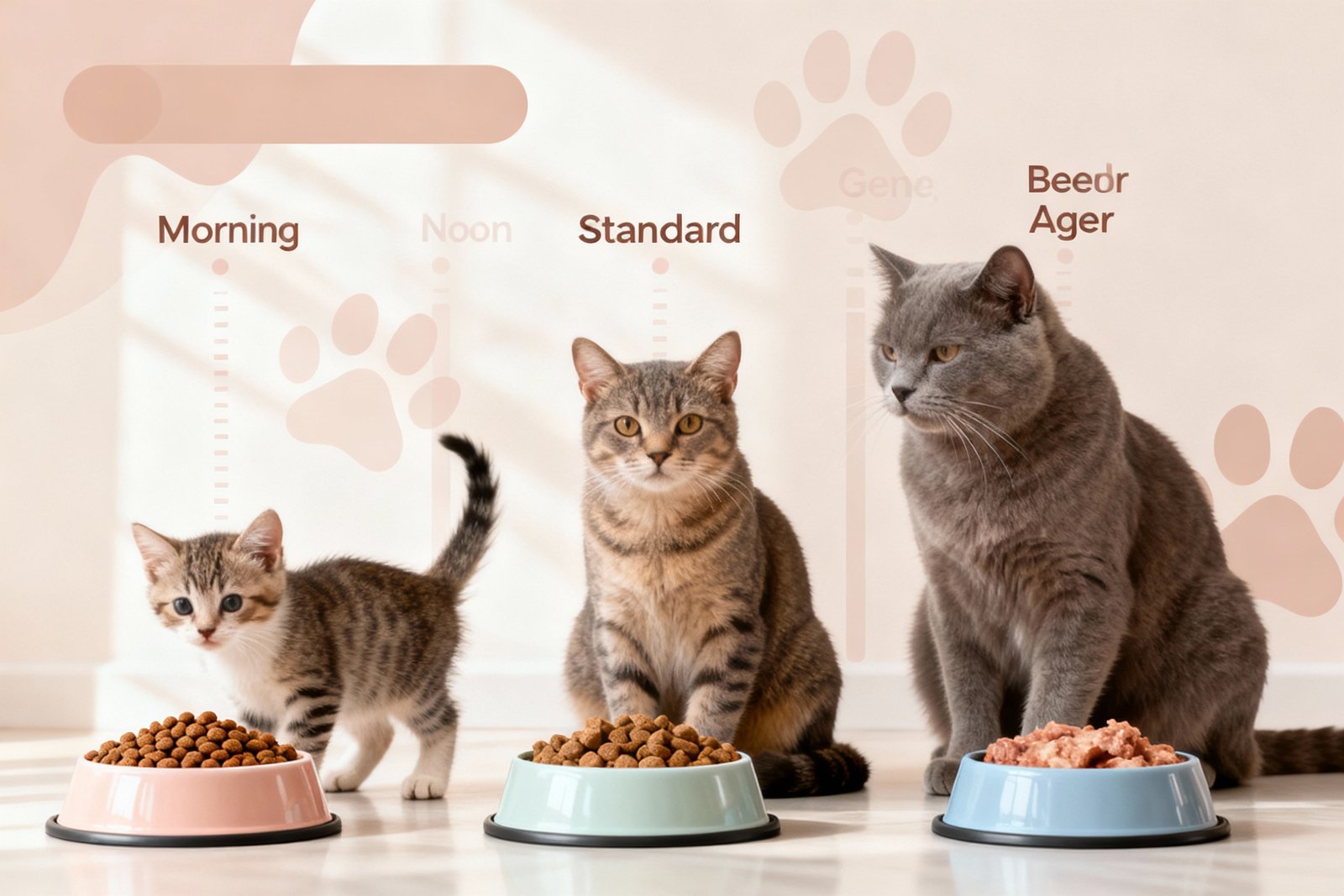
You want your cat well-fed, happy, and not screaming at 5 a.m.? Then you need a feeding schedule that actually fits their age and energy. Time, portion sizes, and routine matter more than you think.
Let’s break down what to feed, how often, and when to say “nope” to those big saucer eyes.
Why Schedule Beats “Free-For-All” Feeding

Structured feeding keeps your cat’s weight steady, digestion smooth, and behavior sane. Cats love routine—dinner o’clock equals calm, predictable vibes. Free-feeding?
It often turns into all-day snacking and sneaky weight gain. Bottom line: set times, measured portions, and consistency. Yes, you can still be the fun parent.
Kitten Feeding: Fuel for Chaos (0–12 months)
Kittens burn calories like tiny parkour pros. They need high-protein, energy-dense food and frequent meals. How often:
- 0–4 months: 4 meals/day
- 4–6 months: 3–4 meals/day
- 6–12 months: 3 meals/day
What to feed: AAFCO-approved kitten food, wet and/or dry.
Wet food boosts hydration and is easier on little teeth. Portions: Start with the label’s weight-based guide, then adjust weekly. If ribs show or energy dips, bump it up. If belly looks round and kitten naps after every snack, dial it back.
Transitioning From Mom to Bowl
Around 4 weeks, offer a slurry: kitten wet food mixed with warm water or kitten formula.
Reduce liquid weekly until you reach normal consistency by 8–10 weeks.
Nighttime Hunger Screams
Give a small, protein-rich meal before bed. Play for 10 minutes after feeding to mimic the hunt-eat-groom-sleep cycle. Your ears will thank you.

Teen Cats & Young Adults (1–3 years): The Metabolism Rollercoaster
This stage often means high energy but less constant growth.
You can cut back meal frequency. How often: 2 meals/day for most healthy cats. What to feed: Transition to adult formula over 7–10 days:
- Day 1–3: 75% old, 25% new
- Day 4–6: 50/50
- Day 7–10: 25% old, 75% new
Watch the waistline: You should feel ribs under a thin layer of fat, and see a waist from above. No waist? Portions need adjusting.
FYI, the measuring cup is not a suggestion—it’s a necessity.
Wet vs. Dry (The Eternal Debate)
– Wet: more moisture, easier portion control, great for urinary health. – Dry: convenient, stays fresh longer, works with puzzle feeders. IMO, a mix works best for most young adults.
Prime Adults (4–8 years): Routine Rules
This is the sweet spot.
Keep things consistent and watch for slow weight creep. How often: 2 meals/day, 8–12 hours apart. Portion guide:
- Average 10-lb indoor cat: ~180–220 kcal/day (check your food’s kcal/cup or kcal/can)
- Split calories evenly across meals
Pro tip: Use a kitchen scale for dry food. Cups lie. Grams tell the truth.
Hydration Hacks
– Add a tablespoon of warm water to wet food. – Offer a water fountain—cats love moving water. – Place water bowls away from food; cats sometimes prefer “separate stations.”

Seniors (9+ years): Gentle on Joints, Sharp on Nutrition
Older cats need easy-to-digest food, more moisture, and sometimes more calories if weight drops. How often: 2–3 small meals/day.
Smaller, more frequent meals help with digestion and keep energy steady. What to feed:
- Senior formulas with joint support (glucosamine, omega-3s)
- Higher moisture (wet food preferred)
- Easy-to-chew textures if dental issues exist
Track weight monthly. Sudden weight loss or increased thirst/appetite can signal kidney disease, hyperthyroidism, or diabetes. Don’t guess—call the vet.
When Teeth Protest
Go for pâté textures, add warm water, or try a dental check-up and professional cleaning. Soft food is not “spoiling”—it’s practical.
Special Cases: When the Usual Schedule Won’t Work
Some cats need a custom plan.
Here’s where you tweak.
Overweight Cats
– Switch to 2–3 measured meals/day. – Use lower-calorie food; aim for slow loss (about 1–2% body weight/week). – Add playtime and puzzle feeders. – Never crash diet a cat—risk of hepatic lipidosis is real and scary.
Diabetic Cats
– Feed timed meals aligned with insulin doses (usually every 12 hours). – Consistent portions, consistent carbs. – Work with your vet on the meal-insulin rhythm. Precision matters here.
Chronic Kidney Disease (CKD)
– Moisture first: wet food, water added to meals, fountains. – Kidney diets with controlled phosphorus if recommended by your vet. – Smaller, more frequent meals to encourage intake.
Timing, Tools, and Tricks That Make Life Easier
You can’t revolve your life around mealtimes (your cat disagrees, but still). Use tools.
- Automatic feeders: Great for early mornings and portion control.
- Puzzle feeders: Slow down gobblers and add mental enrichment.
- Multiple cats: Feed in separate rooms or use microchip-activated bowls.
- Schedule anchor times: Stick to morning and evening windows you can actually keep.
Treats Without the Guilt
Cap treats at 10% of daily calories.
Choose freeze-dried meat or tiny portions of their regular food. Training session? Use a few kibble pieces.
The “just one more” voice lies.
Sample Schedules You Can Steal
Pick what fits your household and adjust portions to your cat’s needs.
Kitten (4–6 months)
– 7:00 a.m. – Wet food – 12:30 p.m. – Wet or dry – 5:30 p.m. – Wet food – 9:30 p.m. – Small wet snack
Adult (2 meals)
– 7:00 a.m. – Half daily calories – 6:00 p.m. – Remaining half
Senior (3 small meals)
– 7:00 a.m. – 40% daily calories – 2:00 p.m. – 20% – 7:00 p.m. – 40% FYI: If your schedule shifts, move meal times gradually by 15–30 minutes each day to avoid a feline uprising.
What About Raw, Homemade, or “Whatever They Want”?
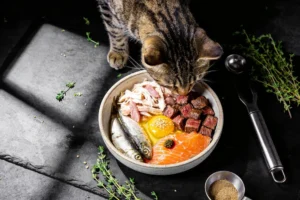
Raw and homemade diets can work, but they require careful formulation to avoid nutrient gaps or bacterial risks. If you go that route, consult a vet nutritionist. “Whatever they want” works only if “what they want” equals balanced, measured meals. Spoiler: it rarely does, IMO.
FAQ
Should I free-feed dry food?
You can, but it often leads to overeating and boredom.
Scheduled meals encourage better weight control and let you notice changes in appetite fast—super helpful for catching health issues early.
How do I switch foods without causing tummy drama?
Transition over 7–10 days, gradually increasing the new food. If stools get soft or your cat refuses, slow down the switch and try a different protein or texture.
Is wet food really necessary?
Necessary? Not always.
Beneficial? Yes, especially for hydration and urinary health. A mixed diet suits many cats.
If your cat drinks well and stays lean on dry, that’s fine—just monitor.
My cat wakes me at 4 a.m. for breakfast. Help?
Use an automatic feeder set for 4–5 a.m., and stop hand-delivering pre-dawn snacks. Feed a small late-night meal and add a short play session so they sleep longer.
Resist the meow-manipulation.
How much should my cat eat per day?
Start with the food label’s calorie guide for your cat’s ideal weight, then adjust every 1–2 weeks. Most indoor 10-lb cats land around 180–220 kcal/day, but activity and metabolism vary. The scale and your eyes will guide you.
Can I leave food out if I work long hours?
Yes, but portion it.
Use an automatic feeder with compartments or timed drops. Or split the day’s ration into puzzle feeders. Structure still wins.
Conclusion
A solid feeding schedule turns chaos into calm.
Match the plan to your cat’s age, measure portions, and stick to consistent times. Tweak as they grow, slow down, or develop special needs. Do that, and you’ll have a healthier cat—and way fewer 5 a.m. wake-up calls.
Win-win.