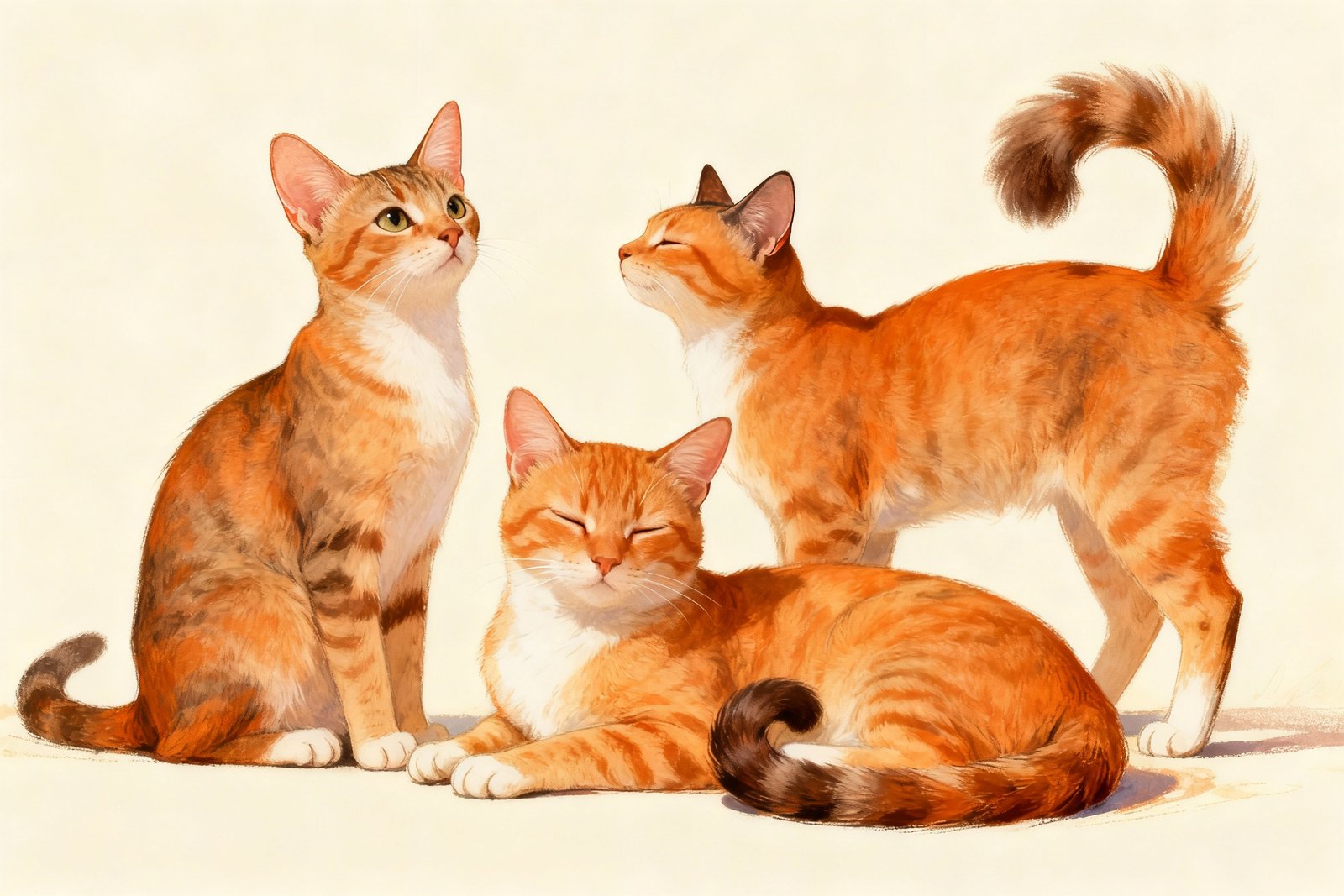
Your cat talks all day. Not with words—please, that would be terrifying—but with eyes, ears, whiskers, and tail. Every flick, fluff, and slow blink says something.
Want to decode the furry mystery living rent-free in your house? Let’s translate cat body language so you can stop guessing and start understanding.
The Tail: Your Cat’s Mood Barometer

When in doubt, watch the tail. It broadcasts emotions like a neon sign.
- Tail up, tip relaxed: Happy, confident, and probably angling for snacks.This is the feline equivalent of a friendly wave.
- Question mark tail (up with a curve): Playful mood. Grab a toy; you’ve got 10 minutes to be a hero.
- Tail puffed: Startled or scared. Your cat just saw a cucumber or heard a sneeze.
- Low or tucked tail: Anxious or unsure.Move slowly and keep things chill.
- Tail swishing quickly: Irritated or overstimulated. Hands off unless you enjoy Band-Aids.
- Slow, gentle swish: Focused on prey or a toy. The hunt is on.
When the Tail Talks During Petting
You’ll see a relaxed tail at first, then a faster swish as your cat gets overstimulated.
That fast swish says, “I’m done now.” Respect the tail and keep your fingers.
Ears: The Real-Time Mood Tracker
Ears switch modes faster than your cat changes napping positions.
- Ears forward: Curious, engaged, possibly ready to play.
- Ears neutral (sideways-ish): Content, relaxed, nothing major happening.
- Ears turned sideways (“airplane ears”): Nervous or overwhelmed. Take it down a notch.
- Ears flat and pinned back: Scared or defensive. Back off and give space.
Combine Ears + Eyes
Ears forward with big pupils?
Excited. Ears back with narrowed eyes? Annoyed and over it.
Context matters, always.

Eyes: Windows to the Mood (and Mischief)
Eye language carries a lot of weight in CatSpeak.
- Slow blink: The love language. It says, “I trust you.” Try returning it. Yes, you will feel ridiculous.Do it anyway.
- Half-closed eyes: Relaxed and comfy. You nailed the vibes.
- Wide pupils: Excited, scared, or in hunting mode. Look at other cues to tell which.
- Hard stare without blinking: Potential challenge.Don’t stare back unless you’re negotiating bedtime zoomies.
Whiskers, Mouth, and Face: Subtle but Loud
Facial expressions aren’t just for dogs. Cats flex micro-expressions like pros.
- Whiskers forward: Curious, alert, stalking something (even if it’s a dust bunny).
- Whiskers pulled back: Worried or defensive.
- Mouth open with “stinky face” (flehmen response): Your cat analyzes a smell using a special organ. Yes, it looks judgy.No, it’s not about you.
- Lip licking or yawning during stress: Displacement behavior. Your cat feels uneasy.
That Weird Chatter
When your cat chatters at a bird outside, it’s not gossip. It’s frustration/excitement and maybe practice for the killing bite.
Cute? Absolutely. Terrifying?
Also yes.

Posture: The Full-Body Story
The pose tells you everything—confidence, fear, readiness to bolt.
- Upright, tail up, relaxed body: Confident and sociable. Great time to interact.
- Loaf position (paws tucked): Safe and comfy. Your cat turned into bread.Do not disrupt the bake.
- Side sprawl, belly out: Relaxed or inviting play. Not always an invitation to pet the belly—proceed with caution.
- Arched back, hair up: Defensive, trying to look bigger. Don’t approach.
- Crouched low, weight back, tail tucked: Fearful.Give space and lower the stressors.
- Butt wiggle + pounce: Play or hunt mode. Clear the breakables.
Play vs. Real Fight
Play includes bouncy movements, loose bodies, and frequent breaks.
A real fight looks stiff, includes growling or hissing, and has pinned ears and dilated pupils. If it escalates, separate with a barrier—not your hands. FYI, cats do not respect your skin.
Sounds: Backing Vocals to the Body Language

Cats layer vocalizations on top of posture and tail talk.
- Purr: Contentment—or self-soothing when stressed or in pain.Check the rest of the body for context.
- Trill/Chirp: Friendly greeting. You got summoned, congrats.
- Meow: Aimed at humans, not other cats. It means “I want something.” Food, door, attention—guess wisely.
- Hiss/Growl: “Back off.” Respect the warning or risk finger loss.
- Caterwaul: Intense yowl, often mating-related or stress.If new, consider a vet check.
Affection Moves You Might Misread
Cats flirt in weird ways. Here’s how to spot the love.
- Head bunts (bunting): Scent-marking you as safe and familiar. You belong to them now.
- Tail wrap around your leg: Friendly greeting.Like a side hug with fur.
- Kneading (“making biscuits”): Comfort behavior from kittenhood. Soft blanket recommended. Your thighs will thank you.
- Presenting the rear: Rude?Sure. But in cat etiquette, it’s trust. IMO, keep your face out of it.
- Bringing “gifts” (ahem, prey): You are part of the colony.Accept with gratitude (and gloves).
Overstimulation: When Love Turns Bitey
Petting can flip to biting fast. Watch for tail flicks, skin ripples along the back, ears turning sideways, and sudden stillness. Stop before the chomp.
Your cat will appreciate your intuition—and so will your hands.
Territory, Confidence, and the “I Own This Place” Energy
Cats map their world with scent and routine. Body language shifts with territory confidence.
- Rubbing on furniture/you: Scent-marking to claim safe spaces.
- Scratching posts: Visual and scent markers, plus a stress release. Place posts where they actually hang out, not in the sad corner you picked.
- Door and window patrols: Routine boundary checks.A window perch can reduce stress and, bonus, entertain.
New Environments
New place? Expect crouching, low tail, slow movement, and hiding. Set up a small “safe room” first with litter, food, water, and a hideaway.
Let curiosity win on their timeline, not yours.
Reading the Whole Cat: Context Is Everything
No single signal tells the whole story. You need the full combo.
- Happy-chill: Tail up, ears forward or neutral, half-closed eyes, loaf or relaxed sprawl, soft purr.
- Playful: Question-mark tail, bright eyes, butt wiggle, chirps, springy movements.
- Stressed: Low tail, ears sideways, dilated pupils, lip licking, crouched posture, hiding.
- Angry/defensive: Pinned ears, hard stare or wide pupils, growling/hissing, stiff body, tail lashing.
How to Respond
– See stress signs? Reduce noise, create vertical spaces, and avoid handling. – See play signs?
Pull out wand toys and keep sessions short and daily. – See affection signs? Pet where they prefer—usually cheeks, chin, forehead. Belly is advanced mode.
Proceed with humility.
FAQ
Why does my cat show me their belly and then attack when I pet it?
The belly flash often means trust and relaxation, not a request for belly rubs. Many cats guard that area because it’s vulnerable. Try petting the cheeks or chest instead and watch for tail or ear changes.
If your cat genuinely likes belly rubs, congrats, you won the lottery.
What does a sudden zoomies session mean?
Zoomies usually mean pent-up energy or a burst of play drive. Offer interactive play and puzzle feeders to channel it. FYI, late-night hallway races are normal and hilarious—until a vase gets involved.
How can I tell if my cat is in pain from body language?
Look for decreased grooming, hiding, hunched posture, narrowed eyes, reduced jumping, and less social interaction.
Some cats purr when in pain to self-soothe, so don’t use purring as your only indicator. If you see these signs, schedule a vet visit—sooner rather than later.
Do slow blinks actually work with every cat?
Not every cat, but many respond well. Pair a slow blink with a relaxed posture and a turned head (not a direct stare).
Keep your energy calm. It’s a polite “hello” in CatSpeak; think of it as knocking before entering their personal space.
Why does my cat swat during petting if they love me?
Overstimulation happens. Nerves fire, and the touch goes from pleasant to too much.
Watch for early signals—tail flicks, twitchy skin, ears turning—and stop before the swat. Shorter, more frequent petting sessions help.
What does it mean when my cat sits with their back to me?
It often signals trust. Your cat feels safe enough to face the room while letting you “watch their back.” If the tail tip curls toward you, that’s extra affection, IMO.
Conclusion
Your cat doesn’t do random.
Every whisker twitch and tail flick carries meaning. When you read the full picture—ears, eyes, tail, posture, and context—you’ll respond better, avoid scratches, and deepen your bond. Learn the signals, respect the boundaries, and enjoy the weird, wonderful language of cats.