
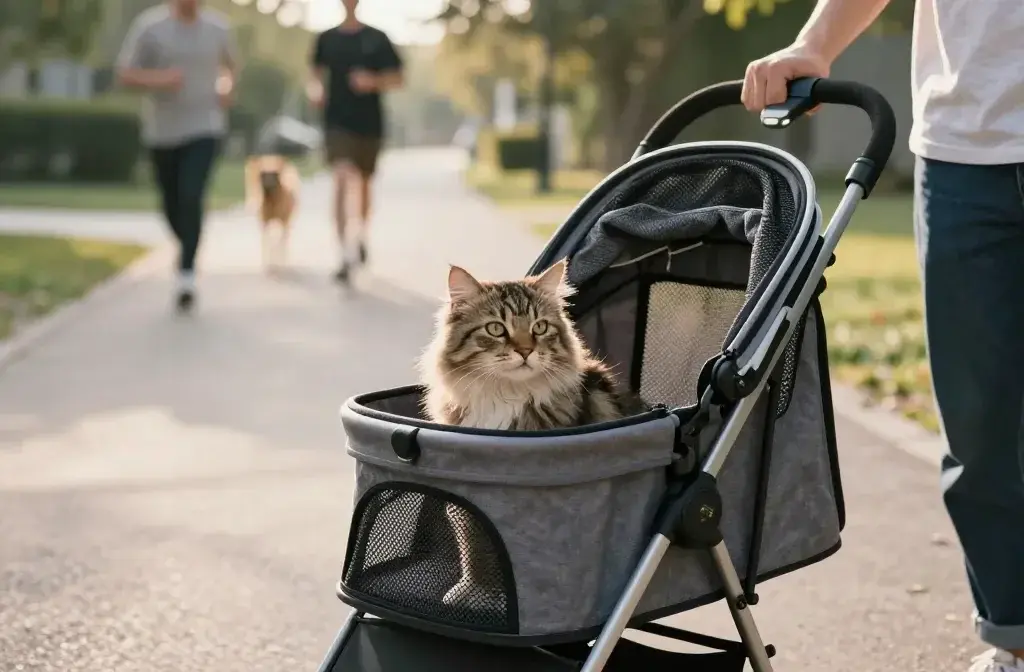
You’ve probably seen it: a fluffy tabby rolling past in what looks like a baby buggy, head swiveling like a tiny security guard. You chuckle, then you wonder—wait, is that actually genius? If your cat panics outside but stares longingly at the window, a stroller might be the weirdly perfect middle ground. Let’s talk about whether cat strollers are silly, brilliant, or both.
Why Even Consider a Cat Stroller?
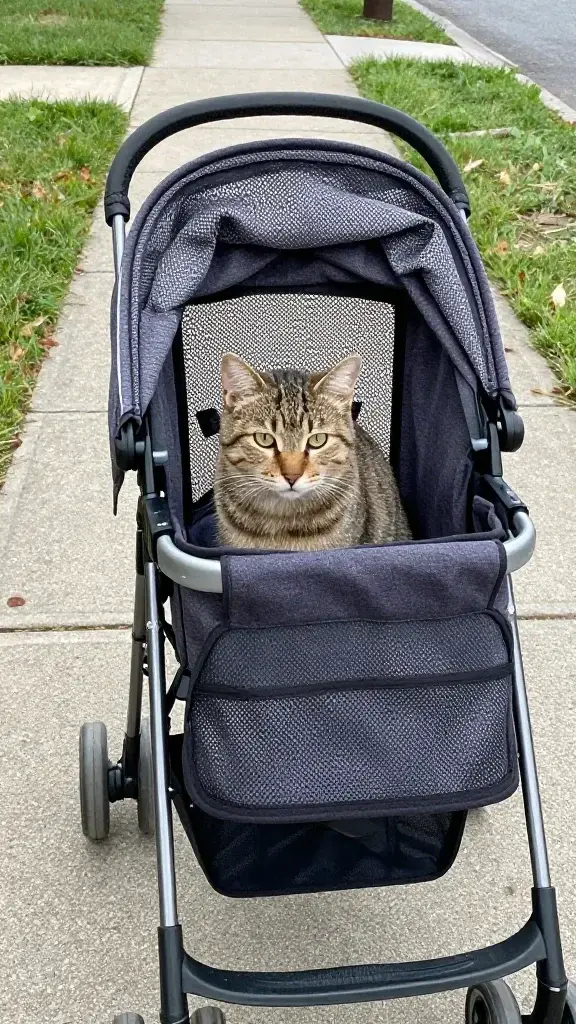
We love our cats, but let’s be honest: some of them go full drama-queen outside. Loud trucks, off-leash dogs, skateboards—instant meltdown. A stroller creates a secure bubble that lets nervous cats take in the world without going full pancake-on-the-sidewalk.
Big win: You give your cat enrichment (new sights, smells, and breezes) without forcing them into scary territory. You also control the speed, route, and escape risk. And yes, you avoid the wobbly chaos of a harness that your cat can Houdini out of in three seconds.
Who benefits most?
- Skittish or formerly feral cats who want to look but not touch
- Senior cats or those with mobility issues
- Indoor-only cats who get bored easily
- Humans who like long walks but hate guilt-eyes
Stroller vs. Harness: What’s the Vibe?
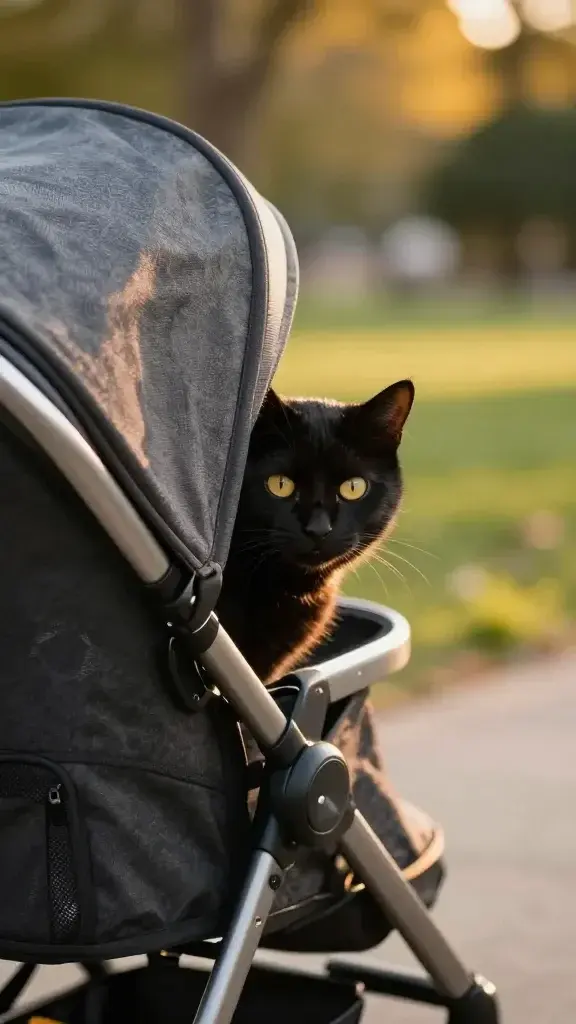
Harness walks feel more “adventure cat,” while strollers feel more “zen spectator.” Both work, but they serve different personalities.
Harness pros:
- More freedom and exercise if your cat enjoys walking
- Cheaper and easier to store
- Great for confident, curious cats
Stroller pros:
- Enclosed, safer experience for nervous cats
- Better for busy areas or dog-heavy parks
- Perfect for long distances, vet runs, and travel days
IMO: If your cat freezes, flops, or bunny-hops backward in a harness, a stroller might be the glow-up your outings need.
Safety First: What to Look For
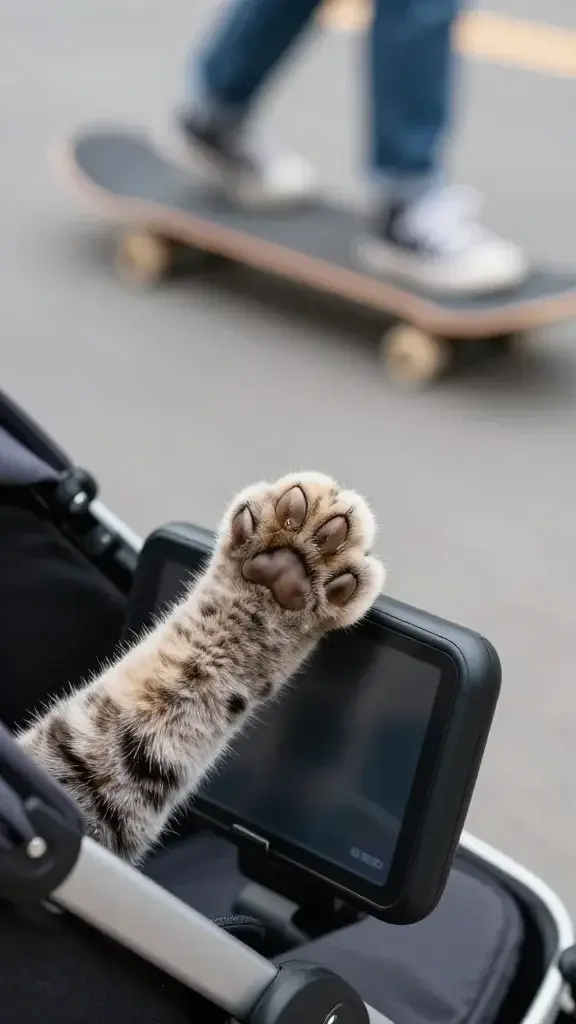
You’re trusting this thing with your tiny overlord, so don’t skimp on safety. The right stroller turns “cute idea” into “actually practical.”
Must-have features:
- Fully enclosed cabin with sturdy mesh and lockable zippers
- Parking brakes on at least one wheel
- Internal tether to clip to a harness (belt and suspenders, baby)
- Quality wheels: air-filled tires for rough paths; EVA/PU for smooth sidewalks
- Stable frame that won’t tip when your cat shifts weight
Comfort extras that matter
- Plush, washable pad (accidents happen—FYI, you want machine-washable)
- Sun/rain canopy for weather surprises
- Good ventilation on multiple sides
- Storage basket for treats, wipes, and—let’s be honest—your iced coffee
How to Introduce a Stroller Without Drama
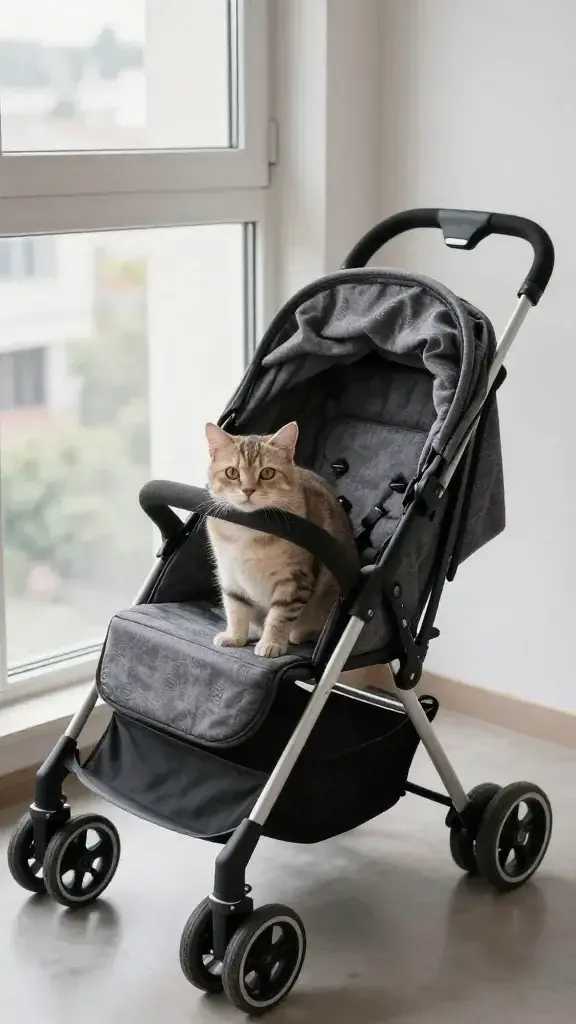
Don’t just plop your cat inside and roll into battle. Slow and steady saves claws and trust.
- Park it indoors with the cabin open. Toss treats and a favorite blanket inside. Let curiosity do the work.
- Feed or play near it so it predicts good things. Bonus points for spraying a little catnip or using pheromone spray.
- Close the cabin briefly while stationary. Treat. Open. Repeat. Keep it boring and positive.
- Roll around indoors (carpet helps) before stepping outside.
- Start with quiet routes—no dog parks, no construction zones. Keep trips 5–10 minutes at first.
Reading your cat’s signals
- Green flags: Ears relaxed, slow blinks, loafing, sniffing the air
- Yellow flags: Rapid tail flicks, low crouch, nonstop meowing
- Red flags: Panting, dilated pupils, frantic scratching—go home and try again another day
“But Do I Look Ridiculous?” (A Short Pep Talk)
Maybe a little. Also: who cares? People push dogs in strollers, wear cats in backpacks, and dress iguanas in sweaters. If your cat enjoys it, that’s the only metric that counts.
Bonus: Strollers keep your cat safe and stimulate their brain. Enrichment beats aesthetic, IMO. And once you see the tiny nose twitching at the breeze, you’ll stop noticing the side-eyes from cyclists.
Real-World Use Cases That Actually Make Sense
You don’t need a curated Instagram to justify a stroller. Everyday stuff works.
- Apartment life: Elevators, hallways, and busy streets feel safer enclosed.
- Multiple pets: Walk one on a harness while the nervous cat cruises.
- Vet days: Use it as a carrier on wheels—less lugging, less huffing.
- Recovery periods: Post-surgery cats can sunbathe safely without overexerting.
- Travel: Hotels and campgrounds feel less chaotic with a mobile “home base.”
Where to roll (and where to skip)
- Great: Quiet neighborhoods, botanical gardens that allow pets, smooth trails
- Maybe: Farmers markets early in the morning, outdoor malls before crowds
- Hard pass: Dog-heavy parks, festivals, busy streets at rush hour
What About Training a Nervous Cat for Bigger Adventures?
Some cats graduate from stroller life to harness walks. Others don’t. Both paths are valid.
To level up:
- Practice “park and observe” sessions—stroller parked, canopy open, harness clipped inside
- Reward curiosity: head pokes out = treat, calm sniffing = treat
- Try micro-walks near the stroller, then return to the “safe base” often
If your cat prefers the view from the VIP suite? Cool. Not every cat wants to be an influencer on a mountain ridge. FYI, comfort > clout.
FAQ
Will a stroller stress my cat out more?
It can if you rush. Introduce it slowly, pair it with treats and calm energy, and keep early outings short and quiet. If your cat shows red-flag stress (panting, frantic scratching), stop and try again another day.
Do I need a special harness inside the stroller?
Yes, use a well-fitted harness and clip it to the interior tether. Even with zippers closed, accidents happen. The harness adds a safety layer you’ll be grateful for if a zipper slips or a dog lunges nearby.
Are cheap cat strollers okay?
Sometimes, but check the build. Flimsy zippers, wobbly frames, and poor ventilation will frustrate you and scare your cat. If you can, invest in sturdy wheels, reliable brakes, and strong mesh. You’ll feel the difference on your first curb.
Can I jog with a cat stroller?
Only with a model designed for jogging—think large air-filled tires and strong suspension. Even then, go slow and watch your cat’s body language. Many cats prefer smooth, leisurely rides over high-speed cardio sessions (same, honestly).
How often should I take my cat out?
Aim for consistency over duration. Two or three 10–20 minute rides per week can satisfy curiosity and reduce indoor zoomies. If your cat starts waiting by the door at 5 p.m., congrats—you’ve created a monster (a cute, well-enriched monster).
What if my neighborhood has lots of dogs?
Choose off-peak times, quieter streets, and routes with easy pull-offs. Keep the canopy mostly closed on dog-heavy stretches. Position the stroller on the side away from approaching dogs and use your body as a buffer.
Conclusion: Silly Look, Serious Payoff
Cat strollers look a little ridiculous—and that’s part of the charm. For nervous outdoor explorers, they can be a genuine game-changer: safe, enriching, and surprisingly practical. If your cat craves fresh air but hates chaos, roll with it. Literally.