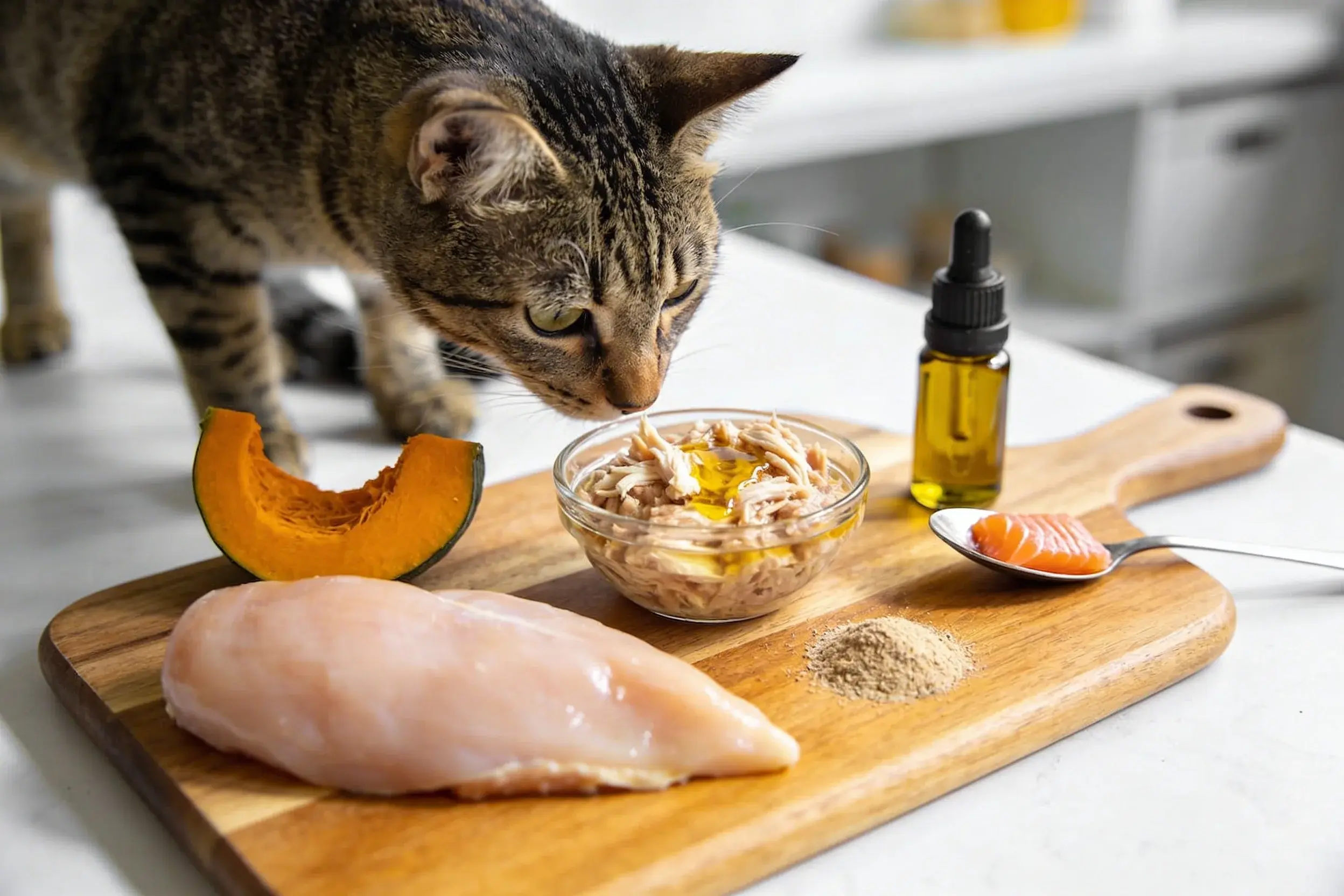
You love your cat, but your calendar looks like a Tetris game. Cooking elaborate feline feasts? Hard pass. Still, you want better than mystery-meat kibble and a prayer. Good news: you can make simple, balanced cat food at home without quitting your job or buying a meat grinder the size of your sink.
Why Bother With Homemade Cat Food?
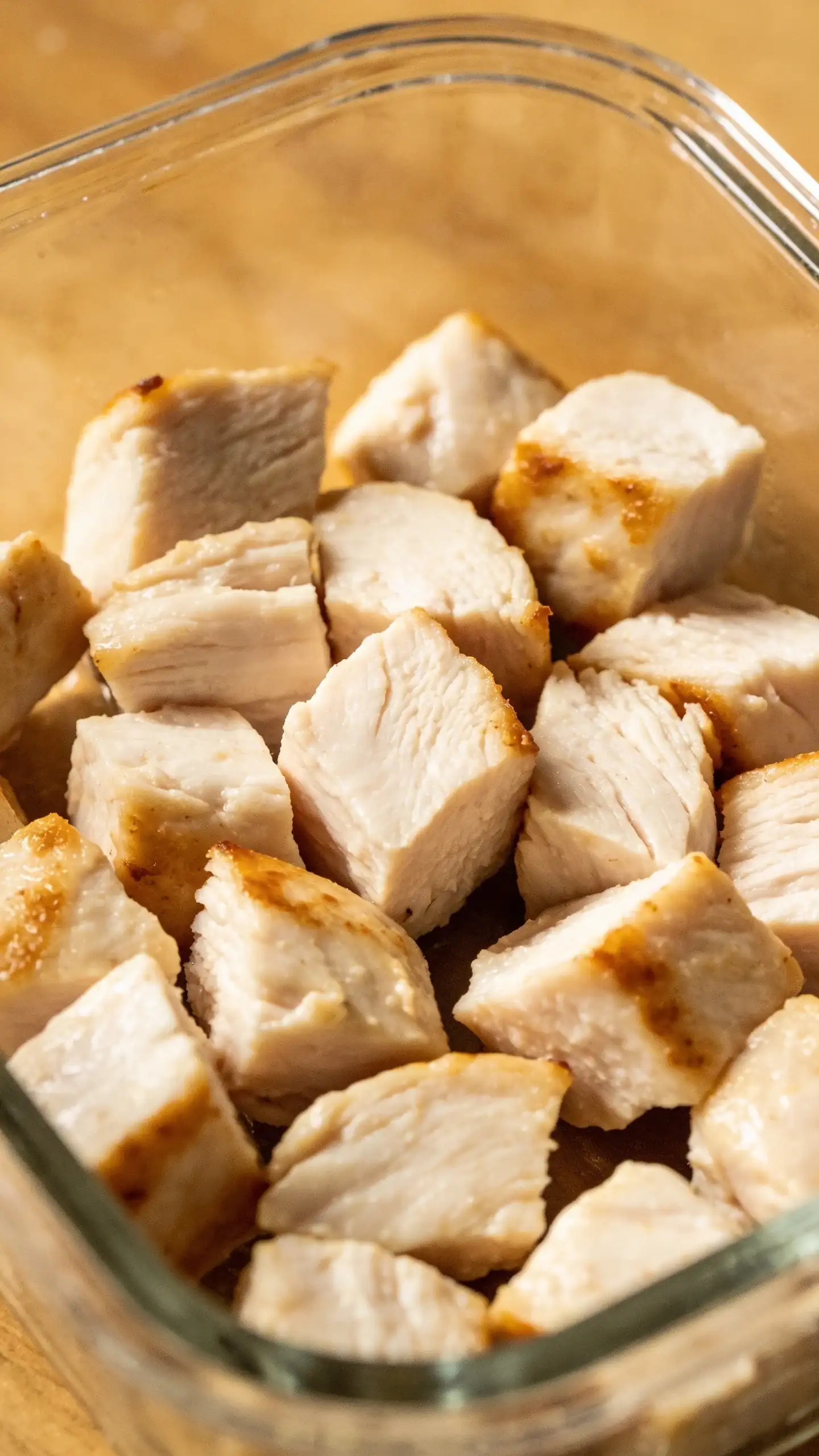
Homemade gives you control. You choose the protein, skip weird fillers, and keep sodium in check. Your cat gets fresh food that actually smells like food, not dusty corn.
Also, picky cats often eat better when meals taste like real chicken or tuna. And if you’ve got a sensitive-stomach floof? Simple recipes with few ingredients can help you pinpoint what works. FYI, we’re not here to dunk on good commercial food—just adding easy options for busy days.
The Non-Negotiables: Cat Nutrition Basics
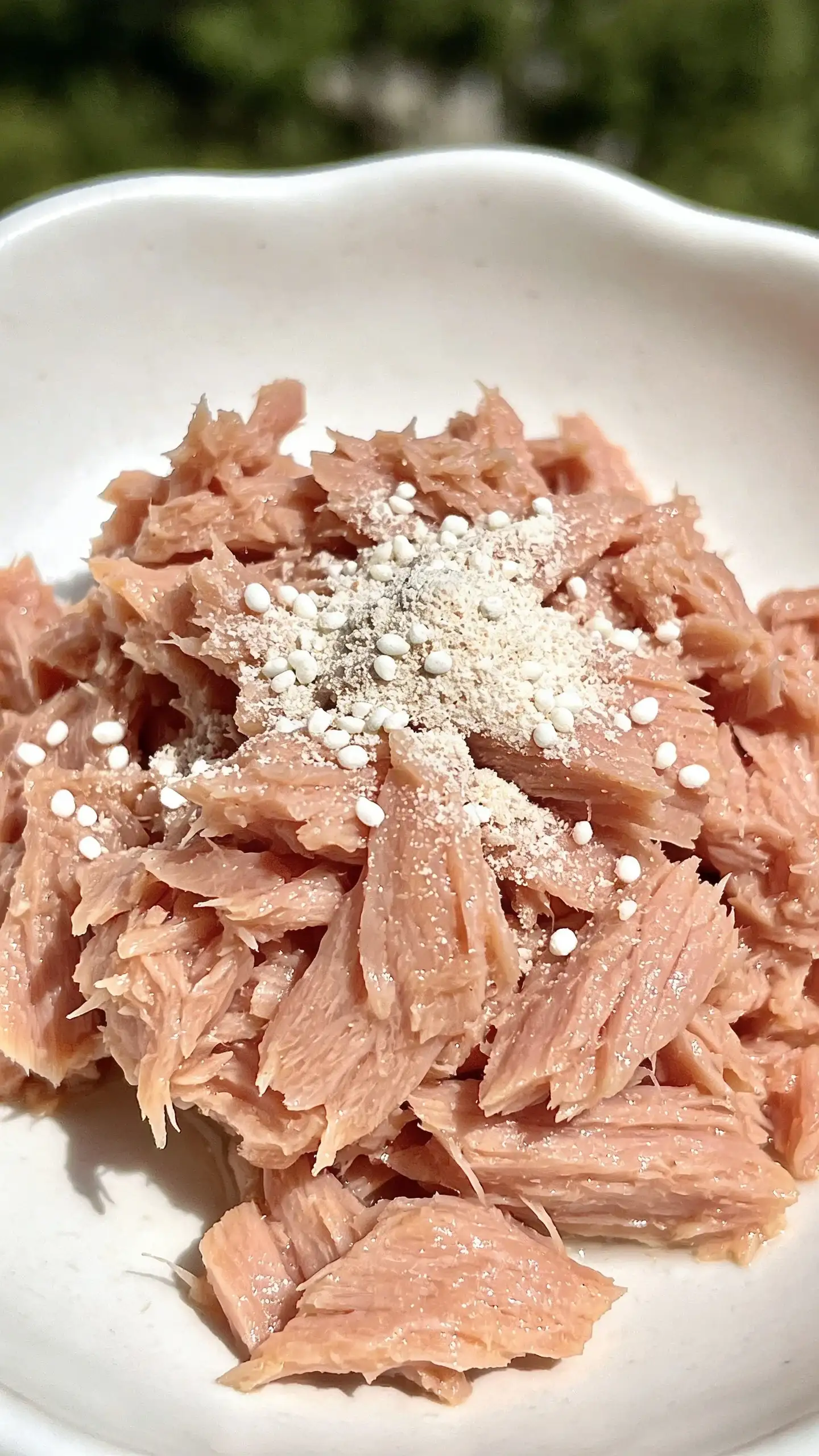
Cats are not tiny dogs. They’re obligate carnivores, which means they need specific nutrients from animal sources. Keep these must-haves front and center:
- High-quality animal protein first. Think chicken, turkey, beef, or fish (not every day).
- Taurine is essential. Meat has taurine, but cooking reduces it. Many homemade feeders add a powdered supplement.
- Fat matters for energy and skin/coat health. Don’t serve only lean meat long-term.
- Very low carbs. Cats don’t crave rice bowls. Tiny amounts of pumpkin or veggies are fine, but keep it minimal.
- Calcium-phosphorus balance. Meat alone = too much phosphorus. You can balance with crushed eggshell powder or a complete supplement blend.
Quick Safety Rules
- Cook poultry and pork fully to avoid pathogens.
- Debone everything or use ground meat. No cooked bones ever.
- Avoid onions, garlic, chives, grapes/raisins, alcohol, xylitol, and lots of salt.
- Transition gradually to avoid tummy drama.
Grocery-Store Simple: 3 Base Recipes
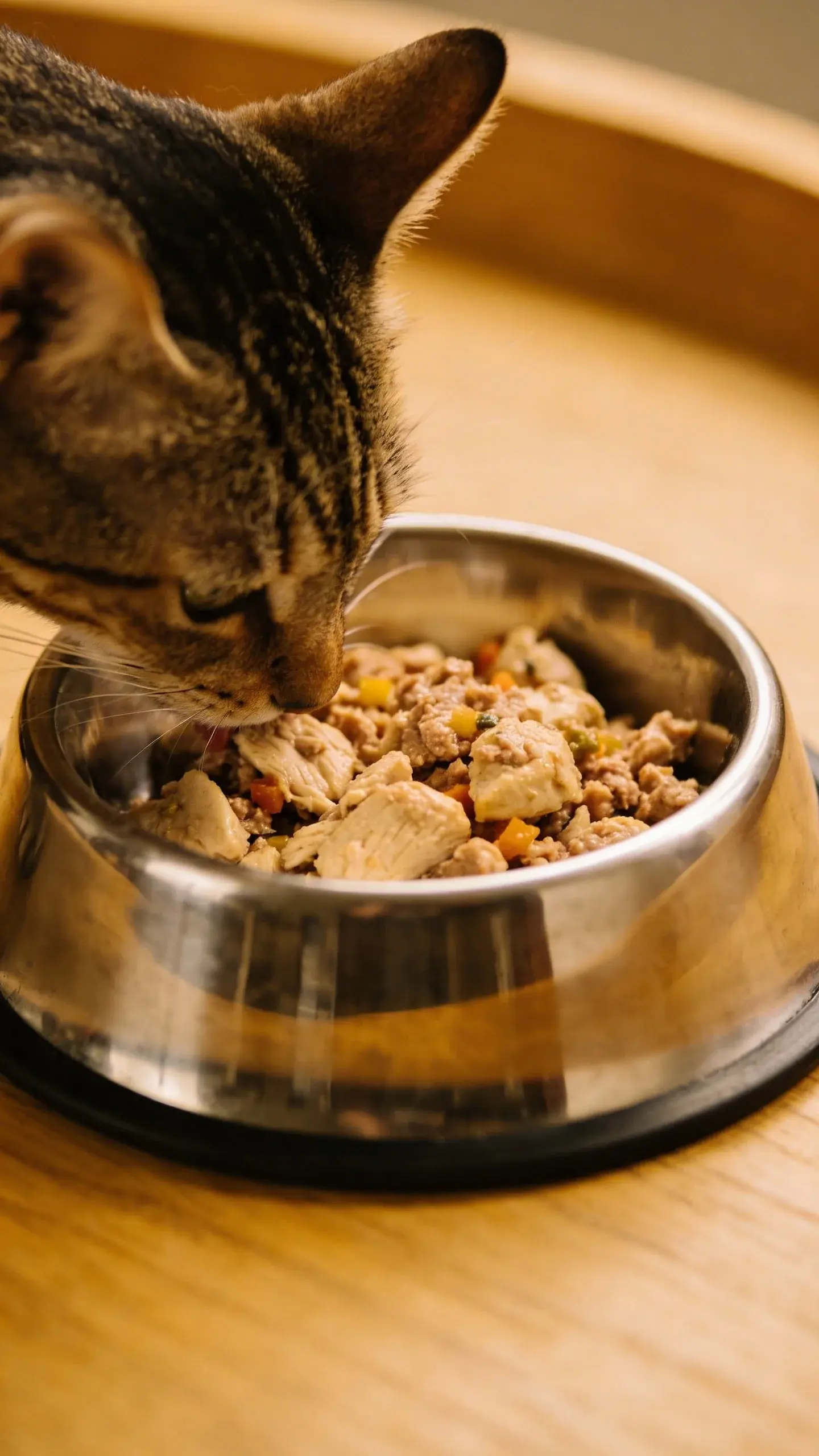
These are easy, batch-friendly, and fast. They’re also designed to be complete only if you add a cat-specific supplement that includes taurine, calcium, vitamin E, and B-complex. Without that, serve them as toppers, not full meals.
1) Weeknight Chicken Mash
- 1 lb ground chicken or finely chopped chicken thighs
- 1 tbsp chicken fat or olive oil (chicken fat if you can get it)
- 1 large egg, scrambled (optional)
- 2-3 tbsp water or low-sodium chicken broth (no onion/garlic)
- Cat multinutrient supplement per label (usually per pound of food)
Instructions:
- Brown chicken in a skillet until fully cooked. Add fat and water to keep it moist.
- Stir in the scrambled egg. Cool slightly.
- Mix in the supplement as directed once the mixture is warm, not hot.
- Portion and chill. Freeze extras in single servings.
Why it works: High protein, easy texture, and quick.
2) Turkey & Pumpkin Comfort Bowl
- 1 lb ground turkey (7–15% fat)
- 2 tbsp pure pumpkin puree (not pie filling)
- 1 tbsp salmon oil or sardine oil
- Water as needed
- Cat supplement blend (with taurine + calcium)
Instructions:
- Cook turkey thoroughly, breaking into small bits.
- Stir in pumpkin and oil. Add water for a soft, spoonable texture.
- Cool slightly and add supplement.
Why it works: Gentle on stomachs, great for hairballs, IMO a picky-eater pleaser.
3) Tuna-Teaser Mixer (Topper, Not Daily)
- 1 can tuna in water, drained
- 2 tbsp cooked mashed egg or a spoon of cooked chicken
- 1 tsp olive oil or a splash of tuna water
Mix and serve over regular food. Keep tuna to once or twice a week due to mercury. This one’s a “get them interested” trick, not a balanced diet.
How to Make It Balanced Without a PhD
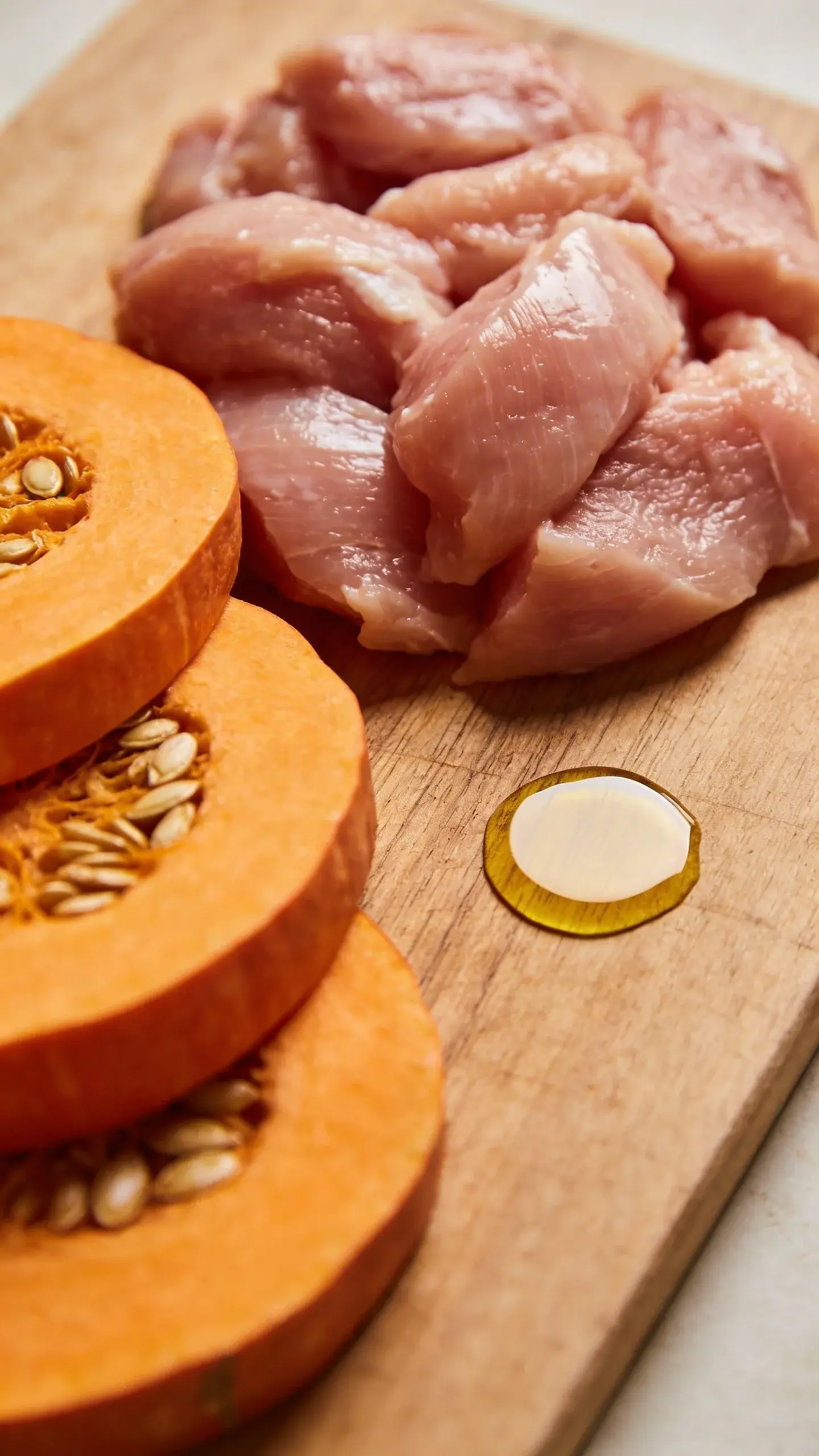
You don’t need to cobble together 12 bottles of vitamins. Use a commercial cat food supplement for homemade diets that lists taurine, calcium (or advise to add eggshell), vitamin E, and B vitamins. Follow the label. That’s it.
DIY Eggshell Calcium (When You’re In a Pinch)
If your supplement lacks calcium:
- Bake clean eggshells at 300°F (150°C) for 10 minutes.
- Grind to a very fine powder (coffee grinder works).
- Use about 1/2 teaspoon per pound of meat to balance phosphorus. FYI: this is a general rule, not a forever substitute for a full supplement.
Time-Saving Workflow for Busy Humans
I get it—you’re juggling life. Batch-cook like a pro with this plan:
- Cook once, portion many: Make 2–3 lbs on Sunday. Split into 2–4 oz portions in freezer-safe containers.
- Label: Write protein, date, and whether you added supplements.
- Defrost smart: Move a portion to the fridge the night before. Warm to room temp before serving (not hot).
- Rotate proteins: Chicken this week, turkey next, maybe beef after that. Variety = better micronutrient coverage.
Serving Sizes (Ballpark)
Most adult cats eat about 20–30 calories per pound of ideal body weight daily. Homemade cooked meat averages 30–45 calories per ounce, depending on fat. A typical 10-lb cat might eat 4–6 ounces per day, split into two meals. Adjust for activity, age, and your vet’s advice.
Transitioning Without Drama
Cats value routine like it’s a religion. Move slowly:
- Days 1–3: 10–25% homemade mixed with their usual.
- Days 4–6: 50/50.
- Days 7–10: 75% homemade, then full switch if everything looks good.
Watch litter box output, appetite, and energy. Soft stool? Step back a stage and add a teaspoon of pumpkin. Cat staging a hunger strike? Warm the food slightly and use a tuna topper.
Common Mistakes to Avoid
- Skipping supplements: Meat alone won’t cut it long-term. Taurine and calcium are non-negotiable.
- Too lean, too long: Add some fat for calories and satiety.
- Overdoing fish: Save it for flavor, not a staple.
- Huge veggie portions: Cats don’t need salad. Tiny amounts only.
- Food left out for hours: Refrigerate after 30–60 minutes, especially in warm rooms.
FAQ
Do I need a vet’s approval for homemade food?
Short answer: you’ll do better with one. Bring your recipe and supplement label to your vet or a veterinary nutritionist. They can confirm it meets your cat’s needs and suggest tweaks for weight, allergies, or kidney concerns.
Can I feed raw instead of cooked?
Some people do, but raw carries higher pathogen risk for you and your cat. If you consider it, talk to your vet and follow strict food safety. Cooked recipes offer a safer, simpler starting point IMO.
What if my cat refuses the new food?
Cats can be dramatic. Try mixing tiny amounts into familiar food, warming slightly, or adding a smidge of tuna water. Use shallow bowls and a calm feeding spot. If your cat still says “nope” after two weeks, pause and try a different protein.
How do I handle taurine properly?
Use a supplement that includes taurine, or add taurine powder per label directions. Because heat reduces taurine, mix supplements in after cooking and cooling. Don’t guess—follow dosing on the product.
Is bone broth good for cats?
Plain, unsalted broth can add moisture and flavor. Skip onions, garlic, and high sodium. Think “lightly seasoned spa water,” not “grandma’s soup with a salt shaker.”
Can I make a giant batch and freeze for a month?
Yes. Portion into daily servings, cool quickly, and freeze. Use within 1–2 months for best quality. Thaw in the fridge, not on the counter.
Final Thoughts
You don’t need chef-level skills to feed your cat well. Keep it simple: good protein, the right supplement, small batches, and slow transitions. Your cat gets fresher food, you save time and money, and dinner becomes less of a negotiation. And hey—if you still keep a solid canned or kibble option on hand, that’s smart, not cheating. FYI, the best plan is the one you’ll actually follow.