Some pets inhale dinner like it’s a competitive sport. One minute you hear kibble hit the bowl, the next you hear… nothing. If you’ve got a speed eater, you’ve also got burps, hiccups, and maybe some tummy drama. Good news: you can design a simple “feeding station” that forces slow, calm eating—and it can actually look nice in your space.
Why Slowing Down Matters (and Not Just for Vibes)
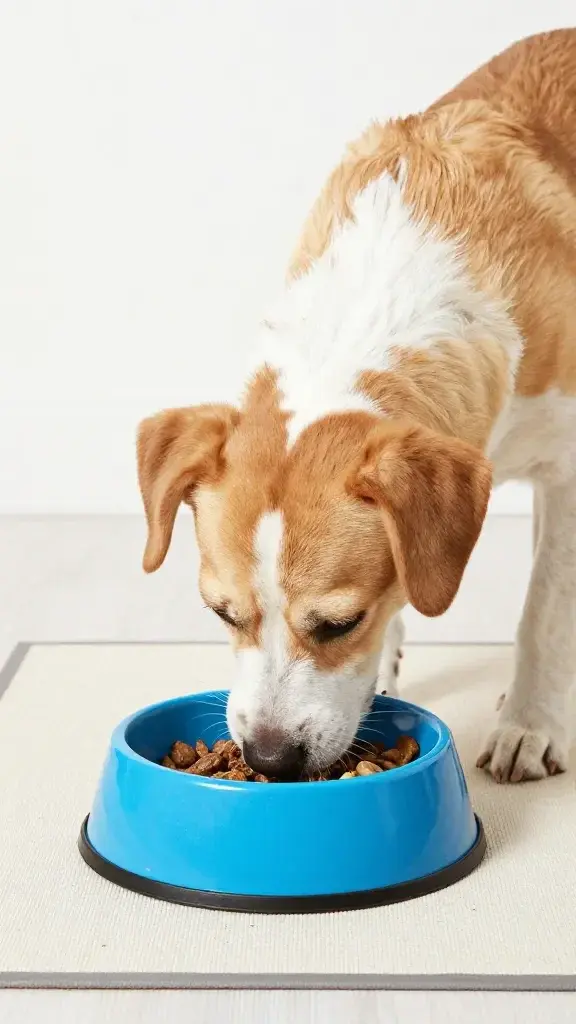
Speed eating isn’t just annoying—it can cause real problems. We’re talking gagging, vomiting, bloating, and extra gas. Some pets also get food aggression from the constant “eat fast or else” mindset.
Your mission? Build a setup that makes fast eating physically hard and mentally boring. That way your pet chews, digests, and chills.
The Core Idea: Create Good Friction
We don’t need tech wizardry; we need friction. Not the physics class kind—the “this takes effort” kind. The trick is to make your pet work a little for every bite.
Think in layers:
- Physical obstacles that break up mouthfuls
- Feeding geometry that spreads food out
- Surface texture that slows licking and grabbing
- Stable, raised platform that encourages calmer posture
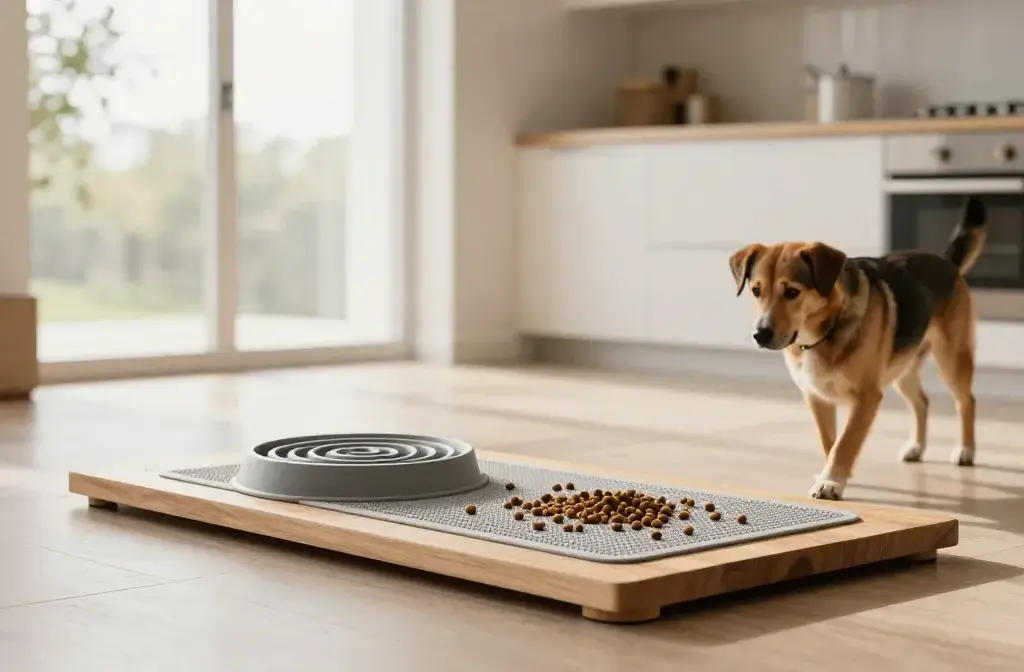
Station Layout: What Goes Where
Set up a designated spot that stays consistent. Predictability reduces frantic “hunt and gulp” energy.
Base
- Non-slip mat with a lip to catch spills. Silicone works best and cleans easily.
- At least 2x the bowl footprint so you can spread elements out.
Bowls and Tools
- Primary slow-feeder bowl with ridges or maze patterns for kibble.
- Licking mat (for wet food or toppers) to promote slow licking.
- Scatter zone on the mat where you sprinkle a small portion to encourage foraging.
- Water bowl placed a bit away to avoid “eat-chug-repeat.”
Elevation
- Use a weighted, non-slip stand that raises bowls to chest height (not neck or head high).
- Heavier dogs: look for 8–12 inches. Cats and small dogs: 3–6 inches. Adjust so your pet keeps a straight neck.
Pro Tip: Noise Dampening
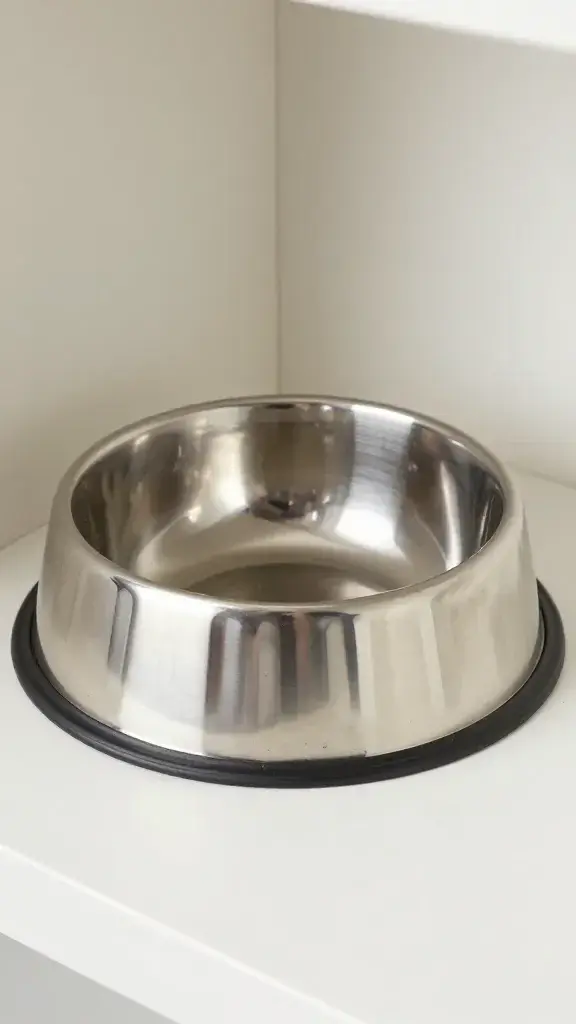
Clanking bowls can trigger frantic eating. Go for silicone or a rubber ring under stainless bowls to keep the station quiet. You’ll be shocked how much calmer mealtime feels.
Pick the Right Slow-Feeder for Your Pet
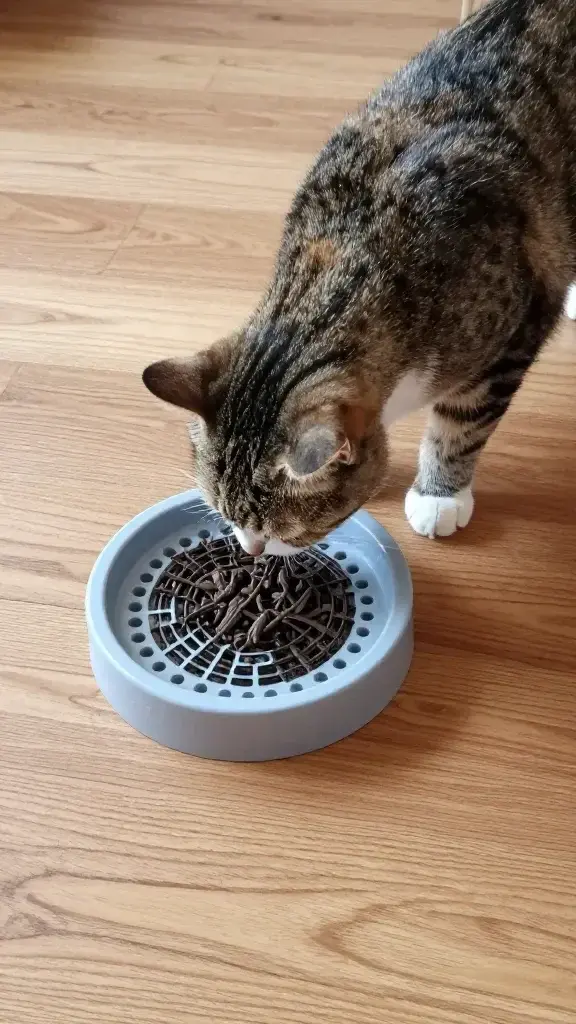
One bowl doesn’t fit all. Your pet’s snout, tongue, and eating style matter.
For flat-faced breeds (brachycephalic)
- Shallow, wide slow feeders with low ridges.
- A textured licking mat for wet food to avoid nose-smashing.
For long-nosed dogs or enthusiastic cats
- Deeper maze bowls with tighter channels.
- Puzzle feeders and rolling treat balls for a portion of the meal.
For pets that scarf and vomit
- Start with a very mild pattern and gradually increase difficulty.
- Use smaller, more frequent meals until the habit changes.
DIY Options That Actually Work
- Muffin tin + tennis balls: Drop kibble under a few balls. Pets must nudge or lift to eat.
- Large plate + clean river stones: Scatter kibble around smooth stones to create barriers. Wash thoroughly.
- Ice cube tray: Portion wet food or kibble with broth, then freeze for a lick-and-crunch challenge.
Portion Strategy: Don’t Dump It All In
The fastest way to slow a fast eater? Control the flow.
- Split meals into 2–3 servings. Offer the next portion only after the pace calms.
- Layer textures: Kibble over a smear of wet food on a lick mat keeps the pace steady.
- Scatter a handful around the mat or a snuffle mat to encourage sniffing (sniffing = calm brain).
- Timed release using puzzle toys for 20–30% of the meal.
IMO: The 80/20 Rule Wins
Aim for 80% of the meal in a slow-feeder bowl and 20% in puzzles/scatter. That combo slows eating without creating a 45-minute saga every night.
Behavior Cues: Set the Tone Before the Bowl Drops
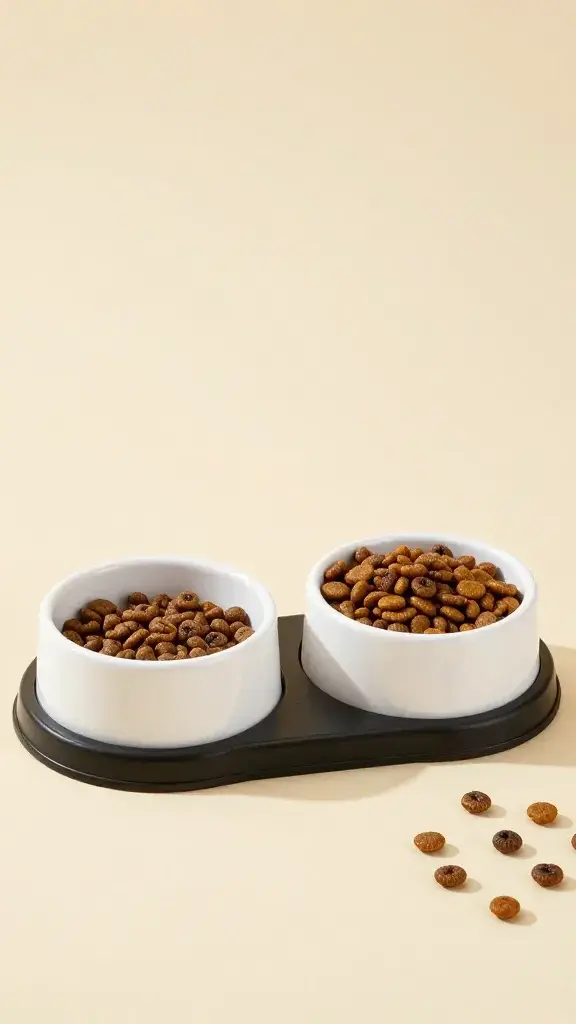
Your pet mirrors your energy. If you hype up mealtime, they’ll sprint like it’s the Indy 500.
- Pre-meal sniff break: 2 minutes of sniffing outdoors or a short “find it” session indoors.
- Calm start cue: Ask for a simple sit or “wait” for 1–2 seconds. Release with a cheerful “okay.”
- Walk away: Give space and avoid hovering. Hovering can spike anxiety and speed.
- Quiet zone: Feed away from pets/people who cause competition.
What If They Flip the Bowl?
Use a heavier bowl, add a suction base, or place the bowl in a low-sided storage bin on the mat. FYI, bowl flipping often means frustration—dial back the difficulty slightly.
Advanced Setup: The “Three-Mode” Station
Rotate modes to prevent the “I solved this” speed run.
- Mode A: Maze + Lick
- Kibble in a medium-difficulty slow-feeder bowl.
- A tablespoon of wet food spread on a lick mat as a side.
- Mode B: Forage + Puzzle
- Half the portion scattered in a snuffle mat.
- Remainder in a simple puzzle feeder (ball or slider).
- Mode C: Stack + Freeze
- Kibble mixed with low-sodium broth in a silicone mold, frozen.
- Serve in a shallow tray to contain the mess.
Rotation schedule: Switch modes daily or weekly. Keep novelty without chaos.
Safety Notes You Shouldn’t Skip
Yes, safety. Because we like our pets healthy and furniture not sticky.
- Size matters: Any loose object should be too big to swallow.
- Materials: Food-grade silicone or stainless steel for anything that touches food.
- Clean-up: Wash slow feeders and mats daily. Bacteria love those grooves.
- Medical issues: If your dog bloats, coughs, or vomits frequently, talk to a vet ASAP. Slowing helps, but it’s not a cure-all.
Training the New Routine (It’s Not Instant)
Change freaks some pets out. Start simple and gradually increase the challenge.
- Begin with an easy slow-feeder and a partial portion.
- Reward calm behavior around the station—no jumping earns access faster.
- Watch body language: frustration = simplify; mastery = level up.
Short on Time? Try This 2-Minute Hack
Dump half the meal in the slow-feeder and sprinkle the other half across the mat and floor. You just built a mini forage field. It’s not fancy, but it works.
FAQ
Will slow-feeder bowls frustrate my pet?
A little challenge is fine; meltdown-level frustration isn’t. Start with an easy pattern and use high-value toppers to keep them engaged. If your pet walks away or cries, simplify the setup and build up gradually.
Is raised feeding safer for fast eaters?
Raised feeding can create a calmer posture for some pets, but it doesn’t automatically prevent bloat. Keep the bowl at chest height, not high-neck level, and focus on slow intake. When in doubt, ask your vet, especially for large, deep-chested breeds.
What if I have multiple pets that compete?
Feed them in separate zones or behind baby gates. Competition fuels speed eating, so eliminate the audience. You can also stagger mealtimes or use microchip-activated bowls for food thieves.
Can I just use a small portion of food and refill as they eat?
Yes, that works—think “manual slow feeder.” Offer small amounts every 30–60 seconds. It’s a bit hands-on, but it re-trains the pace and helps sensitive stomachs.
Are puzzle toys messy or a choking risk?
Choose size-appropriate, durable toys and supervise at first. Many puzzle toys work well indoors if you use dry food and set them on a mat. Inspect toys regularly for cracks or loose parts.
How long should a slowed meal take?
Aim for 5–15 minutes. If it takes 30 minutes and your pet looks annoyed, it’s too hard. If it’s still under 2 minutes, increase difficulty or split the meal into modes.
Conclusion
You don’t need fancy gadgets to fix fast eating—just a smart setup that adds gentle obstacles and structure. Build a stable station, mix in a slow feeder and a lick mat, and tweak portions and routines until your pet relaxes. The payoff? Calmer meals, happier stomachs, and way fewer “why is there kibble on the wall” moments. IMO, that’s a solid upgrade for both of you.