
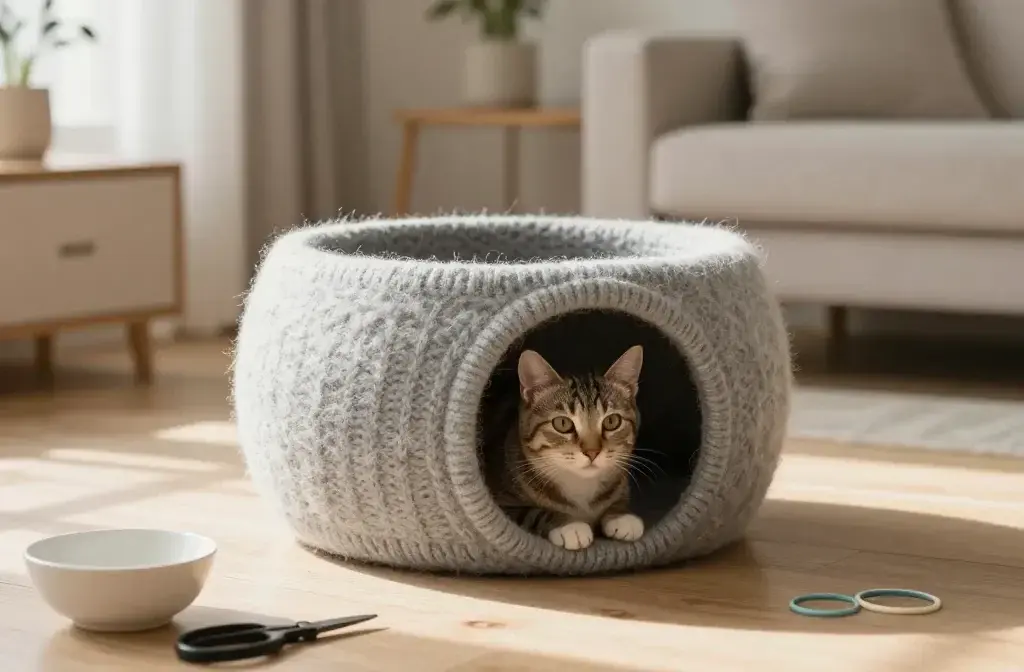
Your cat already ignores the expensive bed you bought, right? Cool, let’s give them a cozy cave they’ll actually use—made from a felted wool sweater you probably already own. It’s budget-friendly, fast, and surprisingly sturdy. Plus, you get bragging rights: “Oh that? I made it.” Boom.
Why Felted Wool Makes the Perfect Cat Cave
Wool felts into a dense, warm fabric that holds its shape and traps heat. That means your cat gets a snug hideaway that doesn’t flop like a sad pancake. It also resists odors better than many synthetics, which matters when you have a furry roommate with Opinions. And IMO, nothing beats the soft-but-structured vibe of felted wool for pet hideouts.
What You’ll Need (and What You Can Improvise)
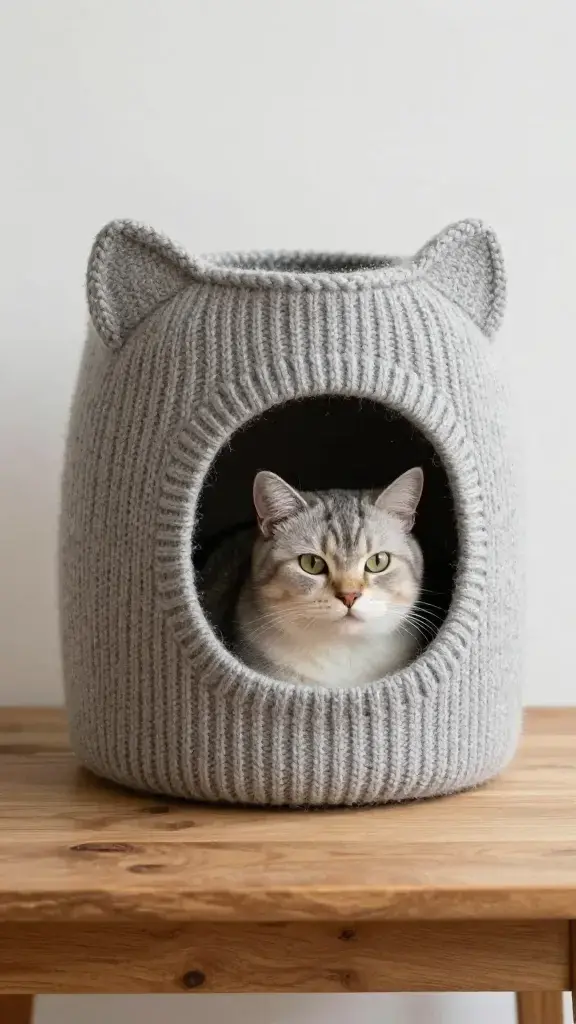
Materials
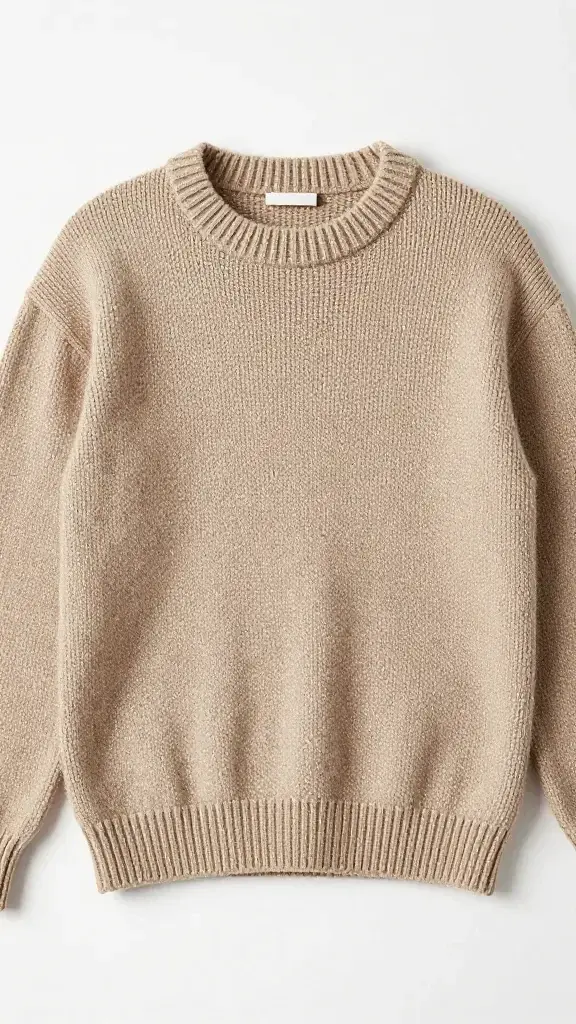
- 100% wool sweater (thrifted is perfect)—avoid blends for best felting
- Rubber bands or string (for shaping while drying)
- Plastic bowl, balloon, or mixing bowl as a mold (cat-head sized)
- Dish soap (a few drops for felting help)
- Scissors that can cut fabric cleanly
- Needle and strong thread (optional, for finishing)
- Old towels (you’ll get splashy)
Nice-to-haves
- Felting needle and wool roving (if you want to patch or decorate)
- Fabric glue (for reinforcing edges)
- Lint shaver (to de-fuzz post-felt)
Step 1: Felt That Sweater Like You Mean It
You’ll shrink and densify the sweater so it behaves like thick felt. No stress—it’s just aggressive laundry.
Machine Felting
- Turn the sweater inside out and toss it in a pillowcase or mesh bag.
- Wash hot with a little detergent and a few towels (they add friction).
- Run a full cycle, then check: the fabric should tighten and shrink noticeably.
- Repeat as needed until it feels thick and has minimal stretch.
Hand Felting (if you’re wool-washing-shy)
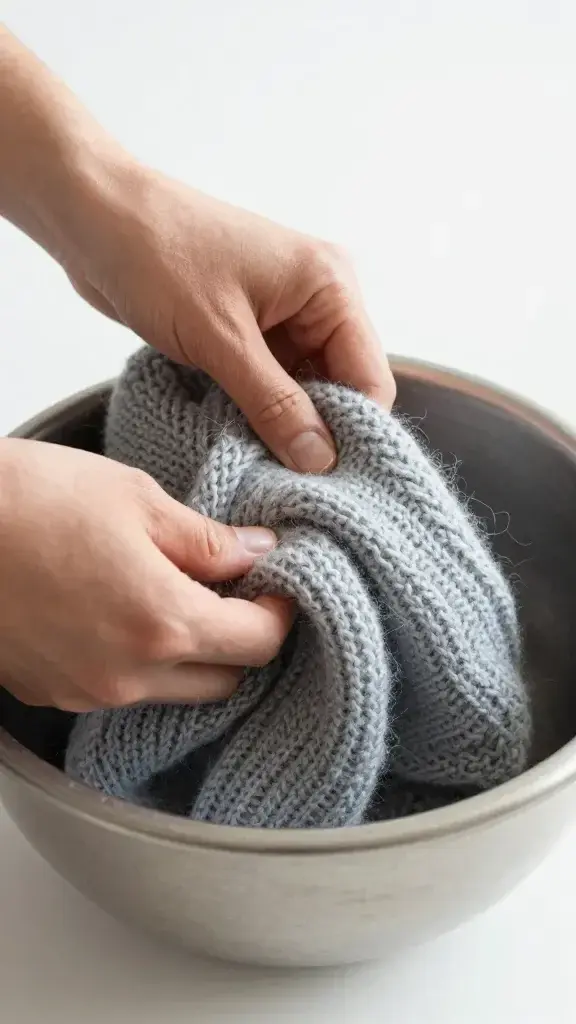
- Fill a sink with hot water and a squirt of dish soap.
- Agitate and scrub the sweater against itself for 10–15 minutes. Rinse with cold water.
- Repeat hot/cold cycles until it thickens and shrinks.
FYI: You can’t “unfelt,” so take it in stages. Stop when the sweater feels firm, dense, and about 25–40% smaller.
Step 2: Cut the Pieces (Minimal Measuring, Maximum Cute)
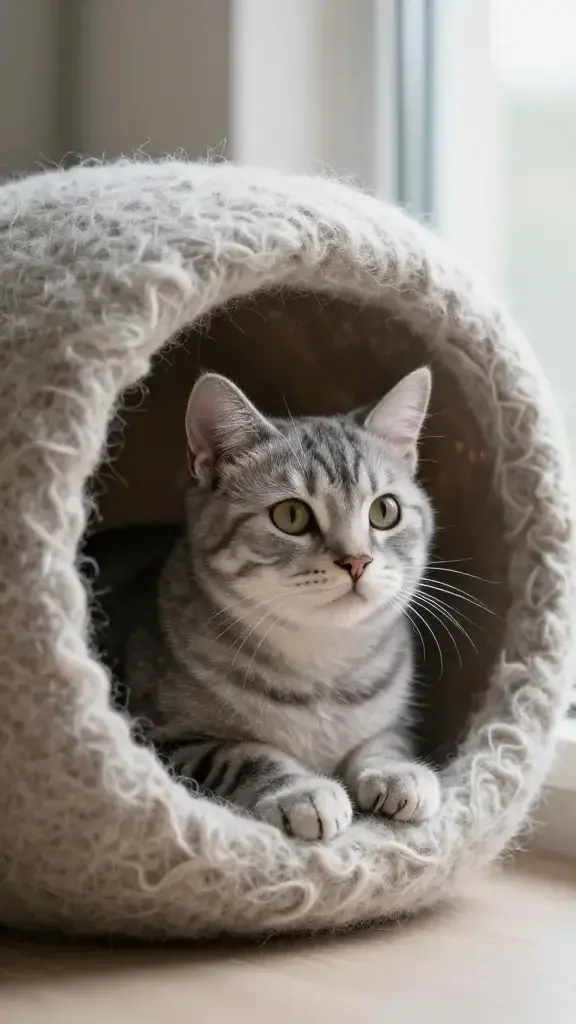
You’ll use the sweater’s body for the main cave and the sleeves for structure or extras.
- Lay the felted sweater flat. Cut straight across under the armpits—this gives you a felted “tube.”
- Trim the bottom hem if it’s bulky. Keep the tube as even as possible.
- Slice off sleeves at the shoulder seams—set them aside for later.
Entrance Planning
Decide where your cat’s doorway goes. Front and center is classic. Off to one side looks extra cozy. Draw a circle about 5–6 inches across for smaller cats, 6–7 inches for chonksters.
Pro tip: Cut small first. You can always enlarge the hole, but you can’t put fibers back without felting magic.
Step 3: Shape the Cave on a Mold
Time to turn your wool tube into a 3D hideout.
- Choose a mold: a mixing bowl, a balloon, or even a basketball. Aim for something roughly 10–12 inches in diameter.
- Pull the wool tube over the mold like a hat. The opening (former neckline or cut edge) should sit at the base.
- Spritz with warm water. Smooth and stretch gently to round it out.
- Use rubber bands around the base to hold the “brim” snug, if needed.
Sculpting the Dome
- Pinch the top to add height if you want a hobbit-hole vibe.
- If the fabric feels loose, lightly felt again: rub with warm soapy water, then rinse with cold.
- Let it dry on the mold completely—this locks in the shape.
IMO: A slightly asymmetrical dome looks artsy. Perfection is for robots; your cat does not care.
Step 4: Make the Entrance and Reinforce It
Once dry, remove the mold. Cut your entrance hole carefully with sharp scissors.
- Start with a small oval. Test with a toy or your hand for size.
- Roll the cut edge between your fingers with a little warm, soapy water to felt it tighter. Rinse and let it dry.
- Optional: Stitch a simple blanket stitch around the opening with strong thread for structure and style.
Use the Sleeves for Upgrades
- Cut a sleeve into a ring and stitch it inside the entrance as a built-in collar for stability.
- Flatten a sleeve, cut a circle, and hand-sew it as a padded “floor.”
- Need a tail? Make a decorative loop at the top for easy lifting and maximum whimsy.
Safety check: Keep stitches tight and ends trimmed. No dangly bits for cats to chew.
Step 5: Final Touches (Because We’re Extra)
Want pattern or personality? Add it without compromising function.
- Needle felt simple shapes—hearts, fish, polka dots—using wool roving. A few pokes lock them in.
- Spot-patch thin areas by layering roving and felting it on. It thickens and strengthens weak spots.
- De-fuzz with a lint shaver if the surface pills.
Stability and Comfort
- Put a grippy mat or felt pad under the cave to stop sliding.
- Add a small fleece scrap or thin cushion inside. Don’t overstuff—cats love a snug nest.
- Place the cave in a low-traffic corner with a view. Cats want cozy, not isolated.
FYI: If your cat ignores it, bribe them. Sprinkle a pinch of catnip or toss in their favorite toy. Zero shame.
Cleaning and Care
Wool stays fresh with light maintenance. You don’t need to baby it, but don’t rage-wash it either.
- Vacuum or lint-roll fur weekly.
- Spot clean with a damp cloth and mild soap.
- Hand wash in cool water when necessary. Reshape on the mold and air dry.
- Airing in sunlight for an hour helps with odor. Avoid long direct sun—colors can fade.
FAQ
Can I use an acrylic or blended sweater?
Acrylic won’t felt properly, and blends felt unpredictably. You’ll end up with a floppy cave that collapses like a soufflé. Stick to 100% wool or at least 80–90% wool for structure.
How big should I make the entrance?
Aim for 5–6 inches for smaller cats and 6–7 inches for larger cats. Start small and enlarge slowly. Cats like to squeeze—tight but comfy wins.
My sweater didn’t felt enough. Now what?
Run another hot wash cycle with towels, then a cold rinse. Add more agitation (a few clean sneakers help, no joke). If it still feels flimsy, reinforce thin spots with needle felting.
Will my cat actually use this?
Probably. Cats love warm, enclosed spaces, and felted wool traps heat like a champ. Place it where your cat already naps, add a familiar blanket, and toss in a treat. Bribery works.
Is wool safe for cats?
Yes, with common sense. Felted wool sheds minimally. Keep the entrance edge smooth and secure any decorations firmly. If your cat aggressively chews fabric, monitor use and remove adornments.
Can I make it bigger for two cats?
Sure, use a larger mold (think big mixing bowl or yoga ball) and a men’s XL or XXL wool sweater. Reinforce the entrance with a sleeve ring or a stitched edge for extra stability.
Conclusion
With one felted sweater and a little shaping magic, you can make a cozy cat cave that looks boutique and costs basically nothing. It’s fast, it’s sturdy, and it gives your cat a snug bunker they’ll actually use. Plus, you get to say “I made that” every time someone compliments it—win-win. Now go rescue that old sweater and upgrade your cat’s nap game.