
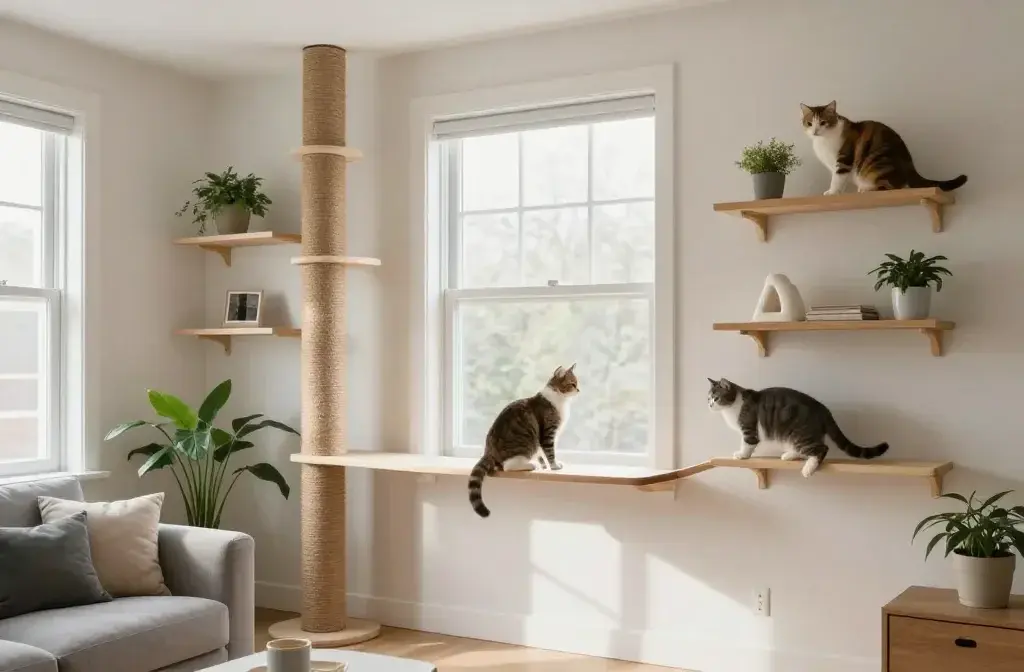
Your cat doesn’t care that your apartment is tiny. They see a jungle gym with rent control. Good news: you can build them a vertical playground without sacrificing your sanity or your shelves. Let’s stack some solutions—literally—and turn your walls into a feline freeway. Ready to reclaim your floor and give your cat the high life?
Why Vertical Space Beats Floor Space
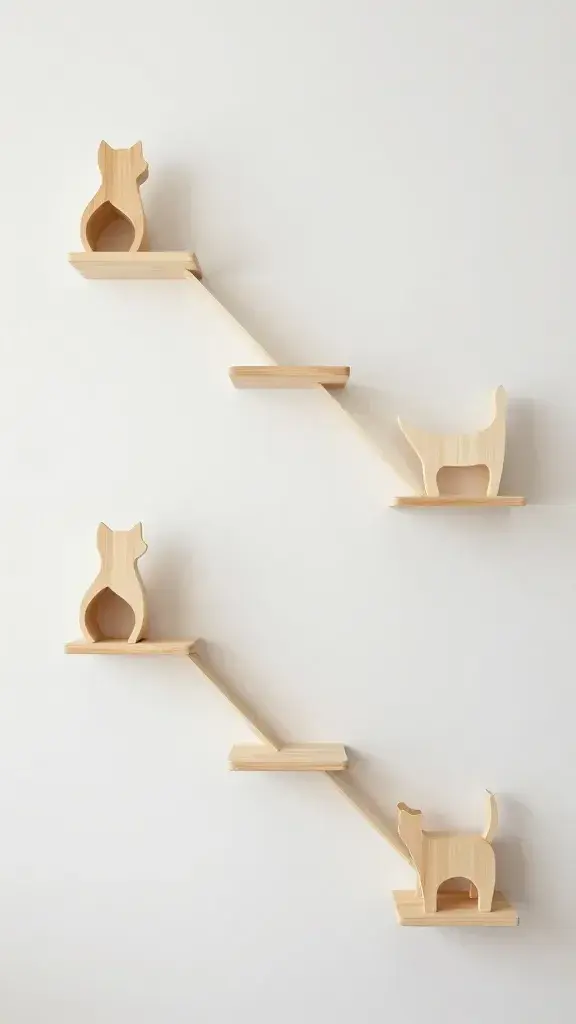
Cats are climbers and perchers by nature. When you go up instead of out, you give them room to roam without eating your living area. It also reduces stress because they can observe like the tiny, judgmental librarians they are.
Bonus: Vertical routes help bored or energetic cats burn energy. And if you have multiple cats, vertical zones reduce turf wars. Think of it as traffic lanes for tiny furry drivers.
Start With the “Cat Highway” Concept
Build a continuous path along your walls so your cat can move from one spot to another without touching the floor. You want clear on-ramps, off-ramps, and scenic overlooks (aka perches).
- Route planning: Map a path that connects the window, a tall piece of furniture, and a quiet corner.
- Multiple exits: Give at least two ways down so no one gets trapped (important for multi-cat homes).
- Vary the terrain: Mix shelves, bridges, and climbing posts to keep it interesting.
Checklist for a Safe Highway
- Stability first: Every platform must hold at least 20–25 lbs. Overkill? Maybe. Worth it? Definitely.
- Non-slip surfaces: Felt, cork, or sisal keeps paws from skidding.
- Clearance: Leave 10–12 inches of headroom above each step.
- Jump distances: Aim for 10–16 inches horizontally for most adult cats.
Use What You Already Own
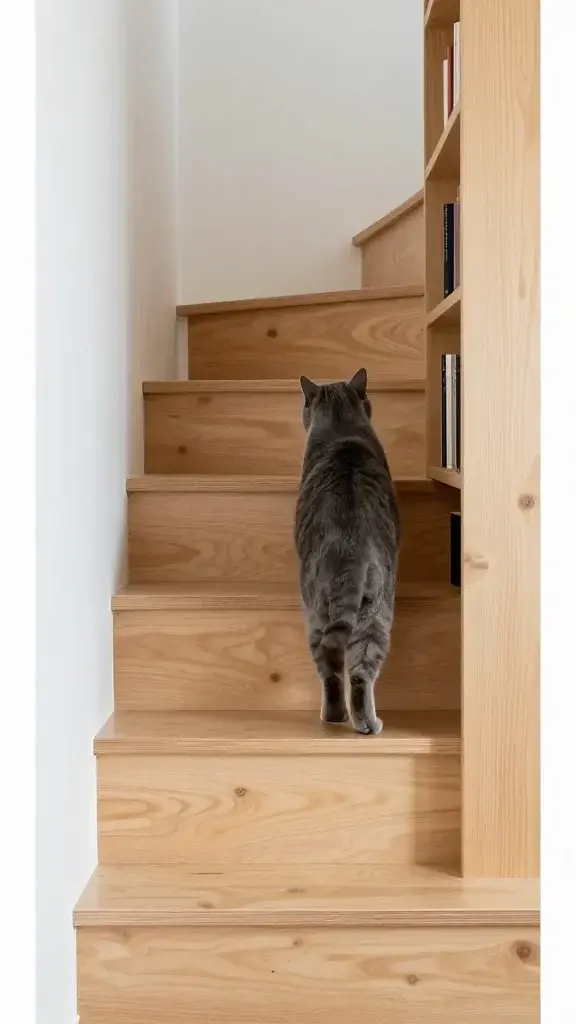
You don’t need a custom cat wall to get started. You can cat-ify furniture you already have.
- Bookshelves: Clear the top shelf and add a cushioned mat. Instant penthouse.
- Wardrobes: Cover the side with a vertical sisal mat so your cat can climb up instead of launching from your face.
- Fridge + cabinets: Bridge the gap with a narrow shelf or a wall-mounted step. Just don’t block ventilation.
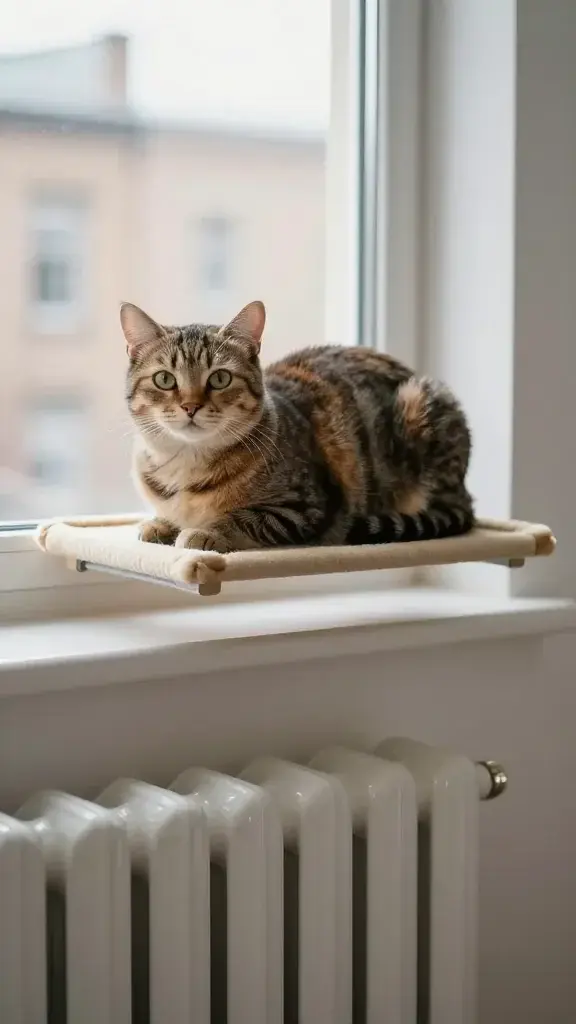
- Window sills: Use clamp-on perches for sunbathing and bird-watching. Screw-in models feel sturdier long-term.
Anchoring 101 (Without Destroying Your Walls)
If you rent, you still have options. FYI: safety first, deposit later.
- Stud finders: Use one. Shelves in studs = no drama.
- Toggle bolts: For heavy loads in drywall if studs don’t line up.
- Ceiling mounts: Sometimes easier than walls for hammocks or baskets (always anchor into joists).
- Freestanding: Tension-pole cat trees press between floor and ceiling—zero drilling.
Smart, Space-Savvy Installations
Want the most vertical bang for your buck? Focus on a few MVP pieces.
- Staggered stepping shelves: Three to five small shelves spaced like stairs. Cats love pathfinding.
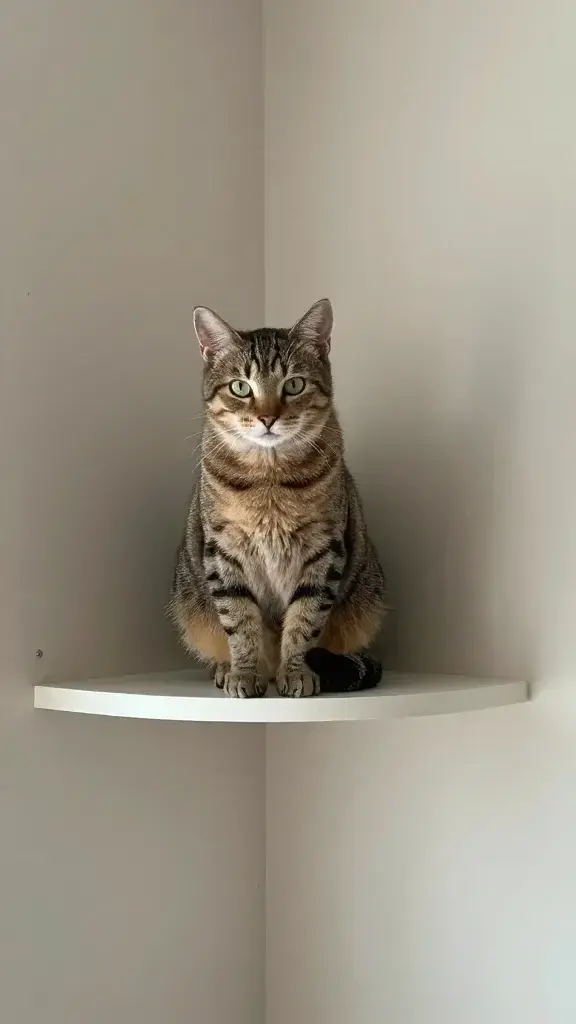
- Corner perches: Use dead corners to create triangle shelves—cozy and out of the way.
- Wall-mounted cat tree: A slim climbing post with platforms up the side. Keeps floors clean and Roomba-happy.
- Over-door bridge: A narrow walkway above a doorway that leads to a perch. Drama points: high.
- Hammocks under shelves: Fabric slings beneath existing shelves create a private nook.
Materials That Work (And Last)
- Sisal and jute: Great grip for climbing posts. Replaceable when shredded (which they will be—joyfully).
- Plywood (birch/poplar): Strong, light, and easy to paint or seal.
- Carpet tiles or felt: Cut to size for shelf tops. Stick with removable adhesive for easy cleaning.
- Cork sheets: Soft, grippy, and surprisingly durable.
Design for Your Cat’s Personality
Not all cats want the same vertical vibe. Match the setup to their style.
- The Observer: Add high perches near windows and work areas. They’ll supervise while you email.
- The Zoomer: Create a fast route with long jumps and a climbing pole to burn energy.
- The Shy Bean: Offer enclosed cubbies and hammocks tucked in quiet corners.
- The Senior Monarch: Use gentle ramps, wider platforms, and low jumps. Add non-slip textures everywhere.
Multi-Cat Diplomacy
- Parallel paths: Build two routes to the best perch so no one blocks traffic.
- Extra exits: Every high spot needs multiple ways down.
- Duplicate hotspots: Two window seats = fewer dirty looks. IMO, duplicates save peace and pillows.
Make It Enrichment, Not Just Architecture
Your cat wants activities, not just altitude. Layer in reasons to climb.
- Rotate toys: Hang teaser toys from shelves (short strings only for safety). Swap weekly.
- Food puzzles up high: Move snack-time to a perch. Built-in cardio.
- Scratch zones at every level: Vertical scratchers guide the route and protect your furniture.
- Scent and texture: Sprinkle catnip or silvervine occasionally. Different textures make it more interesting.
Training and Encouragement
- Lure with treats: Place a trail up each step the first few days.
- Model the path: Tap each shelf and use a clicker if you train.
- Reward the perch: Pet and praise when they chill up high. Make it The Place To Be.
Keep It Safe, Clean, and Rental-Friendly
You want cozy, not chaotic. A little maintenance goes a long way.
- Weight checks: Test shelves monthly. Tighten screws. Wiggle test = mandatory.
- Surface refresh: Wash removable mats. Vacuum fur (accept that fur happens).
- No heat hazards: Keep shelves away from stoves, lamps, and radiators.
- Window safety: Lock screens or add pet-rated screens before building a window perch. FYI: cats do fall.
- Plant patrol: Keep toxic plants off routes. Swap lilies, pothos, and philodendron for cat-safe options like spider plants.
Budget Tips That Don’t Look Budget
- Use IKEA hacks: Picture ledges, LACK shelves, and EKET cubes become steps with added grip.
- Thrift store gold: Solid wood shelves > flimsy particle board. Paint them to match your walls.
- Command hooks for starters: For lightweight hammocks or toy hangers while you test layouts.
- DIY sisal wraps: Wrap table legs or poles with rope for instant scratch-and-climb stations.
FAQs
How high is too high for a cat perch?
If your cat has clear, safe routes up and down, most healthy adults handle heights up to the ceiling just fine. The real risk comes from slippery surfaces, bad angles, or blocked exits. For seniors or kittens, keep top perches around 4–5 feet with gentle steps.
Do I need to drill into studs for every shelf?
Ideally yes for big shelves or jump points. If studs don’t line up, use heavy-duty toggle bolts and stick to smaller platforms at those points. When in doubt, test with sandbags or a stack of books before inviting the feline QA team.
What if my cat ignores the new shelves?
Make them rewarding. Add treats, catnip, or a cozy bed up top, and play routes that end on the perch. Sometimes you just need to move the setup near a window or your usual hangout so it feels socially relevant (cats are nosy).
Is vertical space enough exercise for indoor cats?
It helps a ton, but pair it with daily play sessions. Use wand toys, food puzzles, and short chase bursts to mimic hunting. Vertical highways turn your playtime into parkour, which is basically CrossFit for cats—minus the membership fee.
Will shelves ruin my walls and my security deposit?
Anchors leave holes, but you can patch and paint easily. If that’s a hard no, opt for tension-pole trees, freestanding towers, or over-door perches. Also, choose lighter shelves and more steps so each mount point carries less weight.
What materials are safe and durable?
Sealed plywood, solid wood, sisal rope, felt, cork, and carpet tiles all work great. Avoid glass shelves (slippery) and cheap particle board (sags). Use non-toxic finishes and skip loose strings or dangling hardware.
Wrap-Up: Build Up, Chill Out
You don’t need a palace to make your cat feel like royalty. Use your walls, corners, and tall furniture to create a connected route with safe landings and comfy hangouts. Start small, test the layout, and tweak until your cat claims the penthouse. IMO, once you go vertical, you’ll wonder why you ever tripped over a cat tree in the middle of your living room.