
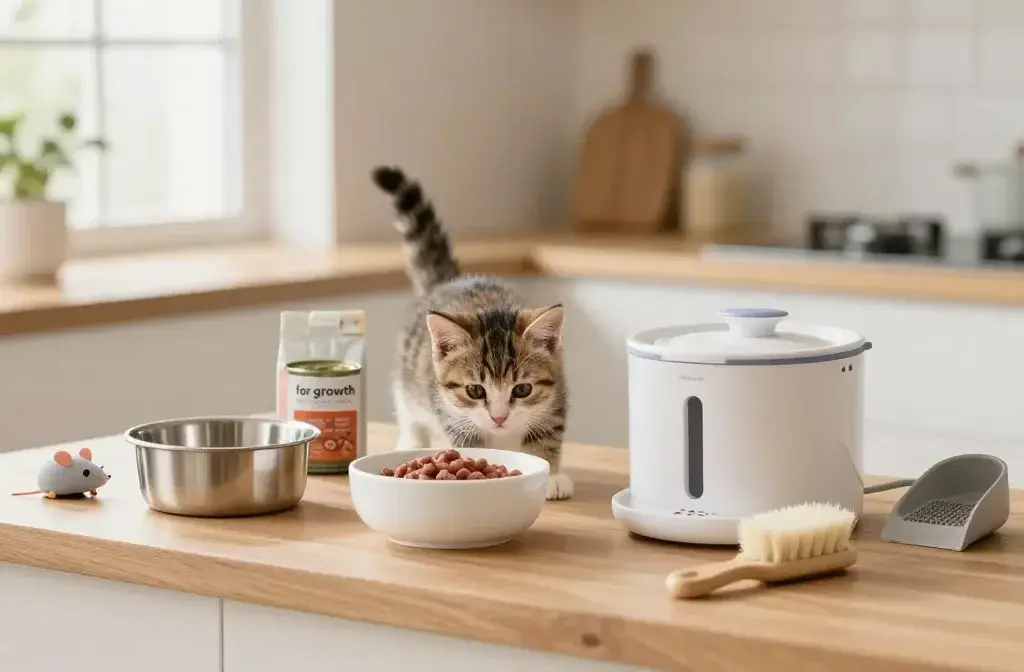
You brought home a tiny, purring chaos machine. Congrats! Now you need supplies—fast. The first month sets the tone for your kitten’s health, habits, and trust in you. Let’s build a “kitten starter kit” that covers everything without buying half the pet store. Sound good?
The Non-Negotiables: Food, Water, and Bowls
You’ll feed a kitten several small meals a day, so you need bowls that don’t tip and don’t trap bacteria. Stainless steel or ceramic bowls win every time. Plastic scratches and turns into a germ party—hard pass.
Food basics:
- Age-appropriate kitten food: Look for “complete and balanced” for growth (AAFCO). Wet food supports hydration and calorie intake; add dry if you like, but wet should anchor the diet.
- Transition food slowly: Mix old and new over 5–7 days to avoid tummy drama.
- Meal schedule: 3–4 small meals daily for the first few months. Kittens burn fuel like tiny athletes.
Water matters: Some kittens act like water bowls are for peasants. A pet fountain can encourage drinking, especially if you feed some dry. Keep it clean or it defeats the whole purpose.
Labels You Can Trust
Look for:
- AAFCO growth statement
- High-quality proteins listed first
- Omega-3s (DHA) for brain and eye development
FYI: Grain-free isn’t automatically better for cats. Focus on quality and balance, not marketing buzzwords.
Litter, Boxes, and Everything “Business”

Let’s talk toilets. Kittens usually learn fast, but you need the right setup from day one.
Starter kit for litter time:
- Two litter boxes minimum—one per floor or one per “zone.”
- Low-entry box so tiny legs can climb in easily.
- Unscented clumping litter to start—gentle on paws, easy to scoop, and avoids perfume overload.
- Scooper + trash bin or litter genie for daily scoops.
Placement and Maintenance
- Quiet, accessible location: Not next to the washing machine or the dog’s favorite sniffing spot.
- Scoop daily, refresh weekly: Cats boycott dirty boxes. They’re dramatic like that.
- Avoid strong cleaners: Mild soap and water keeps scents consistent.
Sleep, Safety, and a Cozy “Home Base”
Your kitten needs a calm place to sleep, hide, and get used to your household. Create a “home base” room for the first few days—bed, litter, food, water, toys. This helps with litter training and prevents overwhelmed zoomie chaos.
Cozy essentials:
- Soft bed or fleece blankets (washable is a must).
- Hideaway option: A small cat cave or cardboard box with a blanket works wonders.
- Heating pad for pets (on low, with supervision) for very young kittens—warmth = comfort.
Kitten-Proofing Checklist
- Hide cords and chargers (chew magnets).
- Secure windows and screens.
- Block nooks behind appliances.
- Store meds, cleaners, and essential oils far, far away.
- Remove toxic plants like lilies (seriously, lilies are deadly to cats).
Toys, Scratching, and Sanity Savers

You want a tired kitten. A tired kitten doesn’t climb your curtains or treat your ankles like prey. Interactive play also builds trust faster than any treat.
Playtime gear:
- Wand toys (feathers, strings) for daily sessions—2–3 short bursts beat one long play.
- Soft balls and crinkle toys for solo play.
- Puzzle feeders to turn mealtime into a brain game.
Scratching setup:
- Vertical and horizontal scratchers: One sturdy post (tall!) and one flat board.
- Sisal or cardboard: Most cats love these textures.
- Strategic placement: Near sleep spots and next to your favorite chair (prevents furniture tragedy).
Cats Need a Job
Rotate toys every few days to keep them “new.” End play sessions with a “catch” and then feed—this mimics the hunt-eat-groom-sleep cycle and reduces nighttime zooms. IMO, this is the secret sauce.
Health, Grooming, and First Vet Trip
Book a vet appointment within the first week. Even if the rescue gave shots, your vet will check for parasites, discuss vaccines, microchip, and schedule a spay/neuter if needed.
Health and grooming kit:
- Kitten-safe nail clippers and styptic powder (for nicks—hey, it happens).
- Soft brush (short hair: rubber curry; long hair: slicker brush).
- Pet-safe wipes for little messes.
- Kitten toothpaste and finger brush—start early, thank yourself later.
- Carrier with a cozy blanket—leave it out so it feels normal, not “doom box.”
Medications and Safety
- Flea, tick, and deworming only under vet guidance—kittens have specific doses.
- Microchip and ID tag: Indoor cats slip out sometimes. Microchip = reunion insurance.
- Pet insurance: Consider it early; plans often cover more if you enroll young. FYI, emergencies get expensive fast.
Training, Socialization, and Routine

Yes, you can “train” a cat. You’ll shape behavior with consistency and rewards. Start small and keep sessions short—like, two minutes short.
Day-one goals:
- Names and recall: Say their name, reward with a tiny treat when they look at you. Jackpot the first few days.
- Touch tolerance: Reward gentle handling—paws, ears, tail—so vet visits don’t turn into WWE.
- Scratcher use: Guide paws onto the post and reward. Sprinkle a dash of catnip (if they’re responsive).
Routine = calm:
- Feed, play, and rest on a predictable schedule.
- Offer a safe spot during loud chores or visitors.
- Use a pheromone diffuser to reduce stress during the first month.
Introducing Other Pets
Slow and steady. Scent swap first (blankets between rooms), then visual introductions with a barrier, then short supervised visits. Reward everyone for chill behavior. If anyone turns into a hissy noodle, back up a step.
Nice-to-Haves That Feel Like Upgrades
You don’t need these, but you might love them.
- Cat tree for climbing and window perching.
- Silicone placemat under bowls for easy cleanup.
- Automatic feeder for small, frequent meals (helpful if you work outside home).
- GPS or AirTag-style collar holder for adventurers (always use a breakaway collar).
- Camera to check in and admire your tiny goblin at lunch.
Sample 30-Day Game Plan
Sometimes a timeline helps. Here’s a simple framework:
- Days 1–3: Home base room, vet appointment booked, litter training, gentle play, start name/recall games.
- Days 4–10: Gradual house access, introduce scratching posts and puzzle feeders, daily brushing, set feeding/play routine.
- Days 11–20: Increase play complexity, short carrier practice (treats inside, door open), trim one or two nails at a time.
- Days 21–30: Vet follow-up or vaccines, consider insurance, expand territory fully, keep rotating toys and reinforcing good habits.
FAQs
How much should my kitten eat?
Check the feeding guide on your food as a starting point, then adjust based on your vet’s advice and your kitten’s body condition. Kittens need more calories per pound than adult cats, so expect 3–4 small meals daily. If your kitten finishes every meal in seconds and acts ravenous, bump portions slightly.
What litter should I start with?
Use an unscented, clumping litter with a fine texture. It feels good on tiny paws and makes scooping easy. Once your kitten nails box habits, you can experiment with other types if you want.
Do I need kitten-specific food?
Yes. Kitten food supports rapid growth with extra protein, fat, and DHA. Adult food won’t cut it during these crucial months, IMO.
When can I start nail trims and brushing?
Right away—gently and briefly. Touch paws, click the trimmer near them, reward. Brush for 30–60 seconds and stop before they squirm; ending on a win builds trust.
Should my kitten sleep in my bed?
That’s a personal call. If you want, go for it once litter habits look solid and the room is kitten-proofed. Otherwise, a cozy bed in their home base works great and avoids 3 a.m. toe attacks… usually.
How do I stop furniture scratching?
Offer attractive alternatives: a tall, sturdy sisal post and a horizontal scratcher. Place them near the “crime scene,” reward every use, and cover the target area temporarily with a throw, double-sided tape, or a furniture protector until the habit sticks.
Conclusion
Your kitten doesn’t need a thousand gadgets—just the right few. Nail the basics (food, litter, safe space), add daily play and a predictable routine, and you’ll cruise through the first 30 days. Before you know it, you’ll have a confident, curious sidekick who lets you live in their house. Win-win.