
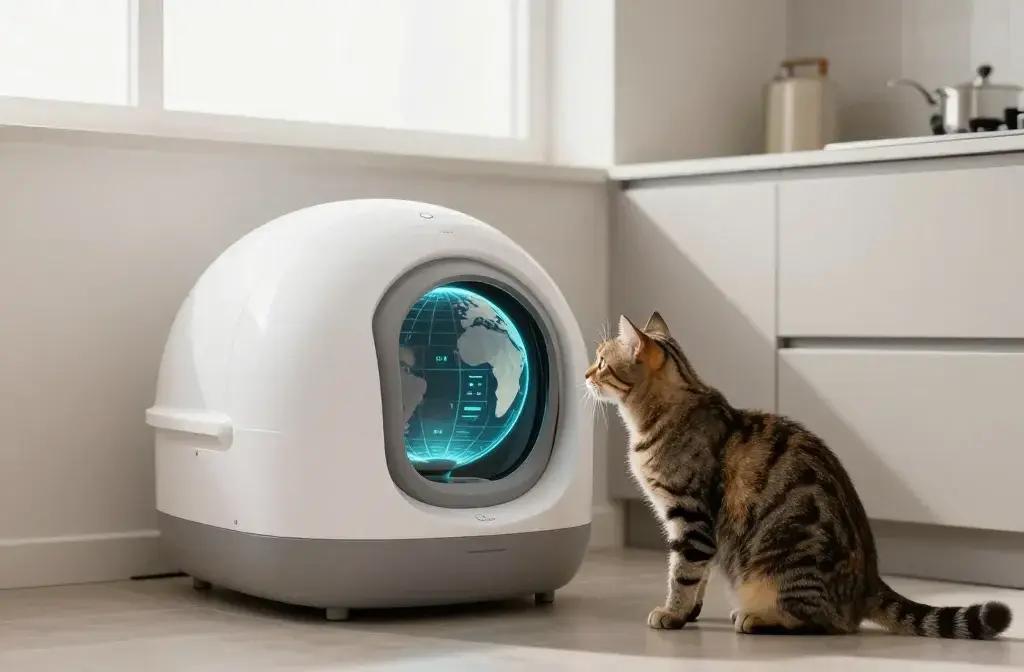
Your cat rules the house; you manage the throne. If you’re tired of scooping clumps like a medieval stablehand, high-tech litter boxes promise a cleaner life for you—and a fresher one for your feline overlord. But do they actually work, or are we buying expensive plastic robots to babysit poop? Let’s talk about the Litter-Robot and its rivals, and figure out which ones deliver and which ones just beep at 3 a.m.
Why Go High-Tech in the First Place?
Automated litter boxes save time, reduce smells, and keep your cat’s bathroom consistently clean. That means fewer “accidents” and way less scooping. If you travel or work long hours, a reliable self-cleaning box can be a sanity saver.
You also get data from some models. Yep, your cat has analytics now. Weight tracking and usage logs can flag health issues early—super handy if you have a senior cat or a kitty with urinary quirks.
Litter-Robot: The Big Name with Bold Claims
The Litter-Robot dominates this category, and for good reason. It’s a globe-shaped, self-cleaning fortress that rotates after your cat leaves, sifting clumps into a lined drawer. It looks like sci-fi, and in many homes, it works like it.
What we like:
- It cleans reliably and keeps odors down when you use quality clumping litter.
- The waste drawer is easy to empty and line with regular trash bags.
- The app tracks usage and alerts you when the drawer’s full. FYI, the notifications actually help.
- It handles multi-cat households decently—no constant scooping war.
What we don’t:
- It’s expensive—like pet-stroller-in-a-Tesla expensive.
- It’s big. Measure your space and your cat’s personality.
- Sensitive cats may need time to adjust to the noise and motion.
- Maintenance exists. You’ll clean sensors, wipe the globe, and deal with the occasional clump jam.
Day-to-Day Use
Most users find the Litter-Robot easy once you dial in the litter depth and timing. You’ll empty the drawer every 2–4 days per cat, IMO. Deep cleaning every few weeks keeps it fresh. If you’re diligent, odor stays manageable.
Cat Acceptance
Cats usually accept it within a week. Leave it off at first, let them explore, then turn on cleaning cycles later. Treats help. Cats rule; we negotiate.
Whisker Competitors Worth a Look
Let’s compare the Litter-Robot to other popular self-cleaners. Some cost less. Some take different approaches. None are perfect, but a few come close.
PetSafe ScoopFree (Crystal Litter Rake System)
This one uses disposable crystal litter trays and a rake to push waste into a covered compartment. It’s simple and quiet.
Pros:
- Low odor with crystals; great for light to moderate use.
- Low maintenance: swap the tray every 2–4 weeks (one cat).
- Lower upfront cost than Litter-Robot.
Cons:
- Tray refills get pricey over time.
- Not ideal for heavy diggers or multiple cats.
- Some cats hate crystal litter texture—test first.
CatGenie (Self-Washing, Washable Granules)
The CatGenie connects to water and a drain, then washes litter-like granules with cleaning solution. Yes, it literally flushes.
Pros:
- No clumping litter. No trash bags. Magical when it works.
- Reduces long-term waste—eco points.
Cons:
- Plumbing required. Setup can be finicky.
- Proprietary supplies add ongoing cost.
- Some cats dislike the granules or washing noises.
ChillX AutoEgg / Leo’s Loo / Other Sifting Domes
These models mimic the Litter-Robot’s idea with different designs: smaller domes, slimmer profiles, or cuter aesthetics.
Pros:
- Smaller footprint and quieter operation in some models.
- Often cheaper than Litter-Robot.
- App features and weight tracking exist on newer versions.
Cons:
- Smaller entry or chamber can bother big cats.
- Reliability varies—rakes and sensors can jam.
- Customer support isn’t always Litter-Robot-level.
How to Pick the Right Robot (Without Overthinking It)
Focus on your cat, your space, and your tolerance for tinkering. Here’s a quick decision guide:
- Have multiple cats or a big chonker? Litter-Robot or a large sifting dome wins for capacity and odor control.
- Hate litter dust and want low odors? ScoopFree with crystals can be great—if your cat likes the crystals.
- Want minimal waste and like gadgets? CatGenie if you can handle plumbing and proprietary supplies.
- On a budget but want automation? Smaller sifting domes (Leo’s Loo, etc.) are decent, with some trade-offs.
Space and Setup Tips
– Place the box in a quiet, accessible spot with an outlet (and water/drain for CatGenie).
– Leave clearance for doors or domes to rotate.
– Use a mat to catch litter scatter. Your floors will thank you.
Real-World Costs: Upfront vs. Ongoing
Upfront:
- Litter-Robot and premium domes: high initial cost.
- Rake systems (ScoopFree): moderate device cost.
- CatGenie: device plus possible install extras.
Ongoing:
- Clumping litter for Litter-Robot and domes (choose low-dust, fast-clumping).
- Crystal trays for ScoopFree (recurring expense).
- Cleaning solution and granules for CatGenie (proprietary).
If you scoop daily now, automation saves time, not necessarily money. IMO, the value comes from odor control, cleanliness, and fewer litter box battles.
Litter Matters More Than You Think
Even the fanciest robot fails with the wrong litter. Pick a clumping, low-dust, unscented formula that forms tight clumps. Heavy, sticky litters cause jams and smear disasters.
Pro tips:
- Maintain the recommended litter depth—too shallow clogs, too deep overloads.
- Empty the waste drawer before it’s packed; sensors get confused.
- Wipe sensors and contact points during weekly resets.
Transitioning Your Cat
– Place the new box next to the old one for a week.
– Don’t turn on auto-clean right away; let them explore.
– Add a scoop of used litter from the old box to seed the scent.
– Reward curiosity with treats. Bribes work. Science.
Known Quirks and How to Avoid Them
No brand escapes quirks. You can dodge most with a little prep:
- Power outages: Robots stop mid-cycle. Keep a surge protector and check position after outages.
- High-traffic homes: Multi-cat households may outpace clean cycles—shorten delay times or add a second box.
- Sensor gunk: Dust and litter spray confuse weight sensors. Wipe weekly.
- Skittish cats: Disable lights/sounds and run cleaning when they’re elsewhere.
FAQ
Will my cat actually use a self-cleaning litter box?
Most do. Start slow, keep the old box nearby, and don’t run cleaning cycles during the first few days. Cats follow cleanliness, so once they smell a consistently fresh box, curiosity usually wins.
Does the Litter-Robot work for large cats?
Yes, generally. Big breeds like Maine Coons fit better in larger domes like the Litter-Robot than in smaller competitors. Check entry size and internal height; a high bonnet version can help for tall sitters.
Are these boxes loud?
They make noise—motors hum, rakes scrape, fans whirr. It’s not vacuum-level, but don’t place one next to your bed unless you sleep like a rock. Many models let you schedule or delay cycles to quieter times.
Do I still need to scoop?
Not daily. You’ll still empty the waste drawer, top up litter, and spot-clean. Think “maintainer” instead of “janitor.” If something jams, you’ll do a quick manual fix.
What if the power goes out?
The box pauses and resumes when power returns. If it stopped mid-cycle, you may need to press a reset or re-level the litter. A small UPS battery helps if your area suffers regular outages.
Is this worth the price?
If you value cleanliness, time savings, and fewer cat-box fights, yes. If you don’t mind daily scooping and want minimal costs, a quality manual box with clumping litter still wins. Different lifestyles, different math.
Bottom Line
High-tech litter boxes work—and they’ve come a long way. The Litter-Robot delivers the most consistent, set-it-and-forget-it experience for most households, especially with multiple cats. ScoopFree and similar rakes offer a cheaper, simpler path if your cat accepts crystals, while CatGenie suits gadget lovers who don’t mind plumbing and subscriptions.
Pick based on your cat’s preferences, your space, and your patience for maintenance. Do that, and you’ll trade daily scooping for quick drawer dumps—and a home that smells a whole lot less like, well, cat. IMO, that’s a win for everyone, especially your royal fuzzball.