
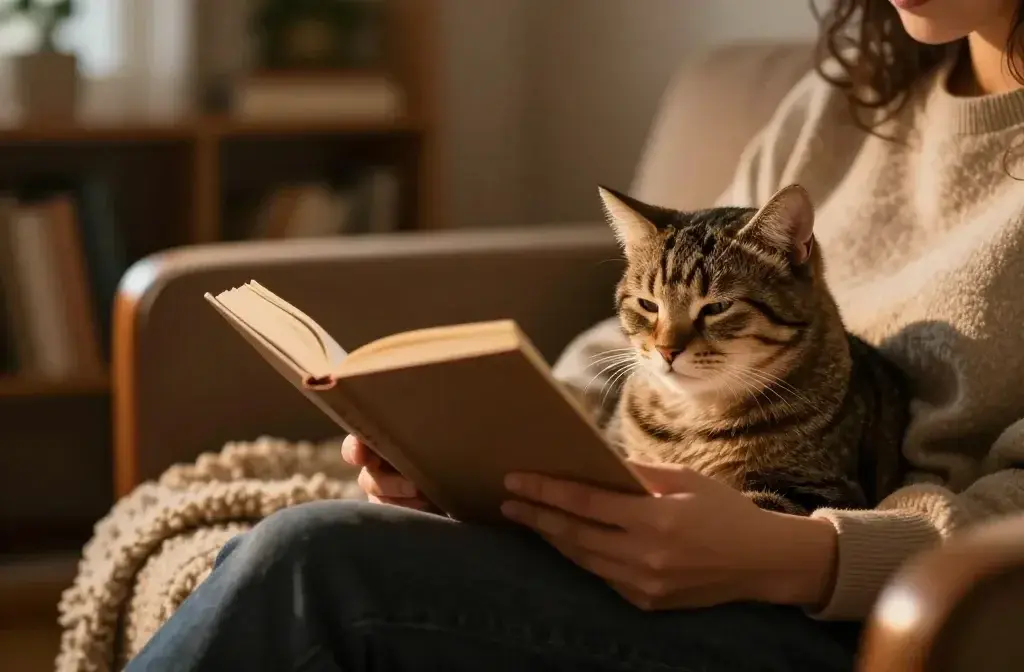
You curl up on the couch, open a book, and your cat plops down like you just started an audiobook made of tuna. Coincidence? Maybe. Or maybe your voice flips a switch in their fuzzy little brain. I wanted to find out. So I ran a tiny, gloriously unscientific experiment: read to the cat, watch what happens, and report back—paws, purrs, and all.
Why Reading to a Cat Makes Sense (Yes, Really)
Cats don’t care about plot twists. They care about vibes. Your voice creates a steady, familiar sound that can help their nervous system chill out. Think of it like white noise with feelings.
Here’s the secret sauce:
- Consistency calms cats. Your voice stays predictable, and cats love predictable.
- Low, steady tones sound safe. Sharp or loud sounds? Not so much.
- Routine equals trust. A nightly read becomes a “nothing scary is happening” ritual.
Do they understand words? Nope. But they understand you. FYI, that’s enough.
The Totally Serious, Extremely Scientific Experiment
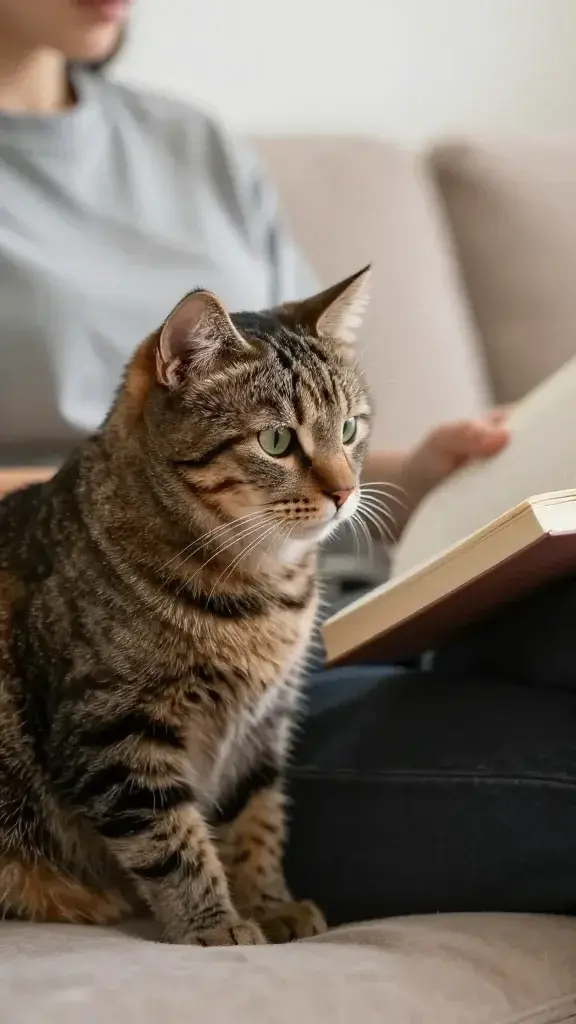
I set up a one-week test with my cat, who alternates between professional napper and part-time chaos gremlin. Each evening, same time, same chair, same blanket. I read aloud for 15–20 minutes. I logged behavior before, during, and after.
Variables I kept consistent:
- Time of day (post-dinner mellow hour)
- Lighting (soft, warm lamp)
- Reading pace (slow, conversational)
- Voice volume (quiet indoor voice)
Then I switched books and tones to see what changed. Thriller voice? Calm bedtime tone? Comedic audiobook narrator mode? We tested it all. For science. And snacks.
What I Looked For
I tracked some basic cat “calm-o-meters”:
- Body language: tucked paws, slow blinks, half-lidded eyes
- Sound effects: purring, chirping, silence (chaos meows count as “nah”)
- Proximity: moving closer vs. leaving like I offended them
- Aftermath: sleep, zoomies, or “contemplate the void” window staring
The Results: Purrs Don’t Lie
Night one? Skeptical side-eye. By night three, my cat loafed next to me and started purring by page two. By night five, he head-butted the book like, “Less reading, more scritches,” which—fair—still signaled comfort. He also fell asleep faster, and the after-reading zoomies took the night off. Success.
My takeaways, IMO:
- Yes, reading can calm your cat if you keep your tone soft and the environment cozy.
- Content matters less than cadence. Poetry, cookbook, IKEA manual—your voice does the work.
- Cats love ritual. Repeat it a few days in a row and watch them show up on cue.
Does every cat melt into a puddle? No. Some will listen from the doorway like tiny judgmental librarians. Still calming, just…more aloof.
How to Try It at Home (Minimal Effort, Maximum Cozy)
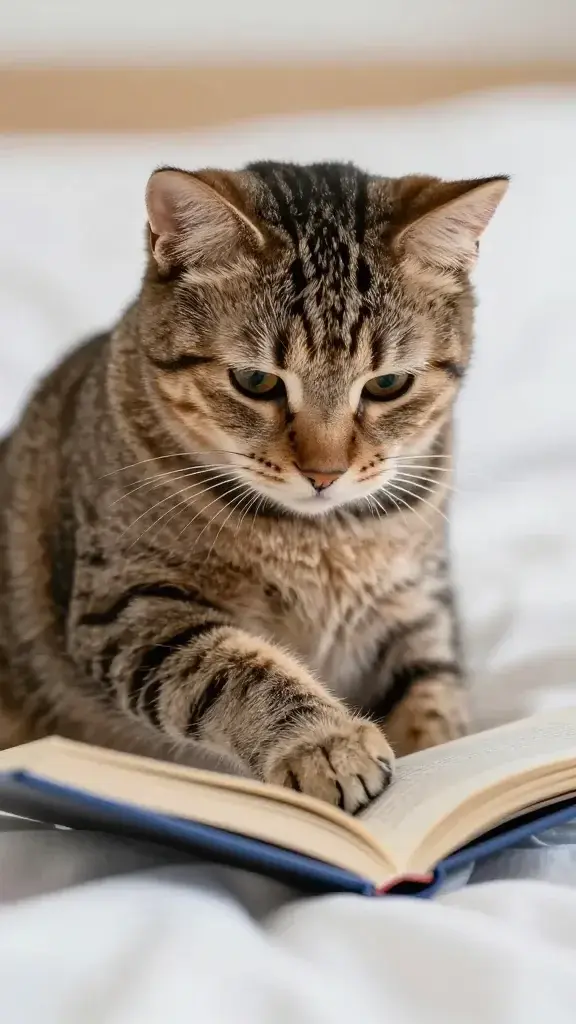
You don’t need special gear or a cat psychology degree. Try this simple setup:
- Pick your time. Aim for the evening or whenever your cat usually mellows.
- Control the vibe. Soft lighting, comfy seat, low background noise.
- Choose a book you like. You’ll read better if you enjoy it. Avoid shouty or dramatic voices.
- Mind your tone. Slow, gentle, rhythmic. Think bedtime story, not courtroom drama.
- Let them lead. If they approach, great. If they keep distance, also great. Don’t force cuddles.
- Keep it short. Start with 10–15 minutes. End on a calm note and give a treat or soft pet if they want it.
Reading Positions Your Cat Will Approve
- Parallel lounging: You on the couch, cat on the armrest like a furry gargoyle.
- Blanket diplomacy: Shared throw blanket = instant truce and warmth.
- Floor time: Sit on a cushion; some cats feel safer at their level.
What to Read (And What to Skip)
No, you don’t need “Cat Literature.” Read what makes your voice smooth and happy. Your cat vibes with your energy more than your vocabulary.
Great choices:
- Short stories or essays—easy cadence, natural pauses
- Cozy mysteries—chill tone, low stakes (for your delivery)
- Cookbooks—surprisingly soothing, and you can say “rosemary” like a lullaby
- Poetry—rhythm does the heavy lifting
Maybe skip:
- Angry manifestos—your tone will spike
- Action scenes—tempting to get loud and fast
- Anything that makes you laugh-yell—hilarious, but not calming
A Note on Audiobooks
Audiobooks can help, but they lack your cat’s favorite component: you. If you use one, keep your hand on your cat, or read a few lines yourself between chapters. Hybrid model for the win.
Reading as Enrichment (AKA Brain Snacks)
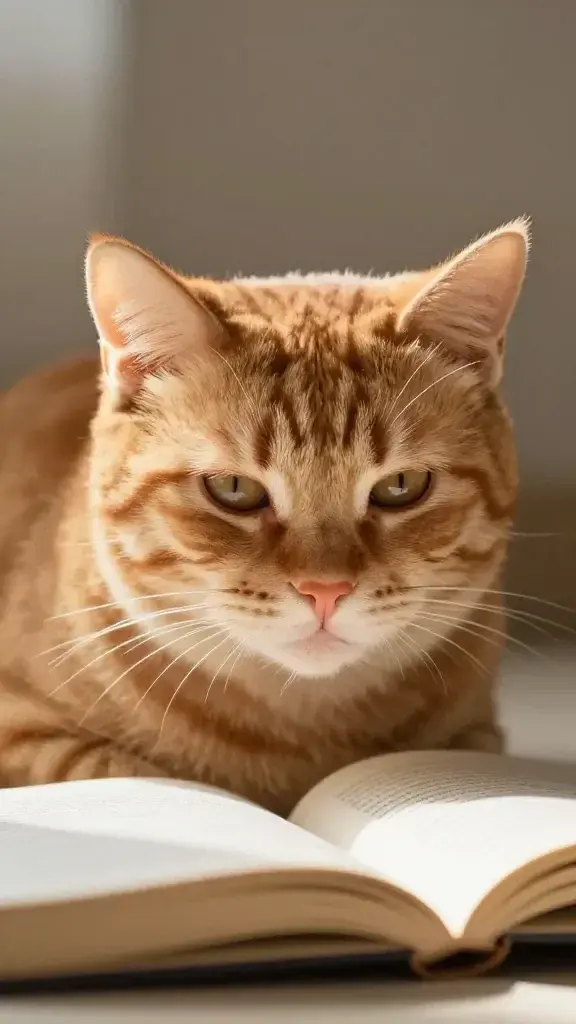
Cats need mental stimulation. Even chill house cats get bored. Reading slides into the enrichment category because it:
- Adds predictable novelty: new sounds, same ritual
- Builds your bond: shared calm time increases trust
- Encourages rest: a wind-down habit signals “bedtime incoming”
Pair it with other low-effort enrichment:
- Place a few crinkly or soft toys nearby
- Offer a lick mat or a couple of treats at the end
- Do a 3-minute gentle brush session after reading
When It Doesn’t Work (And How to Pivot)
Some cats hear you read and go, “No thanks, narrator.” That’s fine. Try these tweaks:
Quick Fixes
- Lower your volume and slow down more than feels natural.
- Shorten the session to 5 minutes and build up.
- Change locations to wherever your cat already relaxes.
- Add a warm spot (heating pad on low under a blanket, supervised).
Alternative Calming Options
- Play soft brown noise or gentle classical at low volume.
- Use a pheromone diffuser in the room.
- Offer a familiar T-shirt or blanket with your scent.
- Swap reading for humming—yes, really. The vibration can soothe.
If your cat shows stress signs—tail lashing, dilated pupils, fast breathing—pause and give them space. We’re going for spa day, not spoken-word battle.
FAQ
Do cats actually understand what I’m saying?
Not the words, but they lock onto your tone, rhythm, and emotional state. Your voice becomes a safe background sound. That’s what calms them, not your flawless pronunciation of “onomatopoeia.”
How long should I read to my cat?
Start with 10–15 minutes. If they settle or fall asleep, great. If they walk off, don’t chase—end calmly and try again tomorrow. Consistency beats marathon sessions, IMO.
What if my cat gets hyper when I read?
You might be too animated or loud. Drop your volume, slow your pace, and pick calmer material. Also, try a quick play session first to burn energy, then read during the cool-down.
Can this help anxious or newly adopted cats?
Yes, as part of a broader routine. Pair reading with predictable meals, safe hiding spots, and gentle interaction. It builds trust without pressure. If anxiety runs high, ask your vet about additional support.
Is reading better than music or TV for cats?
Not universally, but your live voice has a bonding edge. Many cats prefer human voices at low volume over random TV sounds. Try both and watch your cat’s body language for the winner.
What time of day works best?
Evenings usually win because cats shift into relax mode. But ride your cat’s natural rhythm—whenever they lounge, that’s your window.
Conclusion
Reading to your cat probably won’t land you a literary award, but it can absolutely calm them—and you. Keep it simple: soft voice, comfy setup, short sessions, repeat often. Your cat learns that your voice means “safe, cozy, nap soon.” And honestly? That’s the best review any reader could ask for. FYI, if your cat starts head-butting the book, congrats—you just got five stars and a purr.