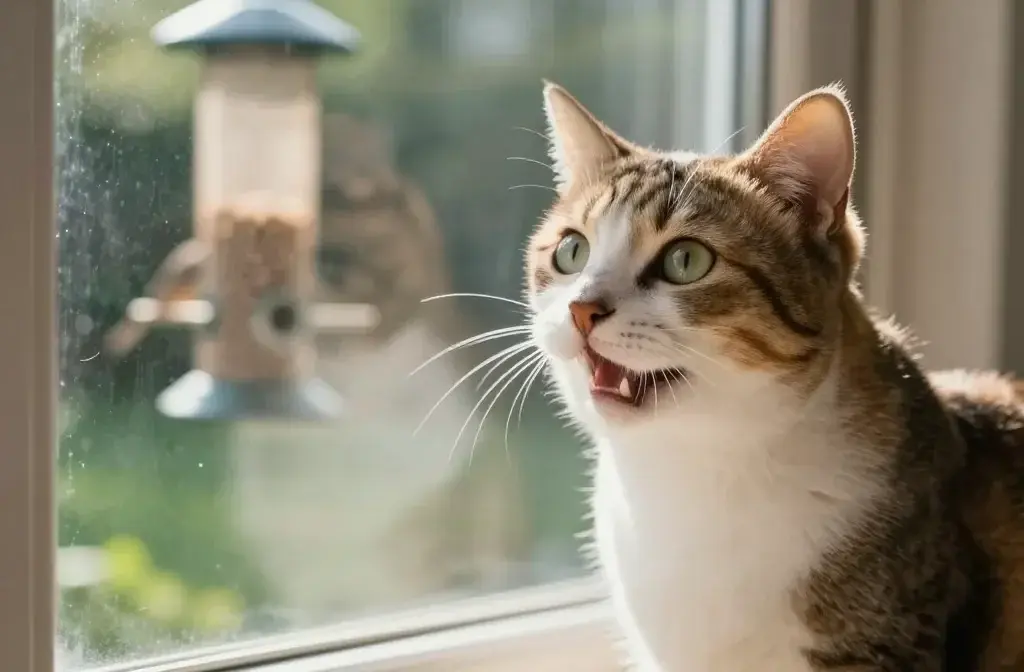
Your cat locks onto a bird outside, jaw twitching, eyes huge, and then—ch-ch-ch-ch. That bizarre staccato noise is not a glitch. It’s cat chatter, and once you notice it, you can’t un-hear it. So what exactly is going on in that tiny tiger brain? Let’s decode the chatter without the snoozy lecture vibe.
What “Chatter” Actually Sounds Like
Cat chatter sounds like a rapid, teeth-clicking stutter, sometimes mixed with soft meows or trills. It shows up most when your cat spots birds, squirrels, or even bugs, usually from a window or hiding spot. They stare, they freeze, and then their jaw starts vibrating like a tiny motor.
Key clues you’re hearing the real thing:
- Rapid jaw movement and teeth clicking
- High focus: laser eyes on the target
- Low body movement: crouched, tail twitching, whiskers forward
The Leading Theory: Predatory Frustration
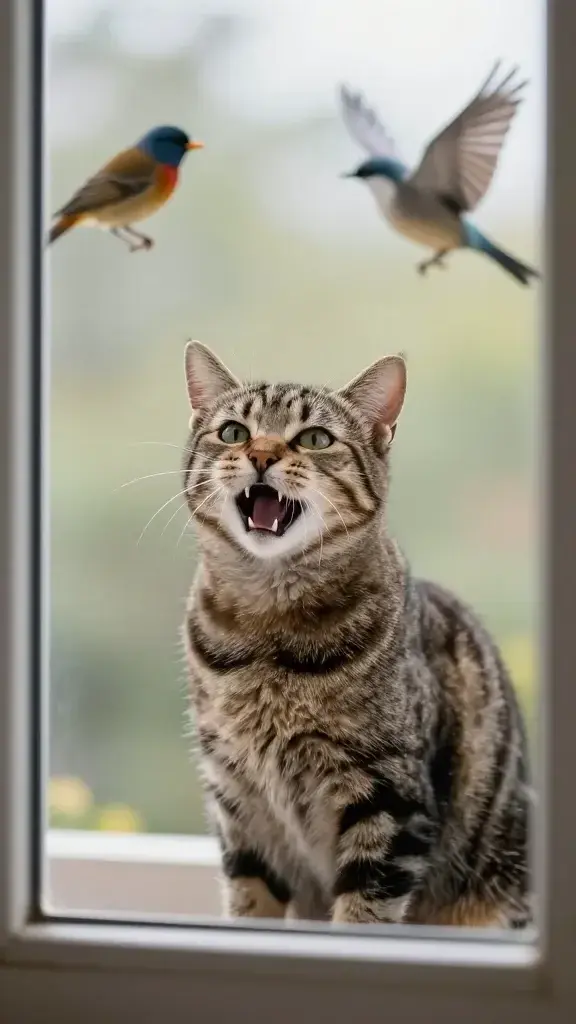
Cats are ambush predators. When they see prey they can’t reach, they build up energy with nowhere to put it. That’s when you get chatter—almost like a “Ugh, let me at it!” sound.
Why this checks out:
- Chatter usually happens behind glass or from a distance.
- Cats also chatter at toys or laser dots when they can’t “catch” the target.
- It stops once they get a chance to pounce or the prey disappears.
Adrenaline and Motor Overflow
Your cat’s nervous system fires up the hunting sequence: spot, stalk, pounce. But when step three stalls, some of that energy “leaks” into the jaw muscles. Think of it like revving an engine with the brakes on. Not scientific enough? IMO it’s pretty relatable.
The Copycat Theory: Mimicking Bird Calls
Here’s the spicy take: some researchers think cats might mimic prey sounds. That chatter sometimes resembles bird chirps or rodent squeaks. The idea? Imitation could lure prey closer. Smart, sneaky, kind of terrifying.
Is It Real or Just Cute Speculation?
We don’t have definitive proof your cat moonlights as a feathered linguist. But cats can imitate sounds more than we give them credit for—some even copy human words. So while mimicry isn’t the mainstream explanation, it’s a fun and plausible layer on the predatory-frustration cake.
Hunting Mode: A Quick Anatomy Tour
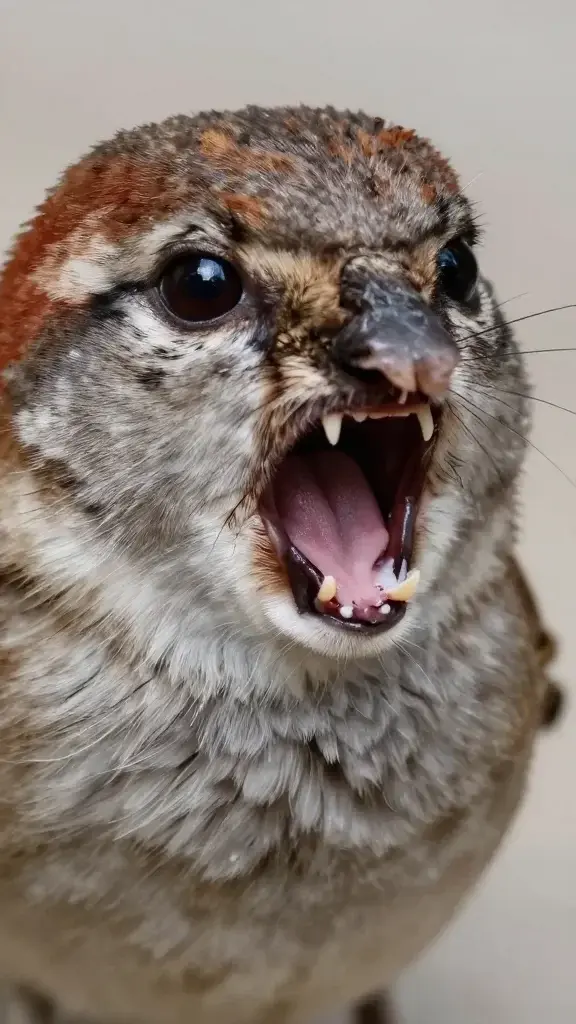
When your cat locks onto a bird, their body goes full tactical. Everything tightens and focuses to improve the hunt odds. The chatter fits right into that sequence.
The “I’m hunting” checklist:
- Eyes: pupils dilate for better focus and light intake
- Ears: swivel to triangulate sounds (tiny satellite dishes)
- Whiskers: push forward to sense movement and distance
- Tail: low, twitching—think coiled spring, not happy wag
- Jaw: rapid micro-movements that create the chatter
The Kill-Bite Practice Theory
Some behaviorists think chatter mimics the jaw action of the “kill bite,” where cats clamp and shake to sever vertebrae. Chattering could be a little practice run—like shadowboxing before a fight. FYI, adorable and metal at the same time.
Why Indoor Cats Still Chatter
Your cat doesn’t need to hunt to want to hunt. Instinct doesn’t vanish just because you serve dinner at 6:00. Chatter is that instinct bubbling up whenever something flutters or scurries.
What triggers it indoors:
- Window views with birds or squirrels
- Fast-moving toys (feather wands, laser pointers)
- TV nature shows—yes, that counts
Is It Stress or Fun?
Both can happen. If your cat fixates for hours and seems agitated, it may be frustration. If they chatter, play, and move on, it’s probably enrichment. Watch the whole vibe, not just the sound.
Should You Worry?
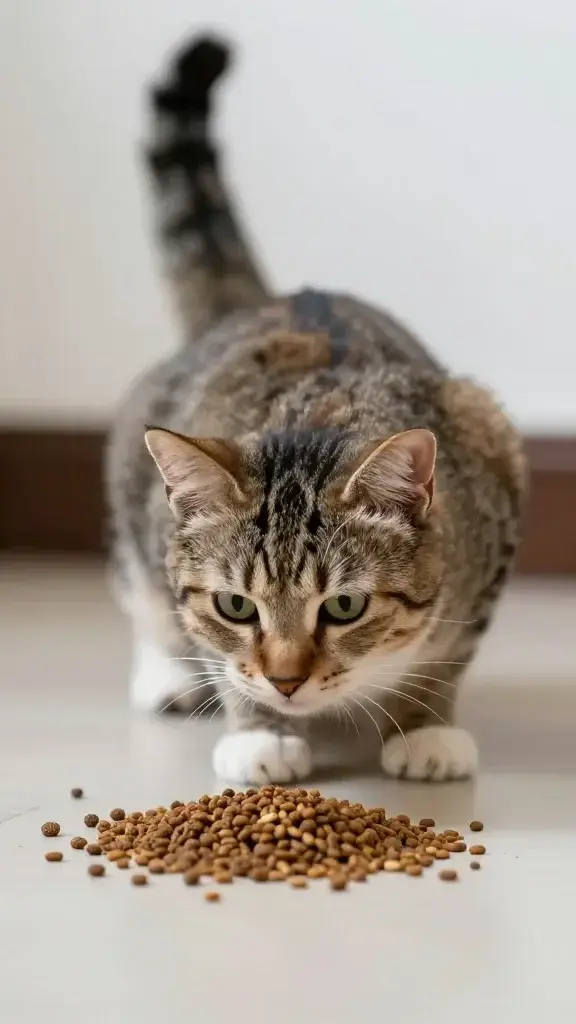
Short answer: usually no. Chattering is normal cat behavior. It doesn’t signal pain, illness, or psychic visions of bird empires (as far as we know).
When to take a closer look:
- Chattering during meals or grooming (could be dental pain)
- Drooling, pawing the mouth, or avoiding food
- Chattering paired with extreme agitation or destructive behavior
If anything looks off, schedule a vet check. Otherwise, enjoy the performance—front-row seats to your cat’s inner wildcat.
How to Channel the Chatter Energy
You can’t stop instinct, but you can give it a better outlet than yelling at pigeons from the couch.
Simple enrichment ideas:
- Daily play sessions: 10–15 minutes, twice a day, with a wand toy. End with a soft “kill” and a treat.
- Hunt-themed feeding: Puzzle feeders or scatter feeding to engage that seek-catch-eat cycle.
- Window upgrades: Bird-safe feeders outside, cat perches inside. Everyone wins. Well, the birds do.
- Rotation: Swap toys every few days to keep novelty high.
- Laser pointer rules: Always finish with something tangible to catch, or frustration builds.
Make Your Windows Wildlife-Friendly
If you set up bird feeders, use decals or screens to prevent window strikes. Cats can watch; birds stay safe. Win-win, IMO.
Decoding the Moment: What Your Cat Might Be “Saying”
Obviously your cat isn’t speaking English (unless yours does, in which case, call someone). But the chatter “message” changes slightly with context.
Possible translations:
- “Target acquired. Must pounce.” (Classic hunting focus)
- “Why is there glass here? Remove the force field.” (Frustration)
- “If I sound like you, maybe you’ll get closer.” (Mimicry hypothesis)
- “I’m in the zone. Don’t interrupt.” (Hyperfocus)
FAQ
Is cat chattering the same as chirping?
Not exactly. Chattering usually includes jaw clicking and a staccato rhythm. Chirping or trilling is smoother and often social—cats use it to greet you or encourage you to follow them. Some cats blend the two, because cats love breaking our labels.
Do all cats chatter?
Many do, but not all. Personality, age, and stimulation level matter. Some cats stalk silently like ninjas, while others narrate their entire nature documentary.
Can chattering mean dental issues?
Chattering at birds typically doesn’t. But if your cat chatters randomly, avoids food, drools, or paws at their mouth, then dental pain could be involved. Get a vet to check teeth and gums—dental disease hides well.
Why does my cat chatter at toys but not birds?
Access and motivation. If your cat can actually pounce on the toy, they might skip the chatter and go straight to attack mode. Birds beyond the window create more frustration—and more chatter.
Is my cat trying to talk to the birds?
Maybe, but not in a “Hello fellow bird” way. It’s more likely an instinctive predatory behavior than a polite conversation. If mimicry plays a role, it’s strategic, not social.
Should I stop my cat from chattering?
Nope. It’s normal and healthy. Focus on enrichment so the energy has a productive outlet. Think wand toys, puzzle feeders, and scheduled playtime.
Bottom Line
Cat chatter isn’t random noise—it’s the sound of pure instinct revving. Whether it’s frustration, mimicry, or a little kill-bite rehearsal, your cat is living out their mini-panther fantasy from the safety of your windowsill. Give them outlets to hunt, play, and “win,” and enjoy the show. FYI: those weird sounds mean you’ve got a highly tuned predator… who also sleeps on your laptop. Classic cat.