If your cat thinks “sit” means “stare into your soul,” you’re not alone. The good news? Cats absolutely can learn tricks—you just need the right language. That language is clicker training. It’s simple, fun, and your cat will love it because it’s basically a snack game. Ready to turn your tiny gremlin into a tiny genius?
Why Clicker Training Works (Even for “Independent” Cats)
Clicker training uses a small device that makes a sharp “click” sound to mark the exact moment your cat does something you like. That sound predicts a treat, so your cat learns fast. It’s crystal-clear communication, which cats appreciate way more than long speeches.
Think of the click as a camera shutter. You “capture” the behavior you want, then reward it. The click always equals something good, so your cat starts offering the behavior more.
What You Need (Spoiler: Not Much)
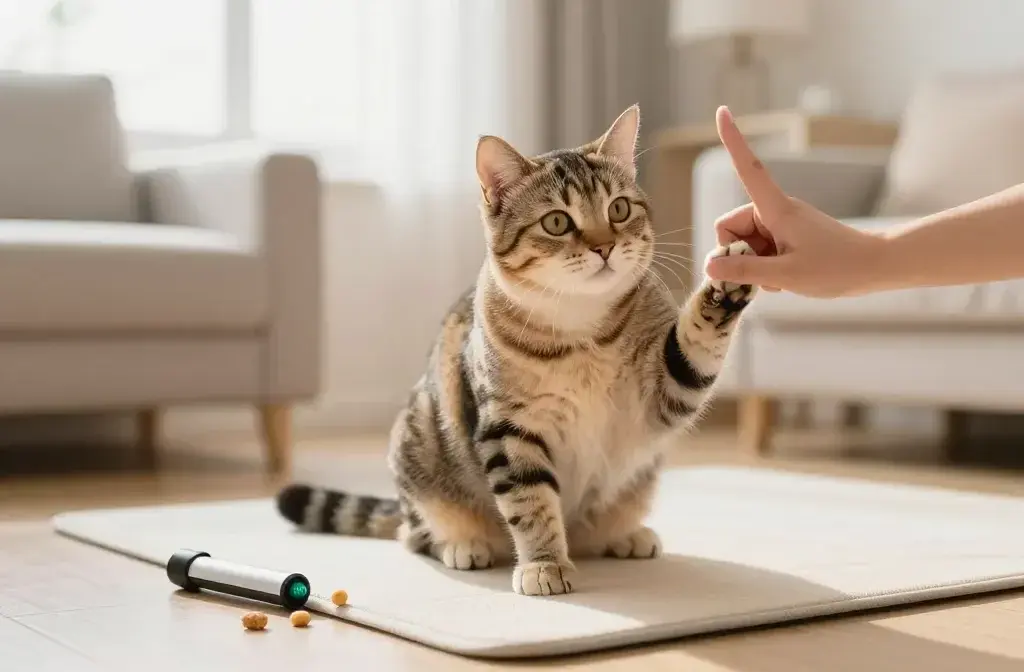
You can set this up in five minutes. Here’s your shopping list:
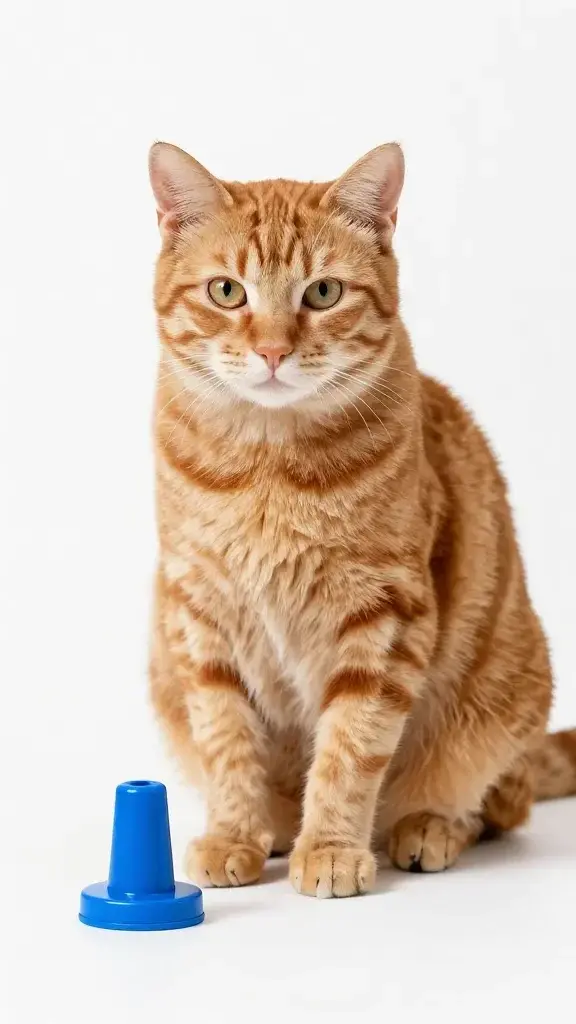
- Clicker: Any basic one works. If your cat spooks easily, look for a quiet clicker or use a pen click.
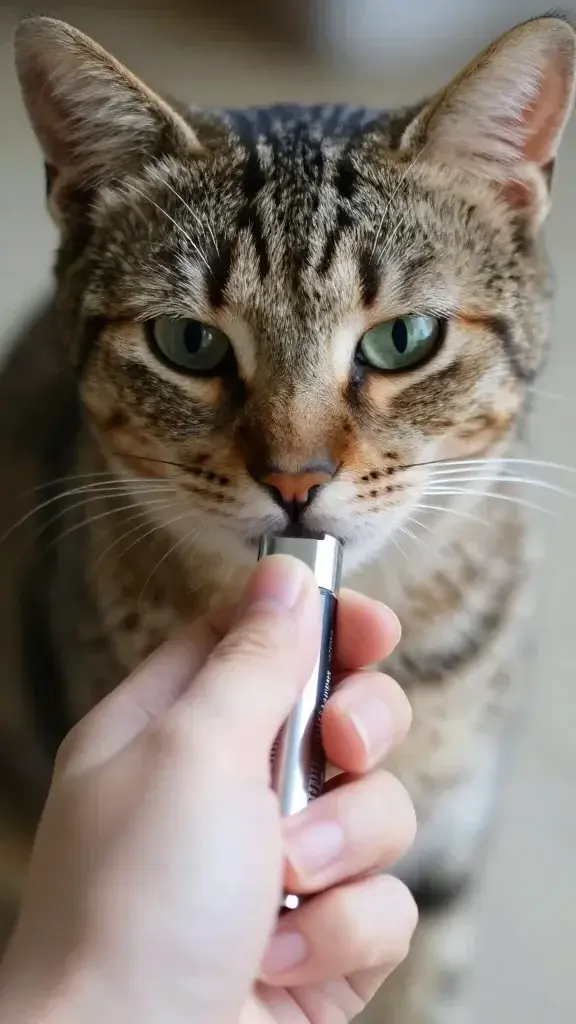
- Treats: Tiny, soft, super tasty. Think chicken bits, lickable treats, or freeze-dried meat. Keep them pea-sized or smaller.
- Mat or training spot: A towel or small mat helps your cat know “this is training time.”
- Optional target stick: A chopstick or pencil works. You’ll use it for tricks like “high five” or “spin.”
Step Zero: Charge the Clicker
Before any tricks, you need to make the clicker meaningful. This takes about one minute.
- Click the clicker.
- Immediately give a treat.
- Repeat 10–15 times over a couple short sessions.
Your cat will start looking excited after the click. Once you see that spark, you’re ready.
Training Basics You’ll Actually Use
Keep it short and sweet. Cats don’t do hour-long workshops. Try 3–5 minute sessions, 1–3 times a day.
End on a win. If your cat gets confused, ask for something easy (like eye contact) and reward that. Quit while they still want more.
Use a marker rhythm: Behavior happens → click → treat. Always in that order. No click without a treat, FYI.
Set your stage: Train when your cat’s alert but not frantic. Not right after dinner. Not during zoomies. Somewhere in the middle.
Luring vs. Shaping vs. Capturing
– Luring: Use a treat to guide your cat into position (best for “sit”).
– Shaping: Reward small steps toward the final behavior (perfect for “high five”).
– Capturing: Wait for the behavior naturally and click it (great for “sit” if your cat offers it often).
Teach “Sit” (Fast Wins Build Momentum)
“Sit” makes a great starter trick. It’s easy, useful, and adorable.
Method 1: Lure the Sit
- Hold a treat at your cat’s nose.
- Slowly move the treat up and back over their head. Most cats naturally sit to follow it.
- As their bum hits the floor, click, then give the treat.
- Repeat 5–10 times. Keep the motion small and slow.
Add the Cue
Once your cat sits quickly with the lure:
- Say “sit,” then do the same hand motion.
- As soon as they sit, click and treat.
- Over a few sessions, fade the treat lure. Use an empty hand motion, then treat from the other hand.
Pro tip: If your cat jumps up, your hand moved too fast. Slow down. IMO, most “my cat won’t sit” problems are just speed and timing.
Teach “High Five” (Your Party Trick)
You’ll teach “high five” by building a paw target. Cats already wave paws around—let’s make it official.
Phase 1: Nose Target (Optional but Helpful)
- Hold out a finger or target stick near your cat’s nose.
- When they touch it with their nose, click and treat.
- Repeat until they boop it reliably.
Phase 2: Paw Engagement
- Hold a treat in your closed fist. Let your cat sniff and paw at it.
- When a paw touches your hand, click, then open your hand and treat.
- Repeat until the paw touch happens quickly.
Phase 3: Turn It Into a “High Five”
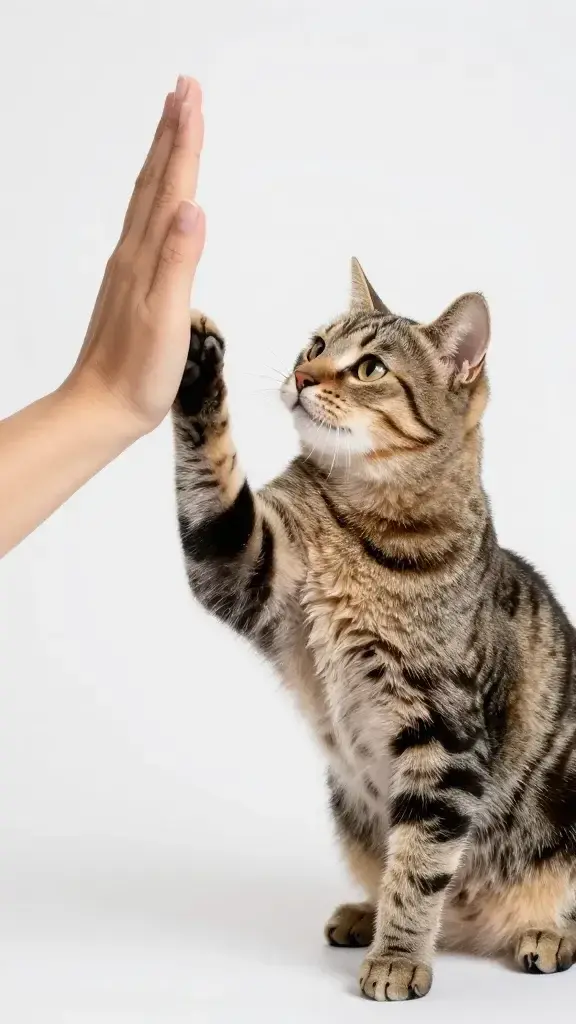
- Present your open palm vertically a few inches from your cat.
- Wait. Most cats will experiment with a paw. The instant they touch your hand, click and treat.
- Say your cue (“high five!”) as their paw starts to lift.
- Gradually move your hand higher or farther. Keep the success rate high—about 70% or better.
Tip: If your cat stalls, go back to the closed fist for a rep or two to remind them. Then swap back to the open palm. You’re not failing—you’re coaching.
Other Fun Tricks to Try
Once you’ve got the hang of it, stack these for a mini cat show:
- Spin: Lure a circle with a treat near their nose. Click when they complete the circle. Add the cue once it’s smooth.
- Target to mat: Click and treat any interaction with the mat, then only for standing on it, then for staying 2–3 seconds.
- Sit pretty: From a sit, move a treat up slightly so they lift front paws. Support them at first to avoid wobble. Short reps here—core workout!
- Go through a hoop: Start with the hoop on the ground. Lure through. Raise gradually. Circus cat unlocked.
Fix Common Hiccups
Cat walks away mid-session? Take a break. Keep sessions short. Also, try better treats. Bribery works and I have no shame.
Cat stares at you like you’re speaking taxes? You may have jumped steps. Make it easier. Reward tiny moves toward the goal.
Clicks scare your cat? Muffle it in your pocket, use a quieter clicker, or use a soft “yes!” as your marker. Consistency beats volume.
Cat grabs and runs? Use tiny treats or lickable tubes so eating stays quick and calm. Hand-feed directly right where they performed the behavior.
Timing feels off? Practice clicking during a TV show every time a character says a certain word. Yes, really. Your timing improves fast.
Reinforcement: Keep It Interesting
Rotate between:
- Food: The main driver.
- Play: One quick pounce on a wand toy after a click. Great for high-energy cats.
- Affection: Chin scritches if your cat loves them. Some do, some are liars.
Mixing rewards keeps motivation high and nips boredom.
Proof the Tricks (So They Work Everywhere)
Cats learn context like champs. If “sit” only works on the blue rug at 4 p.m., you trained a very specific ritual. Let’s generalize it:
- Change rooms.
- Vary your position—standing, sitting, a step away.
- Add gentle distractions, like a toy nearby.
- Space out rewards: click every other rep when the behavior looks solid, then randomly.
FYI: Don’t rush this. If performance drops, go back a step and bring the treats back up.
FAQ
Can older cats learn tricks, or is this a kitten thing?
Absolutely. Seniors can learn just fine. Keep sessions extra short, use softer surfaces, and avoid balance-heavy moves if your cat has arthritis. Training doubles as mental enrichment, which helps older cats stay sharp.
How long until my cat learns “sit” or “high five”?
Some cats nail “sit” in one session. “High five” usually takes a few days of short sessions. The secret lies in consistency and tasty rewards. IMO, five minutes a day beats one long weekend binge.
Do I have to use a clicker, or can I just say a word?
You can use a marker word like “yes.” The clicker stays more consistent and crisp, which speeds learning for many cats. If your cat hates the click, a soft word works fine—just keep your timing sharp.
What if my cat only listens when I have treats?
That’s normal at first. Start by rewarding every correct rep, then move to a variable schedule once your cat understands. Also, switch to non-food rewards sometimes—play or praise—so your cat doesn’t fixate on snacks only.
My cat gets overstimulated or nippy during training. Help?
Lower the intensity. Use smaller treats, shorten sessions, and include calm behaviors like “mat” between tricks. End before excitement tips into chaos. If biting persists, pause for a few days and reset with easier wins.
Can I train multiple cats at once?
Train one at a time or you’ll end up managing feline group politics. Use separate rooms or baby gates. Rotate them in short turns and make waiting a treat game too—scatter a few kibbles for the off-duty cat.
Wrapping It Up
Clicker training turns “my cat does whatever they want” into “my cat cooperates because it pays.” You’ll bond more, your cat gets mental workouts, and you both score bragging rights. Start with “sit,” level up to “high five,” and keep sessions short, fun, and snack-fueled. You’ve got this—and your cat will pretend they taught you first, which, honestly, tracks.