
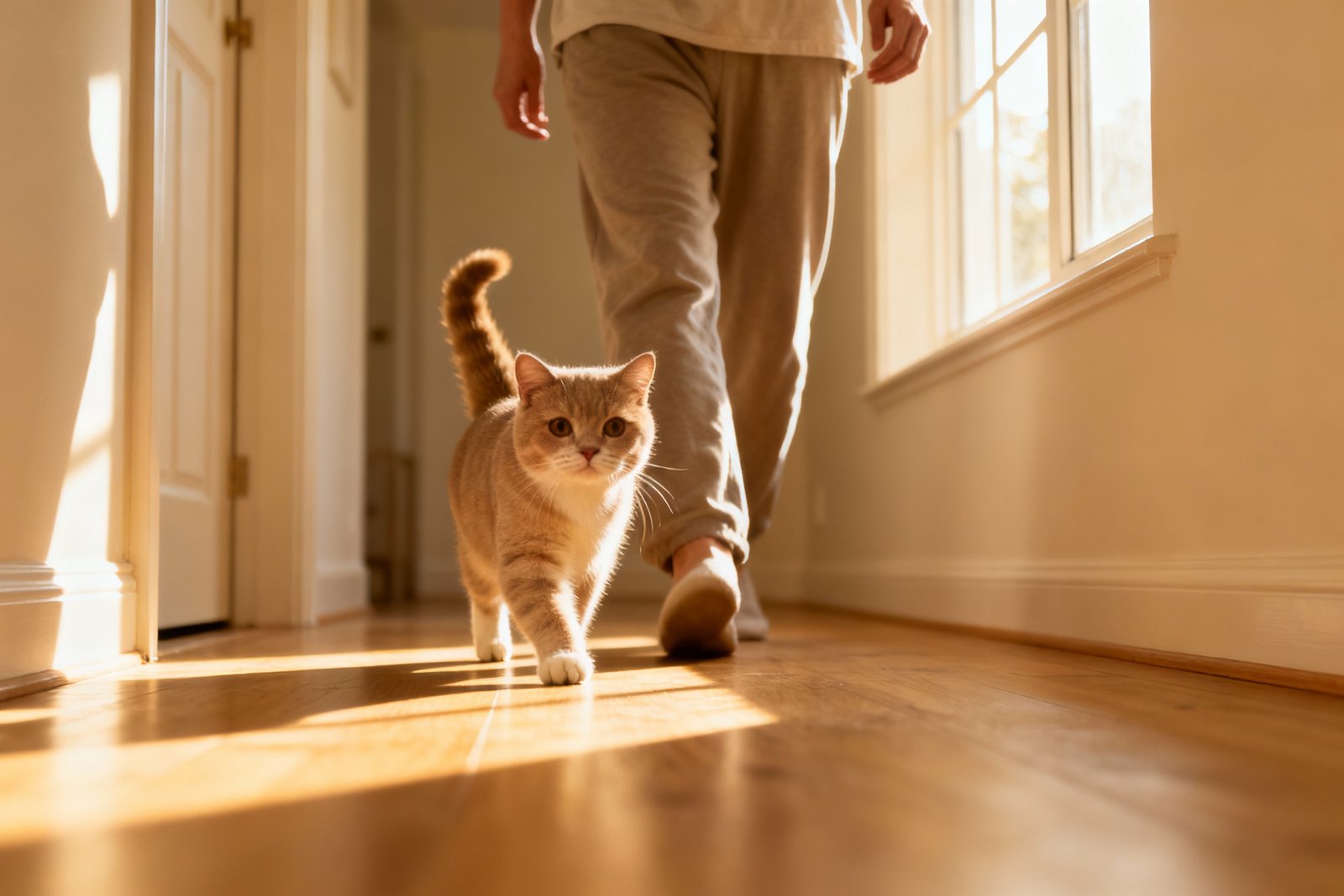
You know that feeling when you turn around and your cat is right there… again? Bathroom, kitchen, bedroom—tiny paw-steps lurk behind you like a furry shadow with whiskers. If you’ve wondered why your cat follows you literally everywhere, you’re not alone.
Good news: it’s not just about food. Well, sometimes it’s totally about food, but not always.
Your Cat Thinks You’re Part of Their Social Circle

Cats don’t just bond with houses or couches. They bond with people—yes, even that aloof one who pretends they don’t care.
When your cat follows you, they often show attachment and comfort. They feel safe when they keep you in sight. Cats also mirror your routines.
If you move, they move. It’s like synchronized lounging, but with more tail flicks. Closeness equals security, so your presence becomes their emotional anchor.
“But Aren’t Cats Independent?”
Totally, but independence doesn’t equal apathy. Cats formed a unique bond with humans over millennia.
They choose to be near you because they want to, not because they need a walk at 6 a.m. That choice is kind of a big deal, IMO.
Food, Glorious Food (And Schedules)
Let’s be real: your cat knows who operates the fridge. Many cats follow their humans because they associate you with snacks, meals, and treats.
If you feed them at consistent times, they will track you like a furry timer. Hunger cues look like this:
- Trailing you to the kitchen and meowing
- Parked on the counter or near the food cabinet (busted)
- Headbutts and twirls around your ankles at mealtime
How to Tell If It’s Food-Motivated
If the following behavior ramps up near meal times and chills out after eating, you’ve got your answer. You’re the walking vending machine. No shame in it.

Curiosity: Your Cat’s Favorite Hobby
Cats basically intern as household supervisors.
They want to inspect doors that close, bags that crinkle, and boxes that appear out of nowhere. When you move around the house, you create novelty. They follow to investigate, supervise, and occasionally judge your life choices. Expect shadowing when you:
- Open a closet (danger: Narnia)
- Unbox a package (instant cat condo)
- Head to the bathroom (the forbidden spa)
Why They Love the Bathroom
Bathrooms echo, smell interesting, and contain sinks—aka cat thrones.
Plus, you become a captive audience. Your cat sees this as prime bonding time. FYI, closing the door only makes you more mysterious.
Affection, Attachment, and “Secure Base” Behavior
Some cats follow because they love you.
Not to be dramatic, but you’re their person. Cats often show “secure base” behavior: they explore more confidently when you’re around, and they relax more easily near you. That pattern signals trust and a healthy attachment. Affection signs that go with following:
- Slow blinking while they sit near you
- Relaxed tail or soft curls at the tip
- Gentle purrs and head bunts
Velcro Cat vs.
Normal Cuddler
A “velcro cat” sticks to you always, not just sometimes. They sleep on your keyboard, yell at doors, and cry when you leave the room. It’s cute until you need to stand up.
If your cat seems distressed when separated, you might be dealing with anxiety rather than just affection.

Territory, Safety, and the Bodyguard Vibe
Cats see your home as territory and you as the VIP who needs escorting. Following you around lets them monitor the perimeter and check for threats (like a rogue houseplant). They also like high-traffic routes and doorways—prime observation posts. They follow to:
- Ensure nothing suspicious happens (looking at you, vacuum)
- Claim you as part of their territory via scent
- Stay on top of routine changes
New Home?
Expect Extra Shadowing
In a new space, cats often stick closer. You’re the familiar thing in a sea of strange smells. As they map the environment, they’ll slowly branch out.
Patience and a steady routine help a ton.
Boredom and Enrichment: You’re the Entertainment
If your cat has energy but no outlet, they’ll follow you like you’re Netflix. That’s not a diss—it’s an opportunity. Add stimulation so your cat can focus on fun instead of stalking you from room to room. Easy enrichment ideas:
- Interactive play: 10–15 minutes, twice a day, with a wand toy
- Food puzzles and treat balls
- Window perches for bird TV
- Rotating toy selection every few days
When Following Signals Under-Stimulation
If they follow and then immediately start zoomies, attack your ankles, or yowl for attention, they probably need more playtime and mental challenges.
A tired cat equals a happy cat (and calmer ankles).
Medical or Anxiety Flags You Shouldn’t Ignore
Sometimes following indicates a problem. Watch for changes—sudden clinginess, increased vocalization, or restlessness can signal pain, hyperthyroidism, cognitive changes, or stress. Cats hide discomfort, so behavior often speaks first. Red flags to call your vet about:
- Sudden drastic change in following or clinginess
- Weight loss, thirst changes, or bathroom accidents
- Pacing at night or confusion in familiar spaces
Separation Anxiety in Cats Is Real
Some cats struggle when left alone. Signs include excessive meowing when you leave, destructive behavior, or refusing food while you’re gone.
Gradual desensitization, puzzle feeders, and predictable routines help. In severe cases, chat with your vet—behavior meds or a professional trainer can make a big difference, FYI.
How to Respond Without Creating a Stage-5 Clinger
Your cat wants connection, not constant attention on demand. You can be loving and still set gentle boundaries. Try this balanced approach:
- Reward calm, independent behavior with quiet praise or a treat.
- Schedule play and cuddle sessions at predictable times.
- Ignore demand meows, then engage when they settle.
- Use vertical spaces so they can “be with you” without being on you.
Teach a “Spot” Cue
Place a mat or bed near where you work.
Lure your cat onto it and reward them for staying. Over time, they’ll hang out there while you do your thing. You get productivity; they get proximity.
Win-win.
FAQ
Why does my cat follow me to the bathroom?
Bathrooms fascinate cats—cool tile, running water, echoey acoustics, and a human who can’t escape. You also smell interesting after showers. Your cat knows you’ll reemerge, but they prefer the front-row seat.
Is following a sign my cat is hungry or just needy?
Could be either.
If they follow most intensely near mealtimes and calm down after eating, it’s food. If they follow while purring, slow-blinking, or flopping beside you, that’s affection. Sometimes it’s both—multitasking at its finest.
Should I worry if my cat suddenly starts following me more?
If the change happens out of nowhere, keep an eye out.
Pairing with other symptoms—weight change, vocalizing, restlessness, litter box shifts—means you should call your vet. Sudden behavioral changes deserve attention, IMO.
How can I make my cat more independent?
Offer enrichment, scheduled play, and safe perches near you. Reward calm alone time.
Avoid reinforcing demand meows. Confidence grows when your cat has choices and predictable routines. Independence doesn’t mean ignoring them—it means structured attention.
Do some breeds follow more than others?
Yes.
Siamese, Burmese, Ragdolls, and Sphynx cats tend to act extra people-oriented. They often play “shadow” more than other breeds. That said, personality beats pedigree—your mixed-breed tabby can be just as devoted.
Is it okay to let my cat follow me everywhere?
Absolutely, if you both enjoy it.
Just ensure they get enrichment and downtime so following doesn’t stem from anxiety. If it ever feels compulsive or distressed, loop in your vet, FYI.
Conclusion
When your cat trails you room to room, they don’t just want kibble. They want connection, safety, and a front-row pass to your weird human rituals.
Offer play, predictability, and a few boundaries, and you’ll turn clingy shadows into cozy companions. And yes, you may never pee alone again—that’s the price of true love with whiskers.