
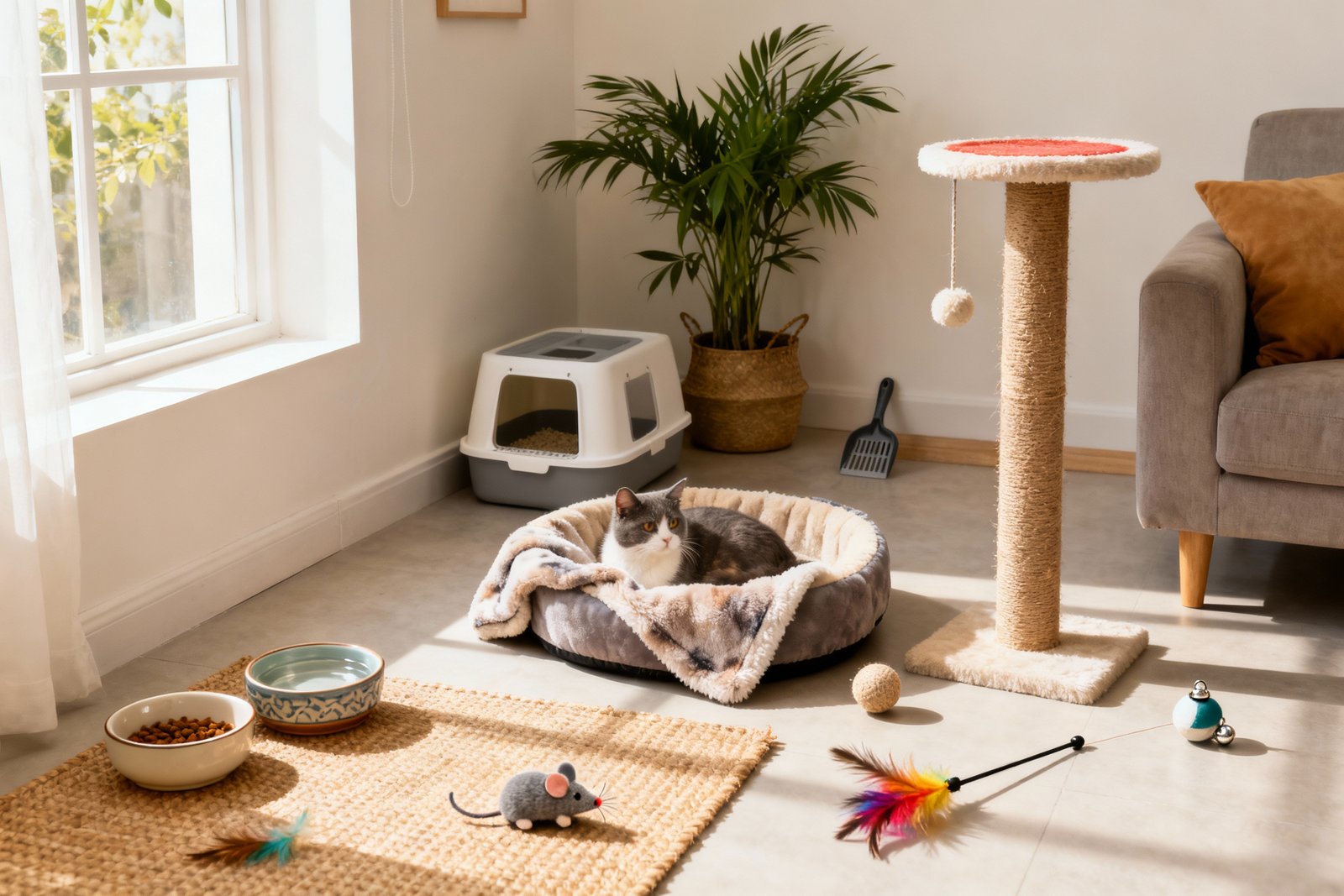
How To Prepare Your Home For A New Cat In 24 Hours
You’ve got 24 hours before a new feline overlord moves in. Excellent choice. Cats bring chaos, comedy, and cuddles—in that order.
Let’s turn your place into a cat-friendly haven fast so your newcomer settles in without staging a dramatic protest under your bed. We’ll keep it simple, practical, and doable by tomorrow.
Set Up a Safe Room First

Start with one quiet room. That space becomes your cat’s HQ while they adjust.
New smells, new sounds, new humans—too much at once can stress them out. A single “safe zone” gives them control and comfort. What goes in the safe room?
- Litter box (uncovered, low-sided if kitten), placed in a low-traffic corner
- Food and water on the opposite side of the room from the litter box
- Hidey spot: a cardboard box with a blanket or a covered bed
- Soft lighting or natural light—no blaring lamps
- Toys: a couple of mice, a wand toy, and a crinkle ball
- Scratcher (vertical or horizontal) near where they’ll nap
Pro tip: Scent matters
Place a worn T-shirt or small towel with your scent in the room. You’ll smell less like a stranger and more like “the one who controls the treats.” Consider a feline pheromone diffuser if you want extra calm vibes.
Get the Essentials (No, You Don’t Need a Cat Palace)

You can outfit your cat like royalty without emptying your wallet.
Focus on the basics that make day one smooth. Shopping list (24-hour version):
- Litter box + litter (clumping, unscented—cats have opinions)
- Bowls (shallow, stainless or ceramic)
- Food that matches what they currently eat (you can transition later)
- Carrier (hard-sided or sturdy soft carrier with good ventilation)
- Scratching post (one vertical, one horizontal if possible)
- Toys: wand toy, kicker toy, small mice
- Grooming tools (brush, nail clippers)
- Enzyme cleaner for accidents
Food and treats

If you don’t know their current diet, grab a simple, high-quality wet and dry option. FYI: sudden changes can upset tummies. Keep the intro easy and bland, like first dates and white rice.
Cat-Proof Like a Detective
Cats will explore everything you forgot you own.
Think like a tiny parkour artist with knives for hands. You only need an hour to make your place safer. Scan these hot zones:
- Cords: bundle or cover them; unplug dangling chargers
- Plants: remove toxic ones (lilies are extremely dangerous)
- Small objects: hair ties, strings, needles, rubber bands—store them
- Trash cans: lids on or tuck away
- Windows: secure screens; check for gaps
- Closets/under beds: block deep hidey holes you can’t access
Kitchen and bathroom traps
Close the toilet lid. Store cleaning products high up.
Keep countertops clear of breakables and hot surfaces. Your new roommate will not respect “no-go zones,” trust me.
Create Comfort Stations Around the House

Once they graduate from the safe room, they’ll roam. Set up inviting “yes” spots so they choose those over your sofa corners. Build cat-friendly zones:
- Scratching areas near doorways and favorite hangouts
- Cozy nap spots (window perches win hearts fast)
- Vertical space: a cat tree or cleared shelves
- Play stash: basket with toys you rotate weekly
Litter logistics
Rule of paw: one box per cat, plus one extra.
In a small apartment, two boxes still help. Place them far from food. Avoid noisy appliances—no one wants to poop next to a washing machine.
Plan the First 24 Hours
Your vibe sets the tone.
Keep things calm and predictable. Talk softly. Move slowly.
Yes, whispering to your cat like a Disney side character helps. Arrival protocol:
- Bring the carrier to the safe room and open the door. Let the cat exit on their terms.
- Show food, water, and the litter box, then give them space.
- Hang out quietly nearby—read, scroll, answer emails. Be boring furniture.
- Offer a wand toy later if they show curiosity.If not, try again tomorrow.
Feeding day one
Offer small, familiar meals. If they don’t eat right away, don’t panic. Many cats nibble after dark once the house quiets down.
Water access matters more in the first few hours.
Bond Without Being Weird

You want to cuddle. They want to evaluate your life choices. Meet in the middle. Trust-building moves:
- Slow blinks from a few feet away—cat language for “I’m chill.”
- Hand sniff intro: offer fingers low and still; let them come to you.
- Interactive play with a wand toy to burn nervous energy.
- Treat trails to encourage exploration (IMO, freeze-dried treats = gold).
Reading the room
Tail puffed, ears flat, hiding?
Give them more quiet time. Kneading, purring, slow tail swish? You’re doing great.
Respect no-touch zones like belly and base-of-tail until you know their quirks.
Vet Prep and Records (Boring but Important)

You don’t need a full medical saga today, but set the basics. Gather any previous records if available. If not, plan a wellness visit within the first week. Do this within 24 hours:
- Find a local vet and schedule an appointment
- Buy a sturdy carrier and a soft towel for comfort
- Note microchip info or plan to chip at the vet
- Pick a flea/tick and deworming plan with your vet
FYI: If your cat sneezes a bit or hides a lot, that’s normal stress.
Lethargy, labored breathing, not eating for 24+ hours, or diarrhea? Call the vet.
Make Your House Feel Like Home
Scent and routine seal the deal. Cats love predictability almost as much as they love boxes. Lock in a routine:
- Feed at consistent times morning and evening
- Play for 10–15 minutes before each meal to mimic hunt–eat–groom–sleep
- Groom lightly if they enjoy it—short sessions build trust
- Quiet hours in the evening to reduce stress
Add a blanket or mat that “belongs” to your cat and place it in preferred spots.
Once they love it, you can move it to new areas to encourage exploration. Sneaky, right?
FAQ
Where should I put the litter box on day one?
Place it in the safe room, away from food and water, and not in a tight corner. Your cat needs an easy escape route to feel secure.
Once they explore more of the house, you can add a second box in a low-traffic hallway or bathroom.
Should I let my cat sleep in my bed the first night?
If they want to and you’re okay with it, sure. But many cats prefer the safe room at first. Keep the door closed, check in gently, and let them choose when to upgrade to the “primary suite.”
How much should I play with my new cat right away?
Follow their lead.
Offer a brief wand session after they settle in, then stop before they get overstimulated. Two to three short play bursts on day one works great, IMO.
What if my cat hides and won’t come out?
That’s normal. Sit nearby and read or work so they get used to your presence.
Place food, water, and a litter box within easy reach. Most cats venture out after dark when the house quiets down.
Do I need fancy cat furniture immediately?
Nope. A cardboard scratcher, a basic post, and a cozy blanket handle day one.
Upgrade later if you want a cat tree or window perch. Start simple and see what your cat actually likes.
How do I switch their food safely?
Transition over 7–10 days: 75% old/25% new for a few days, then 50/50, then 25/75, then all new. Sudden switches can cause tummy troubles, and no one wants that at 2 a.m.
Conclusion
You can prep a cat-ready home in a single day without losing your mind.
Create a safe room, stock the essentials, cat-proof like a pro, and keep day one calm and predictable. Offer play, patience, and snacks. Do that, and your new cat will decide you’re acceptable company—maybe even top-tier.