
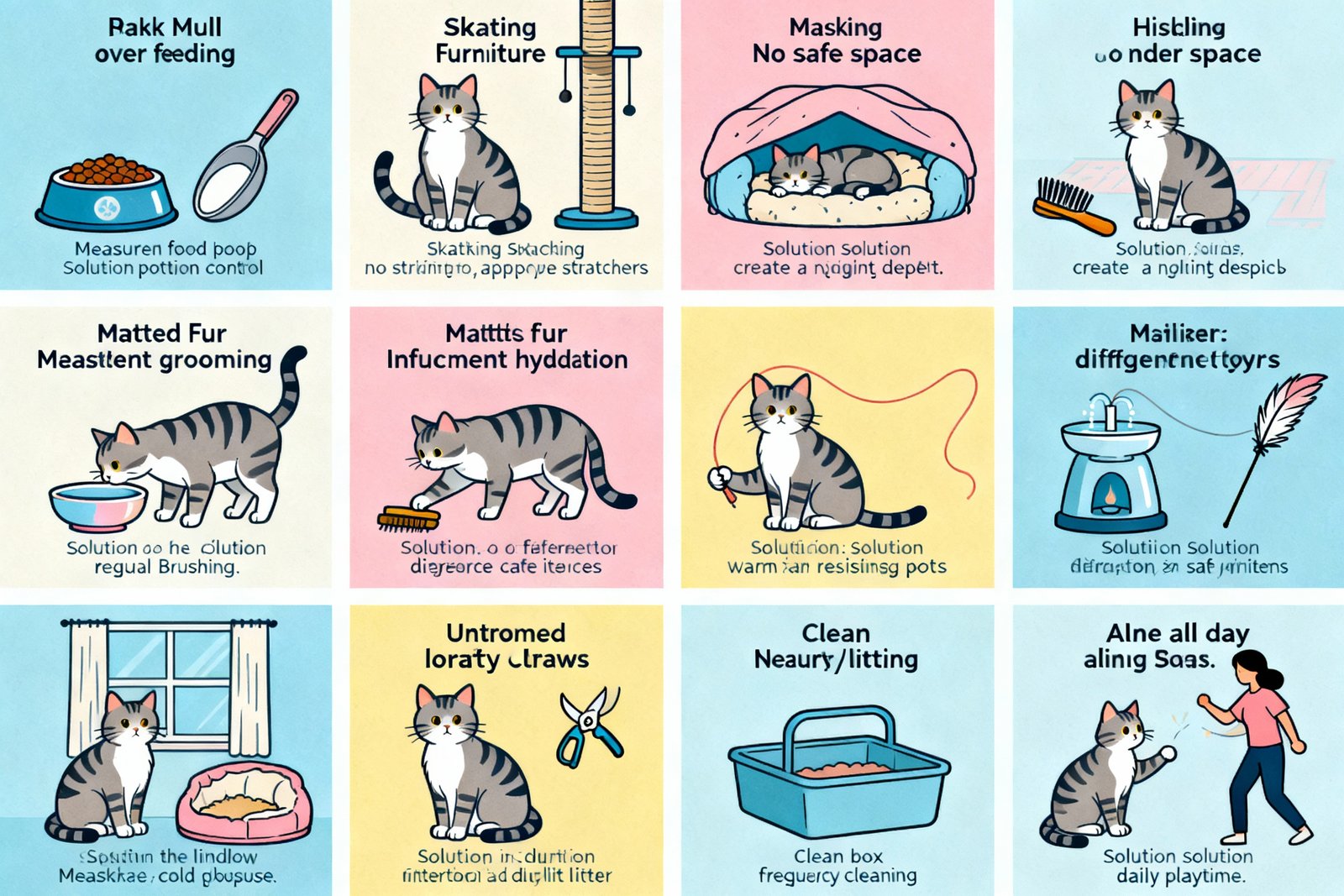
10 Mistakes New Cat Owners Make (and How To Avoid Them)

You brought home a cat. Congrats on adopting a tiny judge who will nap 16 hours a day and still look disappointed in your productivity. The early days feel magical—then the litter box stinks, the couch gets shredded, and you realize “free-feeding” means you accidentally invented a self-filling cat.
Let’s dodge the beginner mistakes so you and your new roommate can actually vibe.
Rushing the Introduction (aka “Let Me Love You!”)
New owners often push too fast. You want cuddles; your cat wants a safe corner and a door. Respect that. Start with a “home base” room:
- Set up a litter box, food, water, and a cozy hideout.
- Keep noise low and movement slow for the first few days.
- Let your cat approach you.Sit on the floor. Offer a finger, not a grab.
Tip: Use treats and play to build trust. Force nothing.
Cats don’t do forced.
When to expand their territory
When your cat eats, uses the litter box, and naps in the open, you can gradually open doors. If they retreat or hide constantly, slow down. IMO, patience here pays off for years.
Skimping on the Litter Box Situation

You can’t “wing it” with litter boxes.
Your cat has opinions, and they enforce them with… carpet. Golden rules:
- Box count: One per cat, plus one. Two cats? Three boxes.
- Size matters: The box should be 1.5x your cat’s length.Kittens need low-entry boxes.
- Location: Quiet, accessible, not near food. No loud laundry rooms.
- Cleanliness: Scoop daily, full change monthly (more if needed).
If your cat avoids the box, check for pain (UTIs, constipation) or stressors (new pets, changes). Cats don’t “spite pee.” FYI: that’s a myth.
Covered vs. uncovered?
Covered boxes trap odor and can feel claustrophobic.
Many cats prefer uncovered. If smell bothers you, scoop more, don’t cap it like a scented tomb.
Free-Feeding Like It’s a Buffet

Cats will “graze” themselves into a veterinary lecture and a diet plan. Free-feeding dry food often leads to overeating, boredom, and weight gain. Better approach:
- Scheduled meals: Two meals a day for adults; more frequent for kittens.
- Portions: Follow calorie needs based on weight and activity (your vet can help).
- Wet food: Boosts hydration and satiety.Great for urinary health.
- Food puzzles: Engage their brain and slow down eating.
If your cat eats like a vacuum, use a slow-feeder bowl. Your future vet bills will thank you.
Ignoring Play (and Then Complaining About Zoomies)

Cats don’t just “chill.” They’re tiny predators. No play means pent-up energy, nighttime chaos, and, yes, shredded furniture. Daily play plan:
- Two 10–15 minute sessions with a wand toy.
- End with a treat or small snack to mimic “hunt, catch, eat, groom, sleep.”
- Rotate toys weekly so the “prey” doesn’t seem dead inside.
Laser pointers are fun, but always finish with a catchable toy so your cat doesn’t feel eternally defeated.
Cats have pride.
Scratching: it’s not “bad behavior”
Provide multiple sturdy scratching posts: one tall sisal post, one cardboard horizontal, maybe a cat tree. Place them near nap spots and where your cat already scratches. Sprinkle catnip and praise like a sports coach when they use them.
Forgetting Vet Care and Preventatives

You need a vet before you need a vet.
New owners often wait for a crisis. Don’t. Set up a wellness baseline:
- Schedule a first vet visit within the first couple of weeks.
- Discuss vaccines, microchipping, and parasite prevention (fleas, ticks, worms).
- Plan spay/neuter if not done already—behavior and health benefits are huge.
- Get dental advice early; dental disease sneaks up fast.
Keep a simple folder with vet records, microchip number, and feeding info. You’ll feel organized, and your future self will high-five you.
Underestimating Environmental Needs

Cats need vertical space, hiding spots, and sunbeams like we need coffee.
A flat, empty room reads “prison” to a cat. Make the space cat-friendly:
- Verticals: Cat trees, shelves, or cleared windowsills.
- Hideouts: Boxes, tunnels, and cozy beds in quiet corners.
- Window entertainment: Bird feeder outside + perch inside = endless Catflix.
- Litter, food, water: Separate zones so your cat doesn’t feel trapped.
If you have multiple cats, add duplicates of everything. Resource guarding looks subtle—side-eye at the water bowl counts.
Enrichment on a budget
Rotate boxes, paper bags (handles cut), and DIY puzzles. A muffin tin + treats + tennis balls?
Instant brain game. IMO, enrichment doesn’t need to be expensive, just thoughtful.
Assuming All Plants, Scents, and Foods Are Safe
Your cat will chew plants and “sample” anything that smells interesting. Many houseplants and essential oils are toxic. Common hazards:
- Plants: Lilies (extremely toxic), pothos, philodendron, aloe, sago palm.
- Foods: Onions, garlic, chocolate, alcohol, xylitol, grapes/raisins.
- Scents: Tea tree oil and many essential oils can harm cats.
Check new plants on a pet-safe list before you buy.
Keep meds and cleaners locked up. Curiosity + nine lives = not a great safety strategy.
Neglecting Grooming and Training

Yes, cats groom themselves. No, that doesn’t replace brushing, nail trims, and basic training. Build a grooming routine:
- Brush long-haired cats daily; short-haired weekly to reduce hairballs.
- Trim nails every 2–4 weeks.Pair with treats so it’s not a horror film.
- Wipe eyes/nose if needed; check ears for gunk or redness.
Training you should actually do:
- Carrier training: Leave it open with a blanket and treats so vet trips don’t become WWE.
- Target training: Teach “touch” with a stick or finger for easy redirection.
- Recall: Yes, you can teach a cat to come when called. Use a consistent cue + reward.
Misreading Body Language
Cats communicate constantly, just not with speeches. You’ll avoid scratches and stress if you read the signals. Key signs:
- Happy/relaxed: Slow blinks, loose body, tail up with a question-mark curve.
- Overstimulated: Twitching tail, ears back, skin ripples—stop petting now.
- Scared: Dilated pupils, crouched body, hiding—give space and a safe route.
Pet preferences vary.
Many cats prefer head, cheeks, and chin scritches. Belly rubs? Proceed at your own risk.
Expecting a Dog in Cat Clothing
Cats don’t aim to please.
They aim to feel safe and entertained. If you want fetch and instant obedience, manage expectations. Build your bond cat-style:
- Routine feeding and play at predictable times.
- Consent-based affection—ask, don’t grab.
- Let them choose lap time. The purrs hit harder when they decide.
You’ll earn a loyal, hilarious companion who blinks at you like you’re their favorite human.
Which you are. Usually.
FAQ
How long does it take a new cat to adjust?
Most cats settle in within 1–2 weeks, but shy or formerly outdoor cats may need a month or more. Watch for small wins: eating regularly, using the litter box, exploring, and accepting gentle pets.
Go at their pace and celebrate the little stuff.
Should I let my cat outside?
I recommend keeping cats indoors or using a “catio” or harness walks. Outdoor cats face cars, predators, parasites, and lost-cat posters. If you want fresh air time, train for a harness or build a secure enclosure.
What’s the best food for a new cat?
Choose a high-quality, AAFCO-compliant diet appropriate for their life stage (kitten, adult, senior).
Add wet food for hydration and urinary health. Transition slowly over 7–10 days to avoid tummy drama.
Why is my cat meowing at night?
Night zoomies usually mean extra energy or boredom. Add a robust evening play session and a small bedtime snack.
Rule out medical issues if the vocalizing seems new or extreme, especially in seniors.
How do I stop furniture scratching?
Don’t punish. Provide multiple scratching options (tall sisal post, horizontal cardboard), place them near targeted areas, and reward use with treats. Use furniture protectors or double-sided tape during training.
Trim nails regularly.
When should I worry about litter box changes?
If your cat stops using the box, strains, visits frequently with little output, or you see blood, call your vet. Urinary issues can escalate fast, especially in males. Sudden changes almost always have a cause you can address.
Conclusion
You don’t need to be perfect; you just need to be observant and consistent.
Set up the basics, respect your cat’s pace, and play like you mean it. Do that, and you’ll earn a purring, biscuit-making roommate who decides your laptop is the coziest bed on earth. And honestly?
They’re not wrong.