
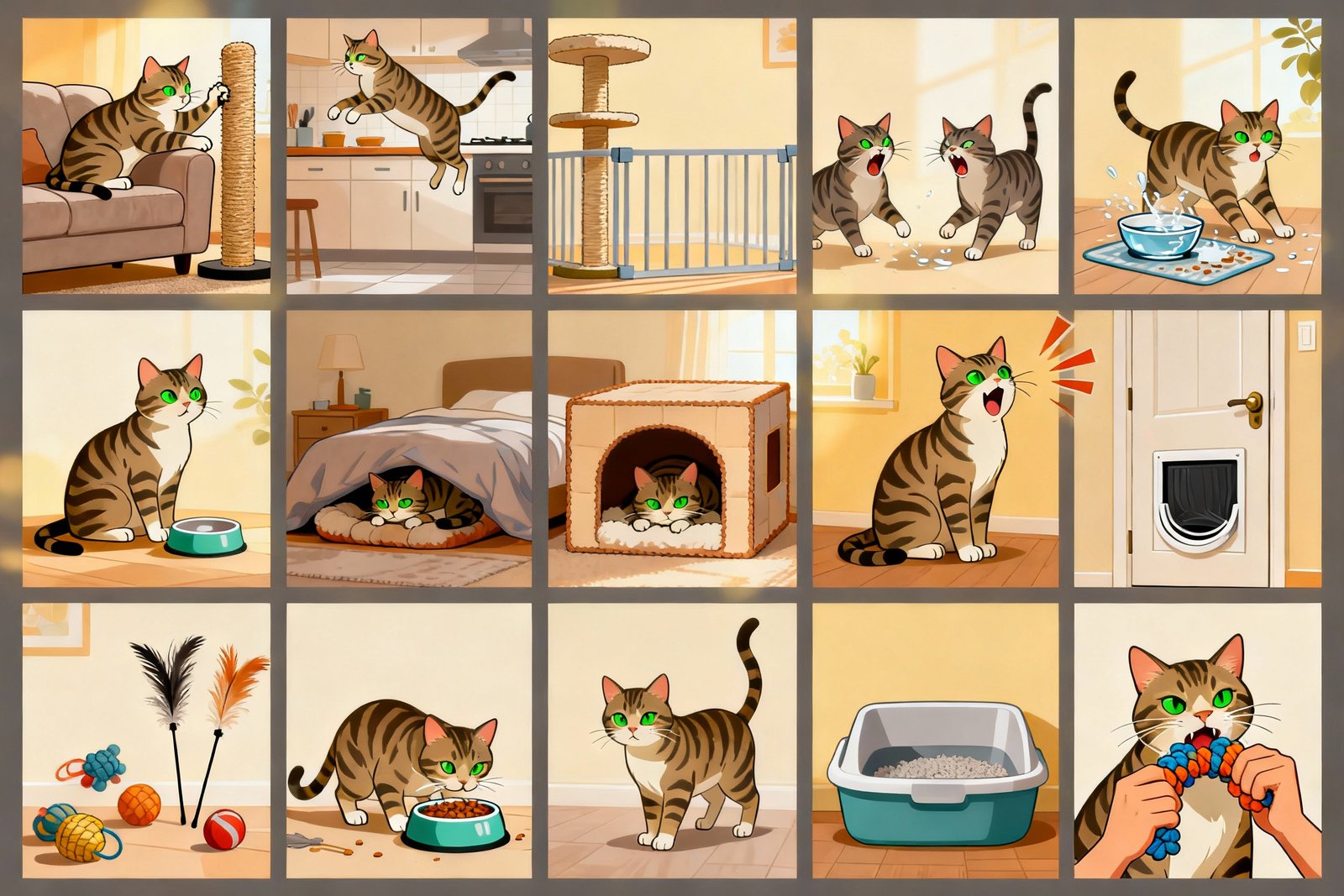
Cats don’t come with a user manual, and sometimes they run on pure chaos. One minute they’re purring angels, the next they’re shredding your couch like it’s their life’s calling. Good news: most cat “problems” actually come from normal cat behavior.
Even better? You can fix them with a few smart tweaks and a pinch of patience.
Scratching Everything You Love

Your sofa is not the enemy—but your cat thinks it is. Scratching keeps claws healthy and marks territory.
So they scratch. A lot. How to fix it:
- Give options: Offer multiple scratchers: vertical posts (tall and sturdy), horizontal cardboard, and sisal fabric.
- Place them smartly: Put scratchers where your cat already scratches—yes, right by the couch.
- Make the couch boring: Use double-sided tape or furniture guards. Reward with treats every time they use the scratcher.
- Trim claws regularly: Short claws = less damage.Consider soft nail caps if needed.
Pro tip: Choose the right post
Height matters. Your cat wants to stretch fully. Get a post at least as tall as your cat when they stand and reach.
Litter Box Drama (Aka Not Using It)
When cats boycott the box, they’re not being “spiteful.” They’re saying, “Something’s wrong.” That could mean medical issues, box setup, or stress. How to fix it:
- See a vet first: Rule out UTIs, constipation, or pain. Medical issues cause accidents all the time.
- Use the right number of boxes: One per cat plus one extra.Spread them out.
- Keep it clean: Scoop daily, deep clean weekly. Cats hate dirty bathrooms—same, honestly.
- Prefer unscented, clumping litter: Most cats do. Avoid strong fragrances.
- Make access easy: Low-entry boxes for seniors, quiet spots for anxious cats.
Location matters
Don’t put the litter box next to the washing machine or the dog’s food. Quiet and private wins every time.

Nocturnal Zoomies and 3 a.m.
Parkour
Cats naturally hunt at dawn and dusk, not 11 p.m. under your duvet. You can’t change instinct, but you can redirect it. How to fix it:
- Schedule play: Do two 10–15 minute play sessions with a wand toy, especially before bed.
- Feed after play: Play = “hunt,” then offer a small meal. Full belly + tired brain = sleep.
- Ignore night shenanigans: Don’t reward meowing with snacks or attention.Yes, it’s hard. Yes, it works.
Create a night setup
Leave puzzle feeders and a safe climbing space. Give them a job that doesn’t involve your toes.
Meowing Nonstop
Some cats are chatty (looking at you, Siamese). But excessive vocalizing can signal boredom, anxiety, or a medical issue. How to fix it:
- Vet check: Especially if the meowing increases suddenly or happens at night—hyperthyroidism or pain can cause it.
- Stick to routines: Feed, play, and sleep schedules calm anxious cats.
- Don’t reinforce noise: Reward quiet moments with attention and treats.Consistency wins.
- Enrich the environment: Window perches, bird TV, and rotating toys help a lot.

Biting and Rough Play
Kittens learn bite control from siblings. Solo kittens or under-stimulated cats sometimes go too hard. Hands are not toys.
Ever. How to fix it:
- Use wand toys: Keep teeth on toys, not skin. Redirect the second they aim for you.
- Stop the game when they bite: Freeze, disengage, and walk away. No yelling—it amps them up.
- Schedule daily play: Tired cats bite less, IMO.
- Reward gentle behavior: Treats and praise when they play nicely.
What about petting-induced biting?
Some cats tolerate only short petting sessions. Watch for warning signs like tail flicks, skin rippling, or ear twitches.
Stop before they snap.
Fear and Hiding
New home? Loud guests? Vacuum?
Cats often choose stealth mode. That doesn’t make them “antisocial,” just cautious. How to fix it:
- Provide safe zones: Hideaways, covered beds, and vertical shelves build confidence.
- Let them set the pace: No forced affection. Sit nearby and toss treats.
- Use pheromone diffusers: They can take the edge off anxiety.
- Desensitize slowly: Pair scary things (carriers, guests) with treats and short exposures.
Counter Surfing and Food Theft
Cats love high ground and crumbs.
Counters deliver both. You won’t win with “no.” You’ll win with strategy. How to fix it:
- Offer legal heights: Cat trees, shelves, or window perches near the action.
- Make counters boring: Keep them clean. Use motion-activated air or crinkly mats as a deterrent.
- Reward the right spot: Treats when they sit on their perch while you cook.
- Store food securely: Bread bags are not cat-proof, FYI.
Door Dashing
Some cats see an open door and think “adventure time.” That’s terrifying for you and risky for them. How to fix it:
- Create a buffer: Use baby gates, double-door entry, or a foyer barrier.
- Teach a “go to mat” cue: Clicker train them to sit on a mat by the door for treats.
- Distract at door times: Scatter a few high-value treats away from the exit before you open it.
- Microchip and collar: Safety net if they slip out.
Territorial Spraying and Marking
Spraying isn’t the same as peeing.
It’s a vertical, tail-quivery statement: “Mine.” Often triggered by stress or other cats. How to fix it:
- Neuter/spay: Reduces spraying dramatically, especially in males.
- Block outside triggers: Close blinds, frost windows, or use motion sprinklers to deter neighborhood cats.
- Clean thoroughly: Use enzymatic cleaner. Regular stuff leaves scent behind.
- Increase resources: More litter boxes, feeding stations, and resting spots decrease turf wars.
When to call in help
If spraying continues, consult your vet or a behaviorist. Anxiety meds or structured behavior plans can work wonders.
Obsessive Grooming
Bald patches aren’t a fashion choice.
Overgrooming often means itchiness, allergies, pain, or stress. How to fix it:
- Vet visit first: Rule out fleas, mites, skin infections, or pain.
- Address allergies: Food trials or environmental changes may help.
- Reduce stress: Add hiding spots, vertical space, and predictable routines.
- Play therapy: Redirect anxiety into activity.
Destructive Chewing
Some cats chew wires, plants, or plastic like it’s gourmet. Dangerous and annoying. How to fix it:
- Cat-proof the zone: Hide cords in covers, secure cables, remove toxic plants.
- Offer safe chews: Dental treats, silvervine sticks, or chew-safe toys.
- Bitter sprays: Use on cords or tempting surfaces (test first).
- Increase enrichment: Boredom fuels chewing, IMO.
FAQ
How long does it take to fix a cat behavior problem?
You’ll often see small wins within a week if you stay consistent. Bigger issues like litter avoidance or spraying can take a month or more.
Track progress, adjust as needed, and celebrate tiny victories.
Should I punish my cat when they misbehave?
Nope. Punishment scares cats and makes behaviors worse. Use management, redirection, and rewards for the behavior you want.
Calm, predictable routines beat yelling every time.
What’s the best way to introduce a new cat to my resident cat?
Go slow. Start with scent swapping, then short visual introductions, then supervised meetings. Provide separate resources for each cat.
Rushing equals drama; patience equals peace.
Do cats need daily playtime even if they’re adults?
Yes. Adult cats still need hunting-style play to burn energy and reduce stress. Two short sessions with a wand toy can transform behavior and mood.
How do I know if my cat’s behavior is a medical issue?
Look for changes: sudden litter problems, increased vocalizing, hiding, reduced appetite, or aggression.
If your cat behaves “off” or changes routines, call your vet. Behavior and health connect closely.
Are pheromone diffusers worth it?
They won’t fix everything, but they help many anxious or multi-cat households. Use them alongside environmental changes and training for best results.
Conclusion
Cats act like cats.
When we meet their needs—play, safety, territory, routine—most “problems” fade fast. Start with a vet check, then tweak the environment, train a little, and reward a lot. You’ve got this, and your sofa might survive after all.
FYI: the wand toy is your new best friend.